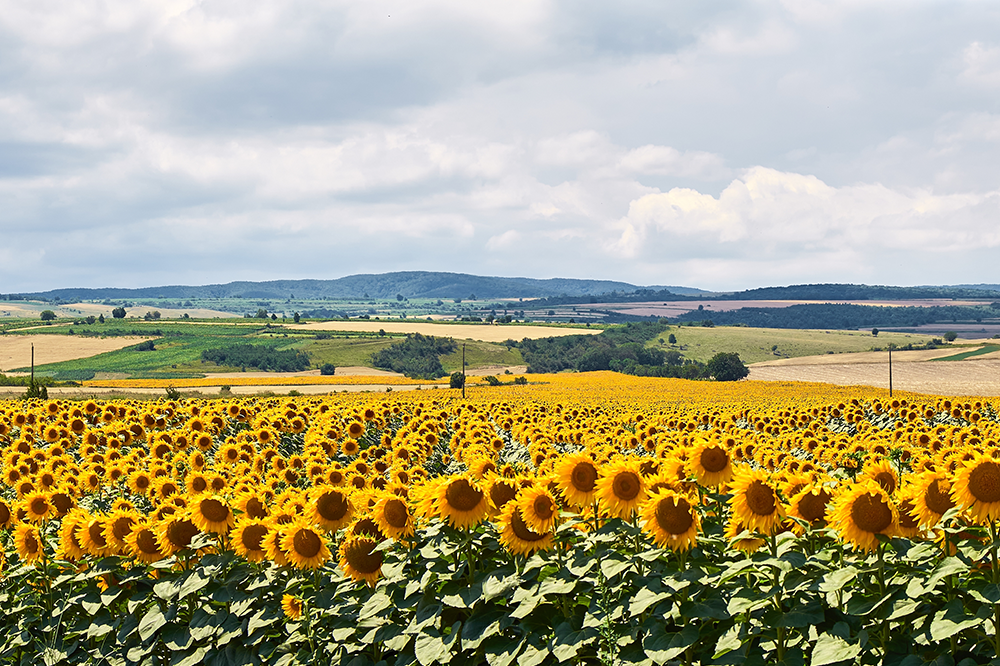
Underutilised crops like lentils, chickpeas and sunflowers are to receive a boost after a new network secured funding to help unleash their potential.
The Novel and Underutilised Crop Network (NUCNet) will see a team of researchers work with farmers, retailers and community groups to explore ways to utilise climate-resilient crops that are rarely grown in the UK today but could be crucial to future food security.
The team includes researchers from the Universities of Southampton, Dundee, Reading, and the National Institute of Agricultural Botany and has secured £645K of funding from the Biotechnology and Biological Sciences Research Council.
Currently, UK farming is heavily reliant on a small number of crops, mainly wheat, barley and oilseed rape. This lack of diversity threatens future food system resilience as extreme weather and new pests brought about by climate change risk significant fluctuations in crop yields.
Diversifying what the UK grows and adding crops that are more resistant to extreme weather is considered key to making UK farming more resilient. The network will lead a coordinated effort to identify the opportunities and barriers to growing underutilised crops like lentils, chickpeas, sunflowers and others in the UK.
“There are a lot of unknowns about how this transition might take place, from the practical challenges facing farms to whether it is economically viable,” said Professor Mark Chapman, the project lead, from the University of Southampton.
“The new network will coordinate research efforts to provide evidence for system level change to the UK food system. Crucially, this means engaging directly with producers, supermarkets and communities to understand their perspectives.”