All eyes were on Liverpool this week as Prime Minister Sir Keir Starmer battled to reclaim control of the political narrative following a torrid few months for his government.
In the event, reaction to Starmer’s headline speech was largely positive with commentators suggesting he had done enough to define Labour’s opposition to Reform’s agenda, whilst heading off an immediate internal challenge from Mayor of Manchester Andy Burnham.
The speech featured little of substance from a food policy perspective – or indeed on the environment – but in a week punctuated by key publications from the likes of IGD, the EAT-Lancet Commission and the Food, Farming and Countryside Commission, the external noise around food systems change grows ever louder. We’ll have more on this in Monday’s Footprint Premium.
It’s been a busy work too for the British Retail Consortium (BRC). On Monday, the trade body released a report in which it warned retailers they must urgently address the loss of nature and biodiversity or risk jeopardising future supply chain resilience (our detailed coverage of the report is here).
Then on Tuesday, the BRC published the latest data from its shop price monitor which showed food inflation was unchanged at 4.2% year-on-year in September.
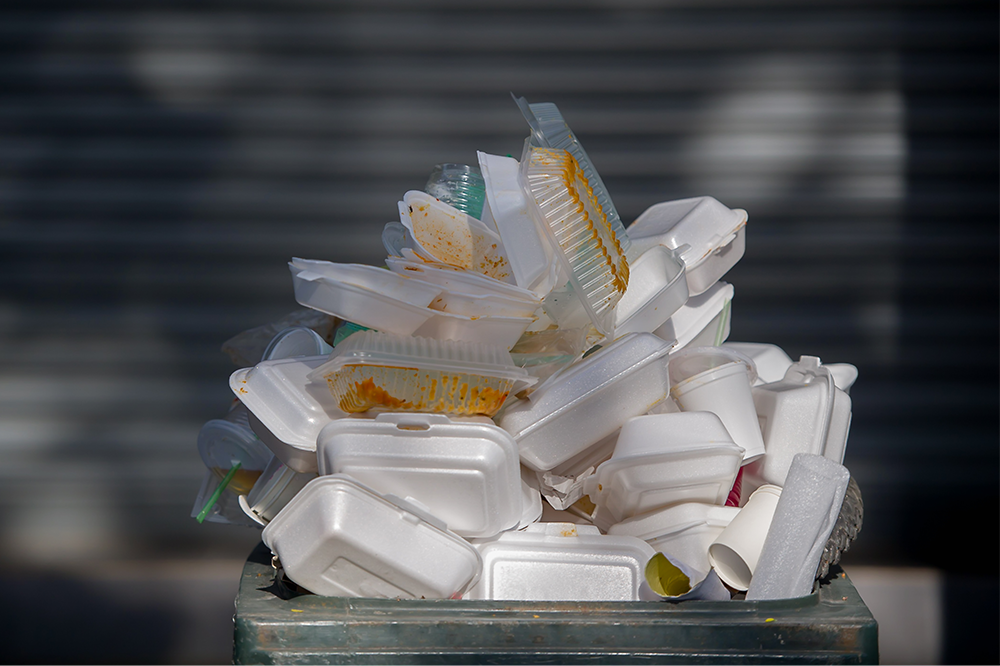
By Wednesday, the organisation had turned its attention to packaging, this time warning that the vast majority of the costs of the newly instituted Extended Producer Responsibility (EPR) scheme are likely to be passed onto consumers.
The scheme, which came into effect on October 1st, levies a charge on businesses who use and supply packaging for the full cost of managing it once it reaches its end of life. It’s estimated that revenue from the fees will generate more than £1bn annually to support local collection and disposal services, including recycling.
Rather than absorb the tax themselves, a BRC survey of retailers found that over 80% of the costs are likely to be passed onto consumers. It argued that with retailers already facing £5bn in extra employment costs following last year’s budget, the industry has been left with little room to absorb additional costs from EPR.
The BRC also renewed calls for the government to put in place legal restrictions to ensure the money raised from EPR can only be used by local councils to collect and operate local recycling, as well as fund improvements to local recycling systems.
This received short shrift from the Local Government Association (LGA), which described the call for ring-fencing as “in practice, a call for industry control of council waste services”. The LGA also pushed back at the warning over consumer price inflation. “Councils support the polluter-pays principle,” said environment spokesperson Arooj Shah. “EPR should be the spur for industry to cut unnecessary packaging, design packaging for reuse and recycling, and phase out hard-to-recycle materials so costs for consumers come down.”
Indeed, beneath the BRC’s headline grumble about cost pressures its survey evidence showed that EPR is already starting to kick-start the investment in more sustainable packaging the policy was designed to do by setting fees based on the types and amounts of materials used. 85% of retailers said they intend to increase the proportion of sustainable packaging they place on the market, and 78% intend to reduce the total volume of packaging they use.
This aligns with the desire of a growing number of consumers to buy food with minimal or no packaging as revealed in the Food Standard’s Agency’s latest insights survey. The results are detailed in another of this week’s news stories alongside a call from Green Alliance for the government to support the plant-based meat sector, and news that discount food chain Farmfoods has become the outlier in the supermarket sector by dropping its commitment to cage-free eggs.