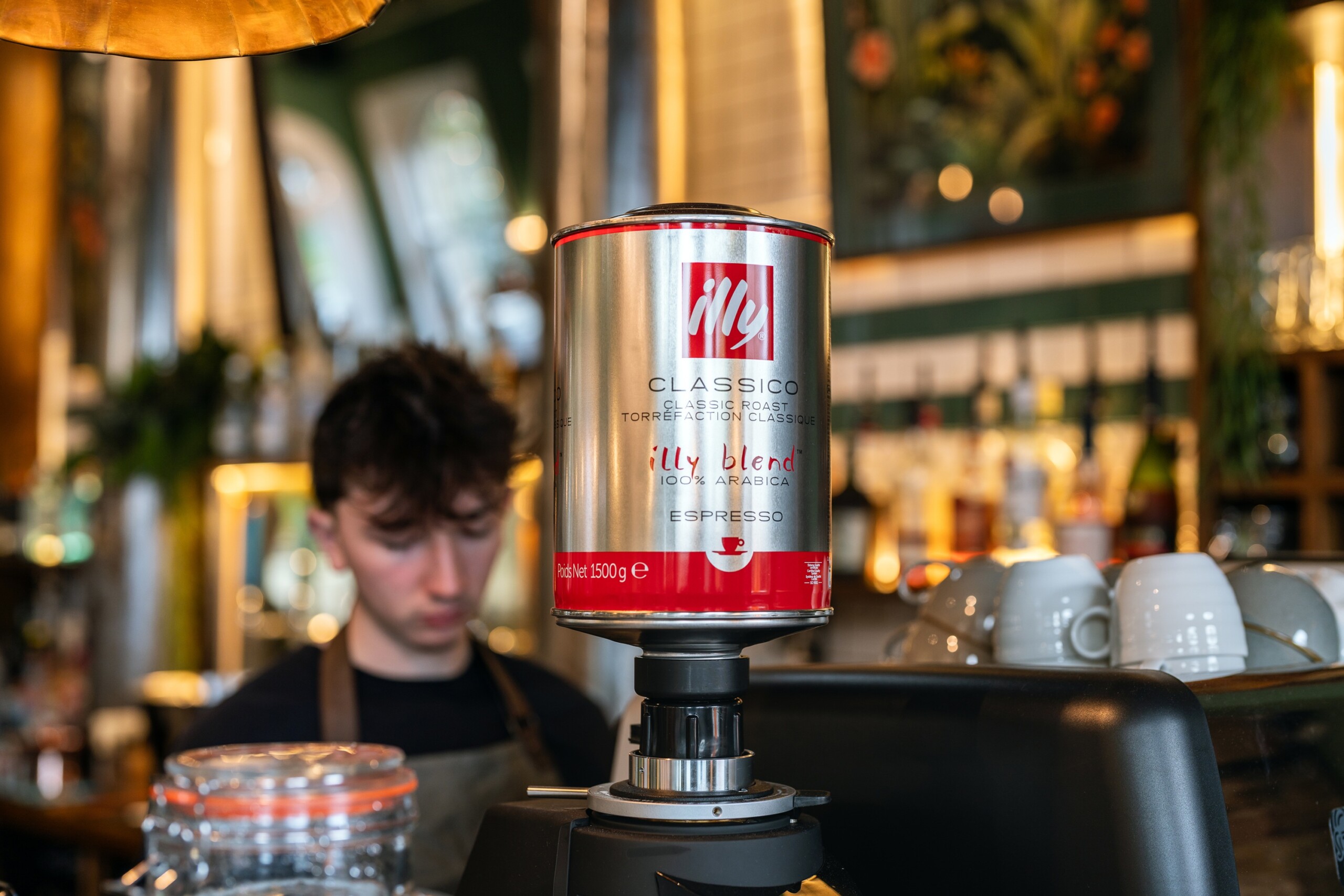
Fuller’s is delighted to announce a new partnership with premium and sustainable coffee brand, illy – which is now available for customers to enjoy in its pubs and hotels.
Oliver Rosevear, Fuller’s Sustainability Director, said: “We are really excited to see illy in our pubs and hotels. illy puts social and environmental responsibility at its core, and our customers can now enjoy high quality coffee that has less impact on the planet and supports its farming communities.
“Fuller’s is committed to being Net Zero by 2040 – with suppliers’ emissions and their own Net Zero targets playing a big role in achieving this. Partnering with brands like illy who prioritise sustainability, not only aligns with our value of doing things the right way – but it helps us on our Net Zero journey.”
According to Fuller’s, the partnership with illy will help the company to achieve other targets within its sustainability programme, Life is too good to waste. “illy’s machines use significantly less energy and there are robust recycling processes for its packaging, supporting us on our target of being Net Zero operationally by 2030 and reaching a recycling rate of 70% this year,” adds Oliver Rosevear.
Quality coffee has become an increasingly important everyday ritual for UK consumers – and the right coffee with strong sustainability credentials can help to build the role of pubs as an all-day destination.
Marcello Canetti, Managing Director UK & IE at illy, said: “This exciting partnership with Fuller’s brings together two brands with a shared commitment to quality, community and the environment. Pubs have long been at the heart of their communities, offering spaces where people socialise and unwind. Connecting over quality coffee has become an increasingly important everyday ritual for UK consumers helping to build the role of pubs as an all-day destination.”
He added “As a certified B Corp since 2021, illy is committed to the highest standards of social and environmental performance, accountability and transparency, with responsible sourcing, regenerative farming practices, recyclable packaging, renewable energy and community enrichment embedded across the estate.”