
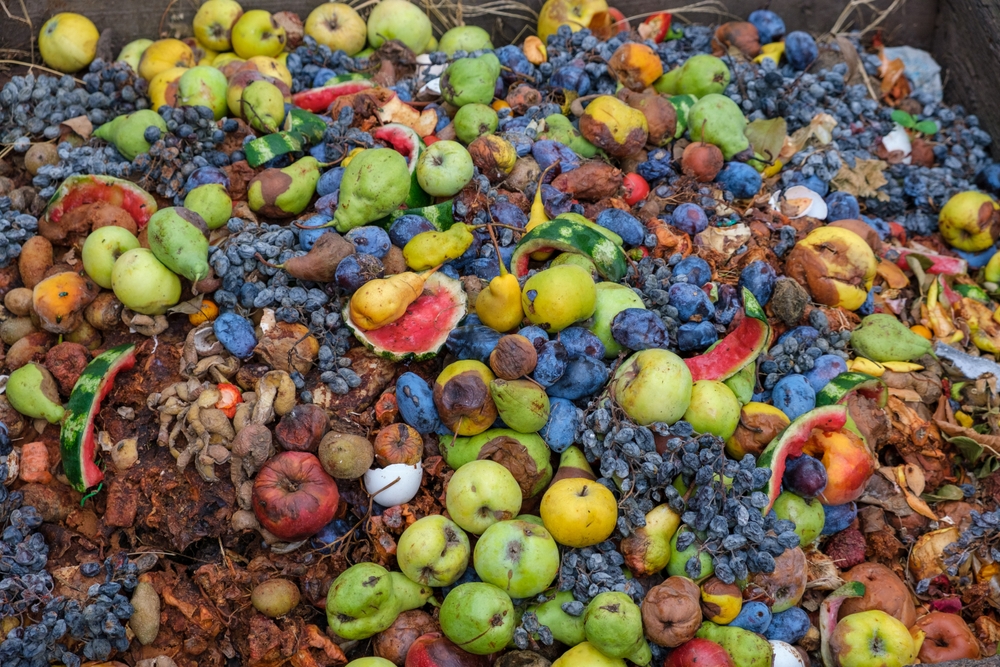
A 2030 target to cut food waste by 50% is in danger of being missed. Government and businesses need to seize the opportunity to turn things around. By Nick Hughes.
Setting targets for transforming the food system can be a fool’s errand. Just ask Wrap, the environmental action charity, which has just four years left to shepherd businesses towards meeting stretching 2030 targets for carbon and waste laid down in its UK Food and Drink Pact.
The rate at which food systems emissions are being cut will need to double during that period if a 50% reduction target is to be achieved.
The food waste target is similarly in jeopardy, with the UK on target to reduce per person food waste by just 30% versus a 50% target.
The case for reducing food waste has always been financial as well as moral. Previous Wrap research has shown that for every £1 invested in reducing food waste businesses can expect to realise a £14 return. Yet overall levels of waste remain stubbornly high. The charity’s most recent estimate for total UK food waste is 10.2 million tonnes, using a mix of data for 2021 and 2022 (it expects to publish new, more up-to-date data in 2027). Household food waste makes up 58% of the total by weight followed by on-farm waste (16%), manufacturing (13%), hospitality and food service (HaFS, 11%), and retail (2%).
Retailers and manufacturers have been most adept at tackling food waste since the 2007 baseline year, achieving a 26% and 33.6% reduction respectively (measured in kg/capita). Reduction rates have slowed since 2018 but it remains plausible that both segments will find a way to hit 50% by 2030.
Not so HaFS for which food waste is 8% higher now than in 2007, albeit estimates are based on modelling due to ongoing issues capturing high-quality real world data. Households are also failing to keep their end of the bargain with a 22.1% reduction since 2007 masking a 6.5% increase since 2018.
A bookmaker analysing the headline data would offer generous odds on the UK reaching its 2030 target, which aligns with the SDG 12.3 target to cut food waste in half by 2030. Yet there are reasons to believe 2026 could be the year when progress finally takes a leap forwards, if not quite gets firmly back on track.
Circular economy
One reason is the UK Government’s forthcoming circular economy strategy for England, which is expected to land in the spring and have tackling food waste as a core element. In December, Mary Creagh, the minister who holds the waste brief within Defra, hinted that proposals for mandatory reporting of food waste for large businesses could finally be resuscitated eight years after they were first proposed in the previous government’s 2018 resources and waste strategy.
Experts believe mandatory reporting is a crucial element in reducing food waste – what gets measured gets managed as the favourite industry adage goes. But speaking at December’s Westminster Food and Nutrition Forum on next steps for food waste and reporting in England, Will Nicholson, who leads Wrap’s global food waste programme, said getting businesses to measure and report their food waste is just a first step which “of itself […] doesn’t solve things”.
For several years, Wrap has built its industry engagement programme around a ‘target, measure, act’ approach to food waste. During this period, it has provided reams of sector-specific resources detailing actions businesses can take to save waste and money. For the HaFS sector, interventions range from better portion control, including offering a wider range of portion sizes, to menu rationalisation whereby items that are often returned uneaten to kitchens are removed from plates.
But beyond those direct interventions, Nicholson suggested there is also an opportunity for the government to help businesses accelerate their actions through policy measures. Wrap, for example, has consistently called for regulation banning packaging for certain fruit and vegetable items where it has little advantage for shelf life and to make it easier for people to buy what they need (by buying loose products).
Adam Isaacs, UK & Ireland public affairs manager at Too Good To Go, which operates an app-based surplus food marketplace and is another strong proponent of mandatory reporting, agreed that more incentives are needed to make food waste reduction a business priority. Isaacs suggested voluntary targets suffer from not being taken seriously as he urged UK ministers to follow the EU’s recent lead in setting legally binding food waste reduction targets.
Other speakers made the point that current government policies can create perverse incentives. David Moore, ESG director at Compleat Food Group, highlighted the rebate manufacturers like Compleat receive when they send food to anaerobic digestion that means some factories can end up in credit by wasting rather than using the food.
The new circular economy strategy presents an opportunity to address these kinds of unintended consequences and incentivise waste prevention and redistribution over recycling and disposal. It was somewhat incongruous, therefore, that in her keynote address to the forum on the transition towards a circular economy, Defra’s deputy director for the circular economy directorate, Clare Delaney, focused almost entirely on the delivery of the government’s simpler recycling policies, including mandatory food waste collections.
Business responsibility
Speakers agreed that government policy alone will not drive the changes needed to get food waste reduction back on track. Businesses will need to take their own share of responsibility, including shaking up established ways of working.
Despite moves over recent years by some retailers to sell ‘wonky’ veg, NFU food business relationship adviser Charlotte Nott said many growers still find retailer specifications for fruit and vegetables too exacting. She suggested more flexible specifications should take account of how climate extremes and other seasonal factors will increasingly influence the aesthetics of fresh produce.
Natalie Verner, senior sustainability and environmental policy executive at the Food & Drink Federation, added that surplus generated at manufacturing sites is often driven by ordering decisions taken further down the supply chain by customers. The Groceries Supply Code of Practice was designed to stamp out unfair practices like cancelling orders at the last minute without compensating the supplier. The Grocer, however, recently reported how middlemen are being employed by retailers in fresh produce supply chains to circumvent the code, which only covers direct relationships. It spoke to an Egypt-based farmer who agreed to grow, pack and export 1,000 tonnes of onions for a UK-based importer and distributor supplying several UK supermarkets, only for the distributor to cancel the agreement at short notice, just as the producer was due to ship.
More positively, Verner noted how supply chain technology is becoming ever more sophisticated with huge potential for managing food waste. AI-enabled software that can pull together multiple data points from across the supply chain to deliver more accurate forecasting will increasingly mean what gets made gets eaten.
Businesses are also stepping up their efforts to ensure unavoidable surplus is redistributed to those in need rather than sent for disposal. Historically, charities have focused on rescuing and redistributing retail-ready food and drink despite a huge volume of waste occurring further up the supply chain. A new Alliance Food Sourcing initiative, led by IGD, FareShare and The Felix Project, is bringing together supermarkets, suppliers, logistics providers and charities to tackle the surplus food that exists within supply chains – in manufacturing sites and distribution hubs. This surplus is often in large or unpackaged formats that makes it unusable by community organisations and requires industry investment and collaboration to make it accessible. Among the trials underway through the initiative, sweet potato ‘rubble’ produced in the dicing process is being rescued for soups or stews, surplus flour and sugar is being made up into biscuits, and excess pasta sauce is being diverted into 7kg bags for catering charities and community cafes.
If these and other initiatives and innovations can be scaled they might start putting a fresh dent in those food waste figures and keep the 2030 target just about in sight. The clock, however, is ticking. There is no time to waste.



Leave a Reply