This week’s Digest was written early. Whether it was to avoid desperately trying to uncover anything positive from the business end of the COP30 climate talks in Brazil, or so we could tune in live as the negotiations reached their thrilling climax this week, you can decide. (A COP30 debrief will arrive in your inbox at some point; so stay tuned).
Glasses half full at the ready: supporters of sustainable diets will be cheering news that more than half (51.2%) of all meals and snacks available at COP30 are vegan or vegetarian. This exceeds the 40% target set by the Extraordinary Secretariat for COP30. However, menus also contained around 12% beef which “surprised” the team at Proveg Brazil who conducted the audit.
Food is a central theme at these COP talks, given the environmental impact of production and consumption of food. Livestock production is the largest emitter of greenhouse gasses in Brazil, well ahead of transportation and energy, and is estimated to account for approximately 60% of the country’s total emissions, according to calculations based on data from the Greenhouse Gas Emissions and Removals Estimation System (SEEG).
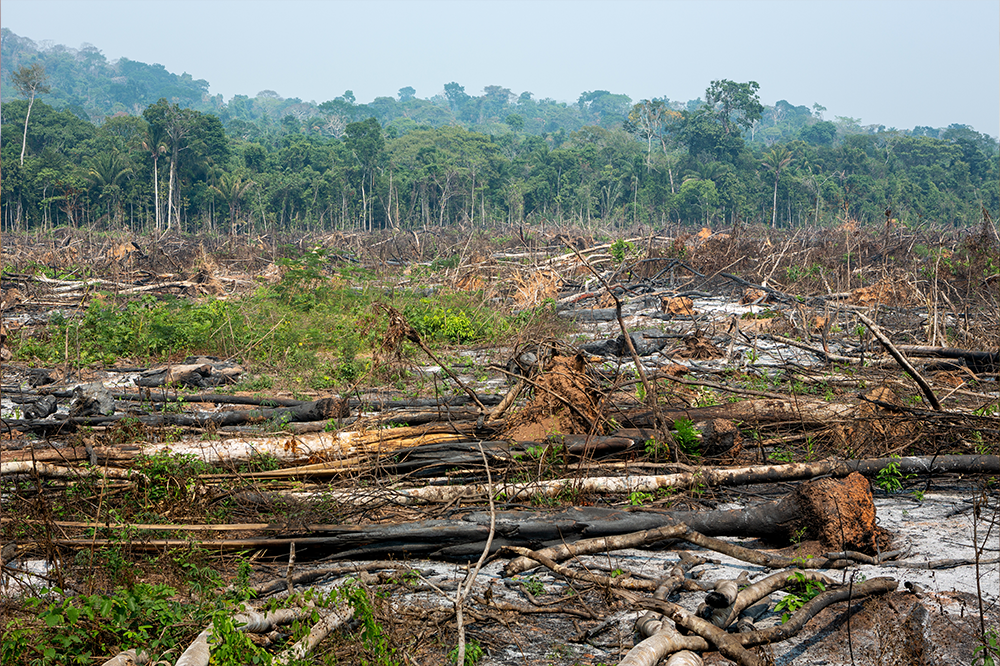
With the talks taking place in Brazil there has been a lot of attention on beef, and also deforestation. However, it’s the decisions in Brussels rather than Belém that have attracted headlines.
This is because there has been more chopping and changing to the EU Deforestation Regulation (EUDR). For a year now, governments have traded postponements, simplifications and exemptions, turning what was meant to be a landmark policy into a moving political target.
On Wednesday, member states agreed to a 12-month delay to EUDR, ostensibly so businesses can better prepare and the European Commission can make sure its software can cope with all the new data submissions (member states also want a simplification review to be carried out by April next year).
Negotiations on the EU Council’s proposals will now begin with the EU Parliament. The irony of the timing of this announcement was not lost on NGOs. As EU policy-makers flew to Belém, Brazil, to address the escalating climate crisis, they were internally discussing how to hollow out EU climate laws, scorned WWF’s Brussels-based team. “With this vote, the EUDR is very close to becoming a theoretical thinking exercise rather than a concrete step towards zero deforestation,” said Anke Schulmeister-Oldenhove, manager for forests at WWF European Policy Office.
Some businesses are not happy with the ways things are going, either. Nestlé, Danone, Mars Wrigley, Ferrero and Tony’s Chocolonely were among those who this week said further delays would “fatally compromise the EU’s reputation as a reliable partner
of producing countries in halting deforestation”.
In a letter to EU lawmakers, the coalition of companies, non-governmental and multi-stakeholder organisations in the food, cocoa, coffee, palm oil, rubber and timber sectors, warned that any further postponement “would be extending current legal and market uncertainty for the long run. This approach would inflict substantial sunk costs on companies which have made the necessary investments and on-the-ground engagement in preparation for the EUDR, and reward the laggards,” they added.
EUDR has already been delayed by 12 months. Another delayed (and perhaps forgotten) policy reared its head again this week as Footprintreported that the waste minister Mary Creagh, along with her circular economy taskforce, are “considering the potential benefits of a mandatory food waste reporting requirement for large food businesses”.
This is another regulation that ministers have flip-flopped on, causing frustration for food businesses. Indeed, a year has passed since a group of more than 30 businesses including Tesco, Nestlé, Compass Group and Bidfood signed an open letter to then Defra secretary of state Steve Reed calling for greater transparency over food waste in order to incentivise better behaviours and more efficient processes.
Food waste is also the subject of another of our stories this week, with new research on reducing leftovers at hotel buffets. Businesses have also been warned to be on the alert for a scam relating to the extended producer responsibility for packaging (pEPR) scheme, and we have more on that COP30 food audit.
- PackUK warns companies following pEPR fee scams. More.
- COP30 serves up more plants … and a little beef. More.
- Banners at the buffet fail to reduce food waste. More.