
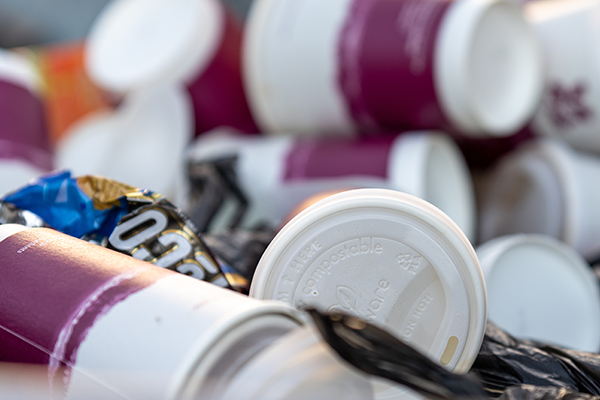
“We were at 6% recycling of cups and gaining momentum, but the pandemic took the wind out of our sails,” explains Hannah Osman, national cup recycling manager at Valpak.
Amidst the climate crisis and dire state of the natural world, recycling more single-use cups might not appear in the top 10, or even top 100, items on the ‘we need to do something about all this’ list.
And yet, for the foodservice sector this is an issue that continues to cast a shadow on some impressive (and often under-reported) efforts in other areas such as dietary shifts, regenerative agriculture and ESG disclosures.
Disposable cups are dirty and seen every day. Of the 3.2 billion of these cups placed on the market in 2019 (the latest full analysis available, conducted by Wrap and Valpak), just 2.8% were thought to be recycled. Industry figures suggest the rate could be double that but that’s still potentially 33,300 tonnes of valuable material (fibre) that ends up burned (in incinerators) or buried (in landfill).
Voluntary industry action, which has resulted in 6,300 collection points being installed across the UK, has not had the impact many hoped. So, can a mandatory takeback scheme make a difference, and what is needed to make it a success?
This is the principal question posed in a new Footprint Intelligence report published this week, in association with Valpak by Reconomy. We look at the practicalities of recycling paper cups – from the materials used and collecting clean streams of them, to consumer engagement in recycling and how new policies can improve recycling rates.
The report details how there has been a “real shift in demand” for used cups (paper lined with plastic) in the recycling sector, but contamination remains a headache. In particular, there are concerns about the interest in cups made with ‘plastic-free’ liners, which impact processing and the final recycled products.
One of the chapters is dedicated to preparing for policy interventions, including a possible mandatory takeback scheme for cups. This was originally going to come under extended producer responsibility regulations for packaging (pEPR) but has since been delayed. The new Labour government is looking to pick up the pace on a variety of policies that have been pushed back but, as the Conservatives also discovered, criticism from industry lobbying groups regarding the costs, timelines and practicalities of these regulations is constant.
The message in the new report is: done well, regulation can work wonders. A mandatory takeback scheme is “only appropriate for certain materials and cups are one of them,” says Louisa Goodfellow, policy manager at compliance scheme Ecosurety. “It should provide certainty and a clean stream of cups.”
Industry support for such a scheme is strong. However, there is continued confusion about pEPR fees and the costs foodservice businesses face in setting up a mandatory takeback scheme. There will need to be widespread consumer engagement via a national marketing campaign to bust some of the myths about cup recycling and to communicate the locations for thousands of recycling points that will take cups. Success could see recycling rates climb towards 40%, according to government impact assessments, but the benefits could also drive reuse, experts told us.
Indeed, the report highlights how the schemes aimed at recycling, like mandatory takeback, must work alongside reuse rather than against it. They can even complement one another. The behaviour of returning a paper cup could tune people in to the value in their waste and their responsibility to put it in the right bin, sustainability experts believe, but it could also make many think that a model like this can be equally convenient with reusable cups.
Covered elsewhere in this week’s Footprint news are claims that ‘plastic free’ paper packaging is disrupting recycling processes; details of a new refill system for spirits that claims to cut carbon emissions in half; and a call from Wrap for foodservice businesses to prioritise food waste prevention ahead of “the most wasteful” month of December.