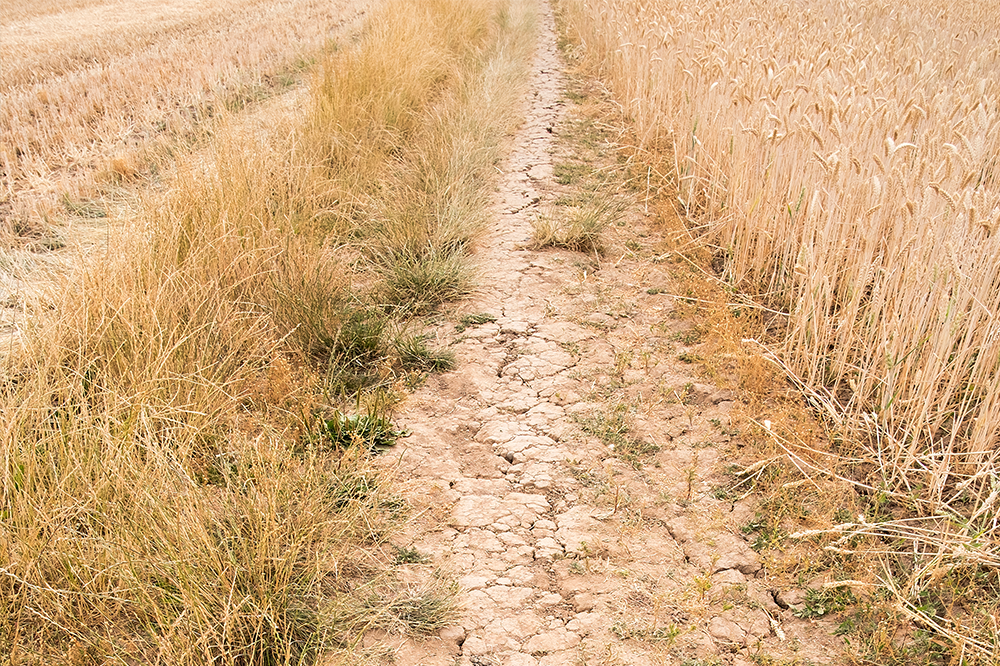
Extreme weather so far in the 2020s has played a “major role” in creating a total deficit in wheat production of over seven million tonnes, according to the Energy and Climate Intelligence Unit, a think tank. This is enough wheat to bake over four billion loaves of bread.
ECIU’s analysis came in the same week that Defra data confirmed that England has had its second worst harvest.
The wheat harvest increased 4.9%, but largely due to an 8.8% increase in area. Spring barley fell 14% year on year, with oat production down 2.3% despite an increase in area of 9.4% Oilseed rape bucked the trend, with yields up 29%. However, most major cereal crops recorded lower yields than last year.
Following the warmest spring and summer (and the dirtiest spring in over 100 years) these figures are even worse than expected, explained ECIU analyst Tom Lancaster.
“We have now seen three of the five worst harvests on record this decade after extreme weather, telling a story of escalating climate impacts that farmers are unable to cope with. This is what farming with climate change looks like,” he added.
Pressure is growing on the government and businesses to support farmers to adapt to these extremes and build their resilience by investing in healthier soils and more climate and nature-friendly farming.
Many food companies are investing in regenerative approaches to agriculture, for example, but trials and initiatives remain small-scale currently.
Businesses have been looking at novel ways to fund regenerative agriculture within their supply chains. Figures cited in the Food Future Movement’s August update on the topic showed use of proceed bonds, which fund projects with dedicated environmental and/or social benefits, that mention regenerative agriculture jumped from $1.4bn in 2023 to $4.1bn last year.
However, global agri-food systems are estimated to require annual investments of $1.1trn over the next five years to transition to more sustainable and resilient food production models.
NFU president Tom Bradshaw this week said producing food is “becoming harder due to the current geopolitical tensions and vulnerability of global food supply chains, alongside an unpredictable climate and extreme weather. Confidence remains low, with deep uncertainty due to price volatility, the future of environmental schemes and changes to inheritance tax,” he explained.
Reacting to the EAT-Lancet 2.0 report findings, reported in this week’s Footprint Friday Digest, Bradshaw added: “We need the government to back British farming and, as the EAT-Lancet report lays out, demonstrate greater cross-departmental collaboration to deliver coordinated policies that will help build resilience, profitability and productivity in the farming sector and allow farmers to invest.”