The risk to health associated with eating nitrite-cured meats is starting to gain traction with the public. Foodservice businesses have an opportunity to take a leadership position on an issue of concern. By Nick Hughes.
What are nitrites are why are talking about them now?
Nitrites are additives used in the production of certain processed meat products – meat that has been preserved by smoking, curing, salting or adding preservatives.
In the UK, nitrites are most commonly added to ham and bacon as ‘sodium nitrite’ to preserve the reddish/pink colour as well as to produce a ‘cured’ flavour and to extend the shelf life. They are also used to give continental sausages like Frankfurters their distinctive red colour, although traditional British sausages do not contain nitrites.
Nitrites are also used to combat the growth of harmful microorganisms, in particular clostridium botulinum, which can cause the life-threatening illness botulism.
Nitrites are not to be confused with nitrates despite being similar in their make-up and function. Both are chemicals that occur naturally, typically in low concentrations, in soils, water and plants, especially leafy vegetables. Nitrite is the active curing ingredient responsible for the preservation of the food in combination with other ingredients, like salt. When added to food, nitrate converts to nitrite before it exerts its preservative function.
It is nitrites specifically that have come under growing scrutiny for their link to an increased risk of developing certain cancers – particularly colorectal (bowel) cancer. Earlier this year, a new Coalition Against Nitrites formed to lobby governments to ban the use of nitrites as a processing aid. The group includes three former World Health Organisation (WHO) experts, world-renowned nutrition expert Professor Walter Willett from Harvard University, and Professor Chris Elliott from Queen’s University Belfast who led the UK Government’s review into the 2013 horsemeat scandal. It also includes politicians spanning eight political parties.
Although nitrites themselves are not harmful, when they are ingested during the consumption of processed meat products they are linked to the formation of nitrosamines in the stomach – compounds associated with the development of bowel cancer. As such, their use as a processing aid should be banned, according to the Coalition Against Nitrites.
The Food Standards Agency (FSA) disagrees, noting how nitrites have undergone a rigorous safety assessment prior to being authorised and pointing to their function in limiting the growth of bacteria that cause botulism.
What does the science say?
The science is clear that eating too much processed meat is bad for health.
In 2015, the WHO classified processed meats as a group 1 (scientifically proven) carcinogen, with a particular risk of causing bowel cancer. Since then, moderating processed meat consumption has become a key pillar of dietary advice from international health authorities.
The UK government advises that adults who regularly consume more than 90g per day of red and processed meat reduce their consumption to no more than the population average of 70g per day.
Most people stick to this advice. The latest UK national diet and nutrition survey data for 2019 to 2023 showed average consumption of red and processed meat was below 70g per day in all age and sex groups. Men aged 19 to 64 years ate the most red and processed meat, on average 66g per day, with around a quarter (27%) eating more than 90g per day.
High levels of salt and saturated fat contribute to the health risks associated with high consumption of processed meats, however Professor Chris Elliott says the presence of nitrites is the single biggest risk factor.
There is growing evidence to support this claim. A 2022 study by the French Agency for Food, Environmental and Occupational Health & Safety confirmed a link between the risk of cancer and nitrites in processed meats and recommended limiting dietary exposure. More recently, a 2023 review by the European Food Safety Authority (EFSA) found levels of exposure to nitrite-causing nitrosamines are a health concern for people of all ages.
There is general agreement among health authorities and experts that a high level of exposure to nitrites is harmful to health. That’s why EU and UK legislation currently sets out the acceptable conditions of use, the foods in which nitrites may be used and maximum permitted levels.
There is, however, ongoing debate over the risk from lower-level exposure and whether nitrites are needed in the first place to maintain food safety.
The FSA continues to view nitrites as important preservatives. James Cooper, deputy director of food policy at the FSA, says there is “strong scientific evidence that they hinder the growth of harmful organisms, in particular the bacteria responsible for botulism which can be life-threatening”.
Cooper adds: “They are one of the ways manufacturers can choose to protect against growth of these harmful organisms. Other methods include using salt, other food additives or a shorter use-by date, or a combination of factors, depending on the product.”
Elliott, however, points to a 2019 report commissioned by the British Meat Processors Association (BMPA) and reported by The Observer newspaper which found no evidence that nitrites provide extra protection against botulism. Researchers tested both nitrite-free and nitrite-cured samples of bacon and ham and found no significant growth of the toxin clostridium botulinum in either.
The BMPA, for its part, has cautioned against using the report’s findings as conclusive evidence that nitrites are not needed to guard against the risk of botulism and the development of other harmful bacteria. “The study was of a small sample of tests that were carried out in a laboratory. It was not a representative sample that you would base a scientific decision on,” says David Lindars, technical operations director at the BMPA. He also notes the study was not peer-reviewed.
How much ham and bacon do we eat?
Bacon and ham remain a staple part of the British diet although long-term consumption is in decline. The average UK consumer purchased 59g of uncooked ham or bacon per week to take home in 2023, according to the latest Defra Family Food Survey, down from 116g in 1974 and 70g in 2004.
Market data from the Agriculture and Horticulture Development Board (AHDB) shows a similar downward trend with bacon present in 1.4 billion in-home occasions in 2024, down 5.4% year-on-year. Ham consumption is also in decline, falling 7.6% year-on-year, although it still accounted for 91% of the 2 million consumption occasions for sliced cooked meat over the past year, according to AHDB.
Falling demand is partly driven by growing concerns over health. Over half (55%) of consumers surveyed by AHDB agreed that bacon should be eaten in moderation with 48% voicing specific concerns around bacon being fatty.
Ham, meanwhile, has suffered from a decrease in sandwich occasions as consumers widen their repertoire of lunchtime options. Despite this, sandwiches still make up 73% of all ham occasions, with the remaining 27% accounted for by main meals where ham is paired with foods like eggs and vegetables, as well as in pasta dishes, omelettes and salads.
Although most ham and bacon is purchased for consumption at home, a recent report by The Food Foundation found a significant amount (36%) of the processed meat eaten in the UK is eaten in out of home venues like restaurants, fast food outlets, cafes and caterers.
Ham is the most commonly eaten meat in the workplace and in schools, according to the report, while bacon features in the top five types of meat consumed in casual dining, leisure settings and workplaces.
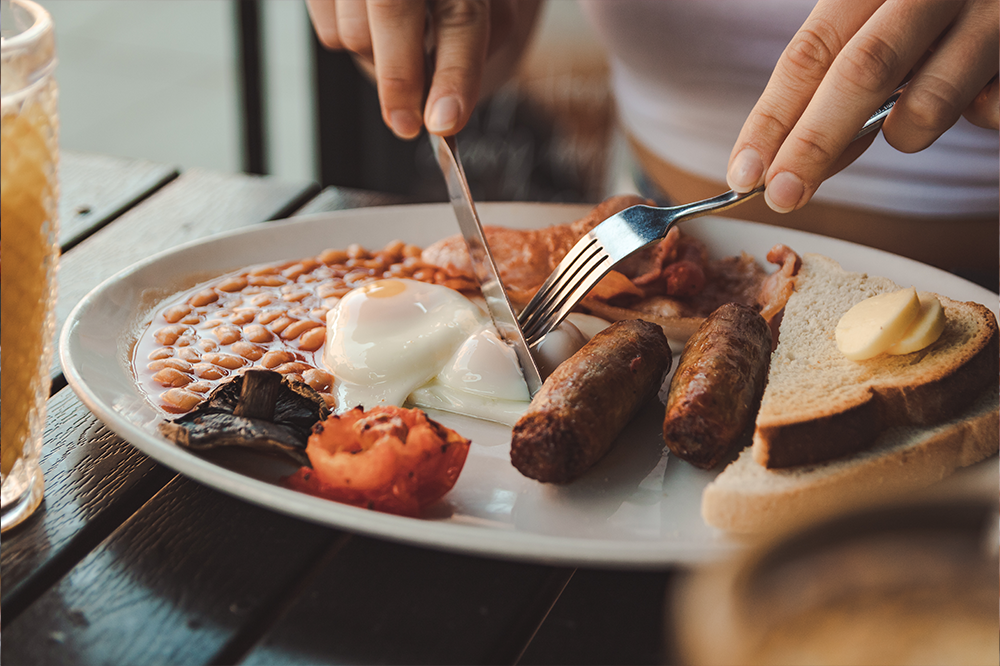
Breakfast time is a key consumption occasion for bacon, especially within the foodservice sector where it is commonly served as part of a traditional English breakfast or in sandwiches, rolls and baguettes.
Although nitrite-free ham and bacon products have been around for almost a decade now, cured meats containing nitrites still dominate the market both in retail and foodservice. Exact figures are hard to come by, however estimates suggest around 90% of the ham and bacon sold in Britain is still thought to contain nitrites. The French market, by contrast, is now estimated to be around 50% nitrite-free thanks to greater public awareness of the health risks of overconsumption of nitrites and sustained efforts by brands to build a market for alternatives (the UK market is still heavily dominated by private label products).
Wiltshire ham is the product with the highest concentrations of nitrites, according to recent analysis commissioned by the Coalition Against Nitrites. Of 21 UK retail products tested in a laboratory – including Wiltshire ham, cooked ham and unsmoked bacon – all were found to contain nitrites, albeit well below the 150mg/kg legal limit.
Retailers like M&S and Waitrose, along with the Naked brand produced by Northern Ireland-based manufacturer Finnebrogue, have led the market in offering customers nitrite-free options for bacon and ham, while the foodservice sector has generally lagged behind in offering alternatives.
How are regulators responding to concerns?
The Coalition Against Nitrites has seized upon a recent tightening of EU rules to push its case for stronger action on nitrites. From October 2025, maximum permissible levels of nitrites added during the manufacturing of meat products were reduced by almost half.
This stops short of the full ban the coalition is calling for; Elliott however describes it as a “very positive step forward” and suggests there is a groundswell of political support within the EU for an outright ban.
The changes have come in response to the 2023 EFSA review which found levels of exposure to nitrite-causing nitrosamines are a health concern for people of all ages.
Effective from October 9th 2025, the EU lowered the maximum permissible levels of nitrites (E 249–250) added during the manufacturing of meat products:
- General meat products were reduced from 150 mg/kg to 80 mg/kg
- Sterilised meat products were reduced from 100 mg/kg to 55 mg/kg
- Traditionally cured meats now have specific limits set between 100–105 mg/kg, depending on the product.
The EU has also introduced maximum residual levels —the amount of nitrites remaining in the final product— ranging from 25 to 50 mg/kg for various categories.
Food businesses supplying the EU will be expected to review and potentially reformulate their products to comply with the new additive limits. They will also need to monitor residual levels of nitrites throughout the product’s shelf-life.
The EU says the regulatory changes aim to balance the preservation benefits of nitrites with the need to minimise health risks associated with their consumption.
The UK has yet to follow the EU’s lead with Cooper at the FSA noting only that “the safety of food additives is kept under review”. However, experts interviewed for this whitepaper point out that market dynamics will mean EU limits effectively become UK limits once they come into force. That’s because UK producers supplying the EU market will be required to comply with the new limits
Additionally, the move towards harmonisation of UK and EU agri-food standards, as outlined in May’s Common Understanding document, will require the UK to fall into line with the EU’s position once the agreement has been ratified.
The food industry is already seeking to get on the front foot. The Grocer reported in May that British ham and bacon producers plan to voluntarily cut the use of nitrites to fall in line with the new EU rules.
What do consumers think about nitrites?
Anyone believing the use of nitrites is a niche concern for the British public should think again. Footprint commissioned market intelligence platform Vypr to survey 1,000 UK adults about their understanding of and attitudes towards the use of nitrites in processed meat products.
More than half (54%) say they have heard of nitrites in relation to ham or bacon, a level of awareness that may be linked to growing coverage of the issue in the mainstream media.
A significant proportion – 40% – say they are concerned about their use with 35% not concerned and 25% neutral.
Notably, there is strong support for the UK government to follow the lead of the EU and reduce the legal limits of nitrites: 57% say they are in support of this happening versus just 11% who are against.
There is significant support too for even stronger action with 40% believing the use of nitrites should be banned altogether in processed meat products.
Almost of quarter of UK adults say they have purposely bought nitrite-free ham or bacon products, suggesting that market penetration is growing.
There is evidence too of demand for more nitrite-free alternatives going forward. A majority – 58% – would like to see more shops and restaurants offer nitrite-free options, while almost a third say they would be willing to pay more for nitrite-free ham and bacon.
What are the alternatives to nitrites?
Manufacturers working alongside their ingredient suppliers are stepping up their focus on producing nitrite-free ham and bacon.
Innovation often centres on finding ways to use the antioxidant properties of natural ingredients like fruit and vegetables to replicate the functions of nitrites.
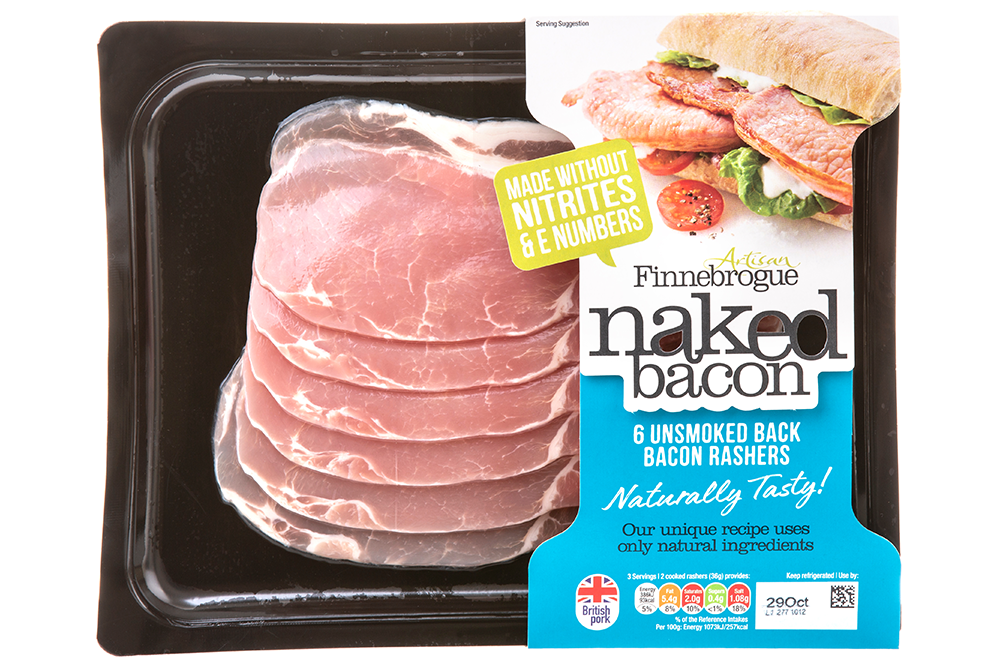
The Northern Irish food manufacturer Finnebrogue has carved out a leading market position with its Naked branded ham and bacon, prominently labelled as ‘made without nitrites’ on retail packs.
The recipe used by Finnebrogue has been developed by Spanish-based ingredient supplier Prosur and uses fruit and spice extracts to maintain a pink appearance and natural flavour.
In the UK, manufacturers that currently supply nitrite-free products for sale under retailers’ own brands are exploring the opportunity to increase production capacity to meet future demand.
That demand continues to grow and Elliott expects the domestic meat sector to respond to the market shift by reducing its reliance on nitrites over time. “What we now know is the major meat processors in the UK all produce some variant of nitrite-free bacon,” he says.
There is broad agreement among manufacturers that alternative ingredients cannot entirely replicate the functions of nitrites in areas like flavour, shelf life and cost.
Nitrites contribute to the development of the unique flavour of cured meats by binding to sulphur-containing amino acids in meat proteins. As a result, nitrite-free alternatives carry a subtly different flavour, particularly in cured ham products like Wiltshire ham.
There is also a small difference in shelf life. Nitrites work as a preservative alongside product packaging and temperature control to give processed meat products an average shelf life of 30-35 days compared with around 25 days for nitrite-free alternatives.
Cost is another consideration for those businesses looking to develop and sell nitrite-free products. Alternatives to nitrites come at a small additional cost, although this only represents a modest premium on nitrite-cured ham and bacon when considered as part of the total product cost.
Lindars at the BMPA is keen to stress that demand for nitrite-free alternatives has been and will continue to be driven by customers rather than manufacturers, most notably the major retailers who sell ham and bacon predominantly under their private label brands and therefore own the specifications and recipes. “It is down to the retailer to make those decisions on how they want their products manufactured, it is not down to the processor,” says Lindars.
Although the market has not yet shifted at scale towards nitrite-free alternatives, there are potential parallels to be drawn with the food industry’s response to the issue of antibiotic use in meat supply chains. As evidence mounted over the link between antibiotic overuse in farm animals and the spread of drug-resistant infections, the leading UK supermarkets moved as one to set stricter sourcing policies which effectively prevent their own-brand suppliers from using antibiotics for routine disease prevention.
Growing awareness of the health risks associated with nitrites could be the catalyst for a similar market transformation. “We’re doing quite a lot of lobbying with some of the main retailers with the hope that one or more will actually go nitrite-free over the next couple of years,” says Elliott. “People are looking at what is the commercial advantage of this.”
Where do foodservice businesses stand on the issue?
Historically, the hospitality and foodservice sector has followed retailers’ lead in responding to issues of public health concern rather than seized the initiative itself. On antibiotics, for example, a report published in October 2023 by the Alliance to Save Our Antibiotics found that none of the 10 leading UK catering companies had by that stage prohibited the routine use of antibiotics or collected any data on antibiotic use in their supply chains (most large retailers had banned routine usage by 2021).
A similar pattern appears to be emerging on the question of nitrites. Footprint asked six of the largest catering companies operating in the UK foodservice sector about their sourcing of nitrite-free ham and bacon. None of those that responded were able to provide data on what percentage, if any, of their ham and bacon is currently nitrite-free, while several confirmed that nitrite-free meat is not currently specified in any contracts.
Those that did respond noted that nitrite levels in their products fall within the limits stipulated by UK regulators and said they continue to monitor ongoing discussions within the scientific and regulatory communities concerning nitrites.
There is some precedent for a leading foodservice business to offer nitrite-free meat. In 2020, the healthy fast food chain Leon announced a partnership with Finnebrogue to sell nitrite-free bacon across its entire UK estate.
Leon, however, remains a mainstream outlier and Elliott describes the foodservice sector generally as “keeping its head down” over the issue of nitrites.
There are signs this position may not be sustainable for long. In August, the Coalition Against Nitrites turned the spotlight on public sector food in its latest round of campaigning. A survey, reported by The Times, found that the majority of state-run schools are routinely serving up nitrite-cured meats like ham and bacon at mealtimes. Information requests submitted to 173 local authorities in England and Wales found that 68% of councils are serving processed meats containing nitrites while only 16% have stopped using them, with the remainder unable to provide clear information about their use.
A subsequent survey, this time of hospitals and reported by The Express, found that 86% of NHS Trusts that responded were still serving nitrite-cured meats.
FIVE KEY TAKEAWAYS
1. An emerging issue of concern. Awareness of the use of nitrites in most ham and bacon products and the potential risk to health is only now starting to gain traction within the mainstream media. History tells us that once health issues begin to register on the public’s radar they invariably stay there.
2. Regulation shapes markets. Moves at an EU level to restrict the levels at which nitrites can be applied to meat products bring legitimacy to concerns raised by campaigners, even though these measures stop short of an outright ban. Regulatory shifts are already acting as a market signal to processors to push ahead with developing alternative solutions.
3. Balancing supply and demand. Investing in the infrastructure needed to produce nitrite-free products will come at significant cost. Manufacturers will need to be certain there is reliable demand for nitrite-free ham and bacon from both customers and consumers before shifting production at scale.
4. An opportunity not a threat. Rather than view growing scrutiny of nitrites as a threat to business as usual, foodservice businesses have an opportunity to show they are proactively responding to people’s health concerns while offering a point of difference in a competitive marketplace.
5. Schools can lead the way. There are particular opportunities to adopt a leadership position for those businesses catering for institutions, like schools and hospitals, where concerns over diet are high and there is already an established market for healthier alternatives like reduced-salt ham and bacon.