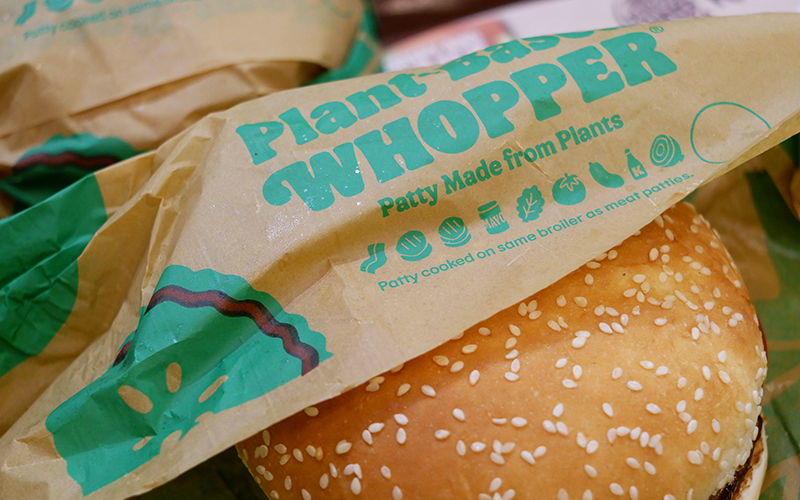
A Burger King in Copenhagen recently went fully plant-based for a month. It was a brave move, but do foodservice brands need to be so bold when trying to encourage more plant-based consumption?
Not according to research by Christina Gravert, associate professor of economics at the University of Copenhagen and the cofounder of Impactually, a behavioural science consultancy. Writing for Behavioural Scientist, she argues that going all out plant-based can lose you customers and produce a backlash in the press (think schools introducing meat-free on Mondays or universities going plant-based).
Instead, caterers and restaurants should tweak their menus in order to nudge customers towards plant-based options. “Rather than limiting choice, I suggest that restaurants expand their plant-based selection and complement this expansion with changes to the choice architecture to encourage more sustainable food choices, without any bans,” she writes.
Wagamama offers a “clever example” of this approach by including all its plant-based dishes in the regular menu alongside meat-containing dishes, as well as having a separate vegan menu section, Gravert explains. Swedish burger chain, Max Burgers, is also spotlighted for its ‘nudges’ to help reach its goal of selling a plant-based burger for every meat one sold. The chain has been putting greenhouse gas emissions on its menus for 15 years.
One study, led by Gravert and involving a restaurant in Sweden, showed how today’s menus often nudge people to the meat options. Just 2% of customers ordered vegetarian at the restaurant when meat was listed at the top of the menu and vegetarian at the bottom. When they flipped that on its head, 20% bought vegetarian dishes.
“Placing a dish at the top of the menu turns the dish into the default choice to which other choices are compared,” Gravert explains. “Most people read a menu from top to bottom and might stop as soon as they see something they like – especially when, as in our case, they are out for a quick business lunch and would rather focus on their companions than on studying the menu. Listing the meat as an alternative at the bottom of the menu also creates a small hassle cost of needing to ask the waiter for details.” What’s more, she adds, some people might also understand the dish at the top to be a recommendation by the kitchen.
Burger King has trialled this default plant-based approach in Austria. “Do people already want to eat more vegetarian but the current menu designs, canteen options, and defaults nudge them to eat more meat?” Gravert wonders.