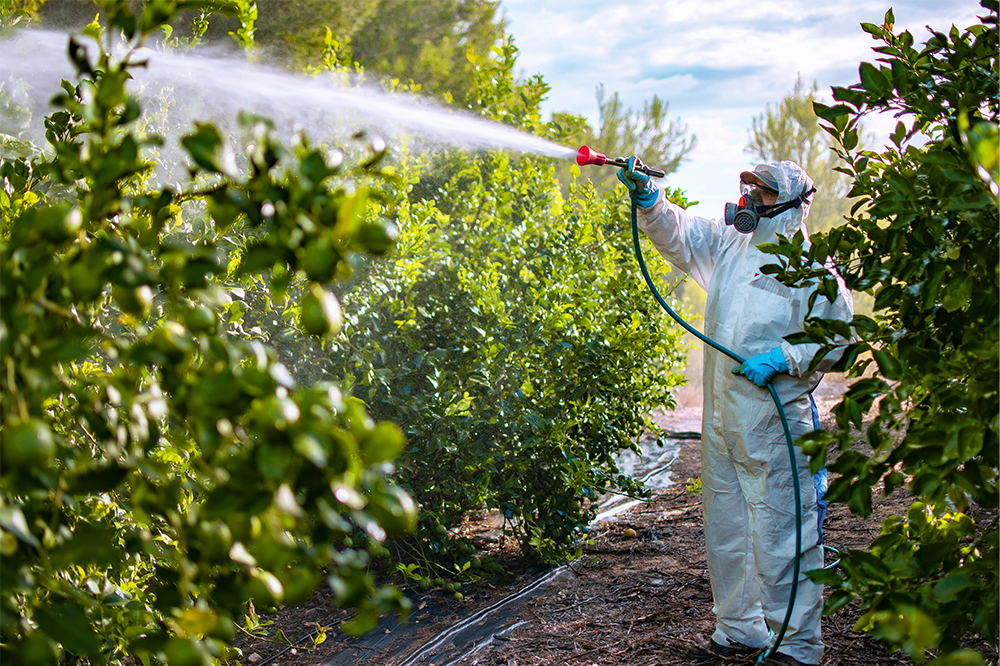
Exports of toxic pesticides that are banned in the EU have increased dramatically in recent years, according to a new Public Eye and Unearthed investigation.
In 2024, European companies notified plans to export pesticides containing 75 different chemicals that are prohibited for use within the EU – almost double the number from 2018, the first year with full data available.
The total volume of these toxic exports reached 122,000 tonnes last year, a 50% increase over the same period. Over half the exports were shipped to low- and middle-income countries such as Brazil, Vietnam, Morocco, and Ecuador, where safety standards are often weaker and the risks of pesticide exposure are highest.
Sending banned pesticides to Africa, or to any low-income countries, is “only possible if you see the people that use these pesticides as inferior and therefore you do not have to care for their health,” Kara Mackay, campaigns coordinator for the South African grassroots group Women on Farms Project (WFP), told Unearthedand Public Eye. “The practice puts profit before people and we in South Africa are demanding a change. We are sick of it and literally sick from it.”
But it isn’t only vulnerable communities and ecosystems overseas that are exposed by these exports, explained Natacha Cingotti from Foodwatch International, a Brussels-based NGO. “Through imported foods, the exported pesticides also return to our plates in Europe like a toxic boomerang,” she explained.
Indeed, nearly one in ten food samples in Europe contains residues of pesticides that are no longer authorised for use here, according to Foodwatch analysis of the EU’s most recent pesticide monitoring data from the European Food Safety Authority (EFSA). Some of the substances are classified as highly hazardous because of their carcinogenic properties or toxicity for reproduction.
A European Commission spokesperson told Unearthed and Public Eye that Brussels “shares the concerns regarding the exports to third countries of EU-banned pesticides” and stressed that it is “committed to addressing this important issue.”