The prime minister took the fight to Reform at Labour’s conference in Liverpool but is a growth-at-all-costs agenda compatible with food systems change? By Nick Hughes.
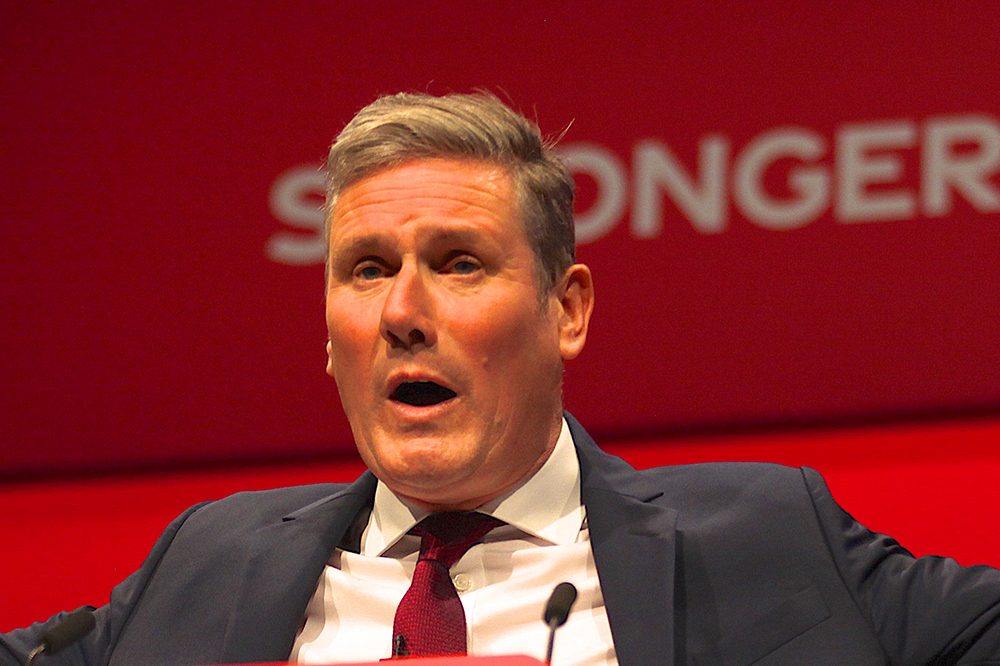
When Sir Keir Starmer took to the stage in Liverpool last week the stakes were high – higher than they should have been for a prime minister a little over a year into a five-year term sitting on a huge majority.
With Reform setting the political weather and under growing pressure from within his own party, Starmer came out swinging with a speech that positioned the country at a crossroads between two futures: one of national renewal versus decline, tolerance versus division, a party that brings people together versus one that feeds off grievance.
He didn’t articulate it in a speech that barely mentioned the environment, but that choice is also between a government committed to tackling the climate crisis and a party, in Reform, that walks the line between straightforward denial and hostility towards net-zero.
Although Starmer’s tone was more combative and his rhetoric punchier than at any point in his premiership, he was clear that Labour’s ‘north star’ remains the same – boosting economic growth and tackling the cost of living crisis. Yet there was little of substance on the economy during his speech and nothing to dry the sweaty palms of business leaders ahead of a budget where further tax rises appear inevitable.
And what of food?
It is perhaps wishful thinking to expect food policy to feature prominently in a prime ministerial keynote, yet it was notable how Starmer’s speech was littered with incidental references to food and food culture. During a riff on the need to put money in people’s pockets, Starmer talked about the joy people feel in “eating out”. He spoke about chatting with shipbuilders in the work “canteen” and shared a “cuppa and a biscuit” with a lady who had strong views on immigration. As Food Ethics Council executive director Dan Crossley highlighted in a social media post, these casual references spoke to “the central role of food in so many aspects of our lives”.
Systems thinking
They also served as a useful symbol for how this Labour government views food policy. There’s a clear sense that food systems thinking is slowly starting to permeate through Whitehall, yet it still exists largely in the hinterland rather than the power bases of Number 10 and the Treasury.
Take the recently published food strategy for England – the ‘Good Food Cycle’ – billed as a framework to transform Britain’s food system. As I’ve written previously, the diagnosis of the problems facing the food system is astute as is the recognition that to deliver a more coordinated and coherent approach to food issues across government, the various limbs of the body politic need to be pulling in the same direction.
Yet very little has actually been delivered. The government may legitimately point to the extension of free school meals and funding for breakfast clubs in schools across England as tangible achievements. Some of its proposals around buying more sustainable public sector food and making food businesses report on the healthiness of their sales are positive too. But the devil as ever will be in the detail.
There are worrying signs that the timidity that has characterised Starmer’s government during its first year in office has already seeped into the food sphere. See, for example, the anger of health campaigners at what they see as a total dilution of rules banning advertising of unhealthy foods to the point that renders them almost meaningless. Sustain’s Fran Bernhardt says the number of loopholes contained in the legislation “essentially enables business as usual”.
What’s the plan?
An action plan for delivering the priority outcomes set out in the food strategy is due to be published in the spring, albeit it’s not yet clear what form this will take. That plan will tell us much about how committed the government really is to systemic change, especially where it requires tackling powerful vested interests.
If the Good Food Cycle is to be more than a neat slogan, the plan needs to anchor food systems change in a way that means piecemeal policies can’t be systemically unpicked by a future Reform government. That requires giving businesses confidence – through strong regulation, public investment and market incentives – that those growing, making and selling healthy, sustainable food in a responsible way will be advantaged in the long-term.
The food strategy aims to perform the tightrope act of supporting healthier and more affordable food, good growth, sustainable and resilient supply, and vibrant food cultures, all at the same time. Defra says the four cross-cutting outcomes are not a hierarchy and believes they can be mutually reinforcing, but it seems fanciful to believe there won’t be difficult trade-offs ahead.
It will surely have concerned those of an environmental or public health bent to hear Tessa Jones, agri-food chain director at Defra, tell an IGD-facilitated webinar last week that new secretary of state, Emma Reynolds, and minister, Dame Angela Eagle, have taken a particular interest in the growth aspects of the food strategy since their arrival in Defra.
Reynolds was parachuted in from the Treasury and her experience is in financial matters so it’s no surprise that she sees the world through an economic lens. Food can of course be a driver for growth and prosperity, not least when it keeps people healthier and more productive. But there is a risk that the dash for growth dominates ministerial thinking to the point where the fiendishly complex challenge of marrying short-term growth with long-term climate resilience and healthy food environments becomes just too difficult to contemplate for a government seeking the sugar-rush of quick wins.
Poultry paradox
This tension was writ large in two reports published in September by IGD, which has emerged as a leading industry voice in pushing for food systems change. One was a thoughtful framework for population diet change in which it clearly articulated how businesses could support a shift to healthier, more sustainable diets aligned with the Eatwell Guide.
The other was an altogether more puzzling document titled ‘Driving growth through a thriving food system’ in which IGD identified horticulture and….wait for it…..poultry as “promising areas for development, with potential for economic and social gains”. The two sectors “are vital for food security, public health, rural economies, and the environment, and yet their potential is constrained by fragmented policy, inconsistent local decisions, and weak long-term strategy,” stated the report.
You can certainly make a case for the economic importance of the poultry sector through job creation and commercial value. You can make a more tenuous case that poultry, as a good source of protein, is an important contributor to good nutrition (though no more so than other protein-rich foods). But vital for the environment? Really?
IGD’s assertion that poultry is aligned with sustainability goals seems to be predicated on the fact that chicken tends to perform better in carbon footprinting assessments versus red meat and therefore supports net-zero goals. But that feels an increasingly dated view as progressive businesses and other experts start to view environmental sustainability through a more holistic lens including issues, like local pollution and biodiversity loss, consistently associated with poultry production and supply chains.
These are the kind of tensions ministers and their officials will have to grapple with as they attempt to make good on the ambitions of the food strategy and deliver lasting food systems change. To do so will require the kind of political bravery that Starmer hinted at in Liverpool but could rapidly unravel on collision with the real world.