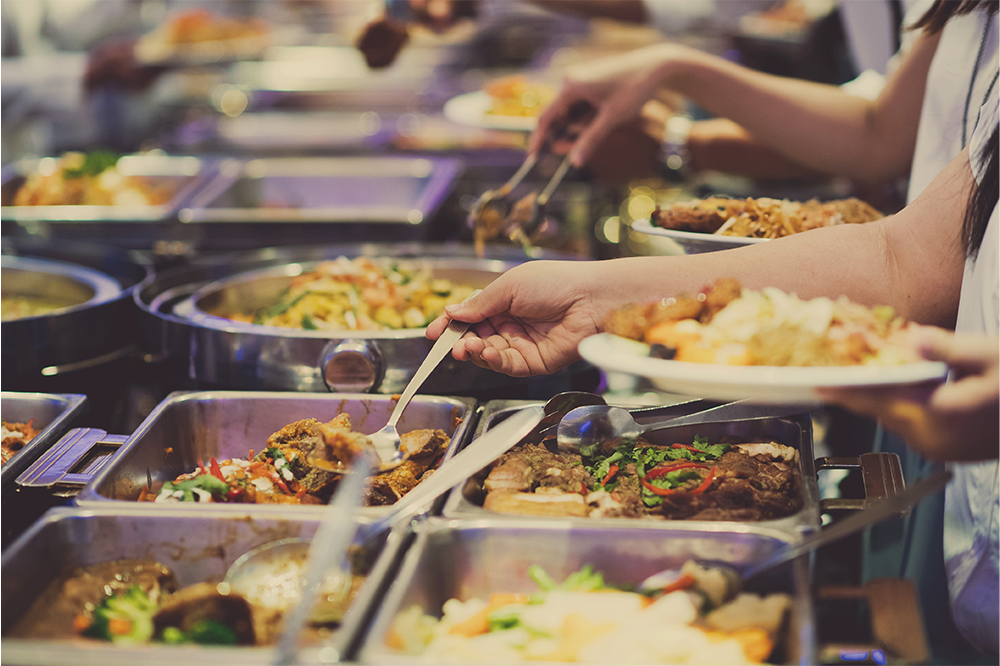
Last September, Footprint posed the question, ‘Are public diners ripe for a comeback?’ This week we had our answer. The UK Government will provide funding for two public restaurants to be piloted in Dundee and Nottingham from 2026 as part of a UK-wide project to tackle food inequality. The state-subsidised restaurants will focus on catering to the needs of deprived households with children and will serve nutritious, sustainably produced meals.
The restaurant pilot is one of six projects to receive funding from UK Research and Innovation (UKRI) designed to address concerns around accessibility and affordability of nutritious meals. Other projects include the trial of a mapping tool that will direct a mobile greengrocer to visit areas of Liverpool where social housing residents have poor access to food, and a project to improve the take-up and nutritional content of free school meals.
The concept of a public restaurant is not new. During the Second World War, the UK Government established a subsidised chain of British Restaurants serving price-capped, nutritious meals to people across the country. Some continued to operate as civic restaurants well into the 1970s.
A report published in October last year by the food charity Nourish Scotland made the case for the state to once again tap into the benefits of community dining by establishing a network of affordable restaurants serving healthy, tasty meals to the general public. It argued that state-owned dining infrastructure could support citizens to eat well, as well as offering a perfect training environment for future generations of cooks and chefs.
The government has answered its call and now Nourish Scotland will support the new, 3-year public restaurant project, which will be led by the Institute of Development Studies at the University of Sussex with funding of £1.5m. The work will include running two test sites – in Dundee and Nottingham – with the aim of understanding the operational aspects and the impact the restaurants can have on the city and wellbeing of people who live, work and study there.
The first year of the project will focus on co-development of the test sites following feedback from local people on their needs and preferences, ranging from locations and menus to opening hours. The research team will also look to recruit a caterer that is up to the challenge of running the restaurant. The tender is set to be announced later this year, with the actual test diners opening their doors for 12 months, starting in the summer of 2026.
Responding to the launch of the six projects, science and technology secretary Peter Kyle said it was vital that everyone has access to healthy food. “These projects will draw on the power of research to actively explore the best ways to get healthy food into the mouths of those who need it, potentially having a transformational effect on people’s lives, and fulfilling the missions set in our Plan for Change,” he added.
In 2023 to 2024, 7.5 million people were living in food insecure households every month, according to UKRI, an increase of 300,000 people from 2022 to 2023 and 2.5 million people from 2019 to 2020. Low-income and disabled groups are at a disproportionately higher risk of household food insecurity and its contribution to illness.
In a blog post, Nourish Scotland’s deputy director Anna Chworow wrote that public restaurants “provide the imaginative leap we need: from circular conversations about needing to teach people about good food to an actual change in the food environment that will allow all of us to eat well”.
Elsewhere in this week’s Footprint News: