New research used by Defra in its animal welfare strategy suggests farmers should not fear higher production costs. By David Burrows.
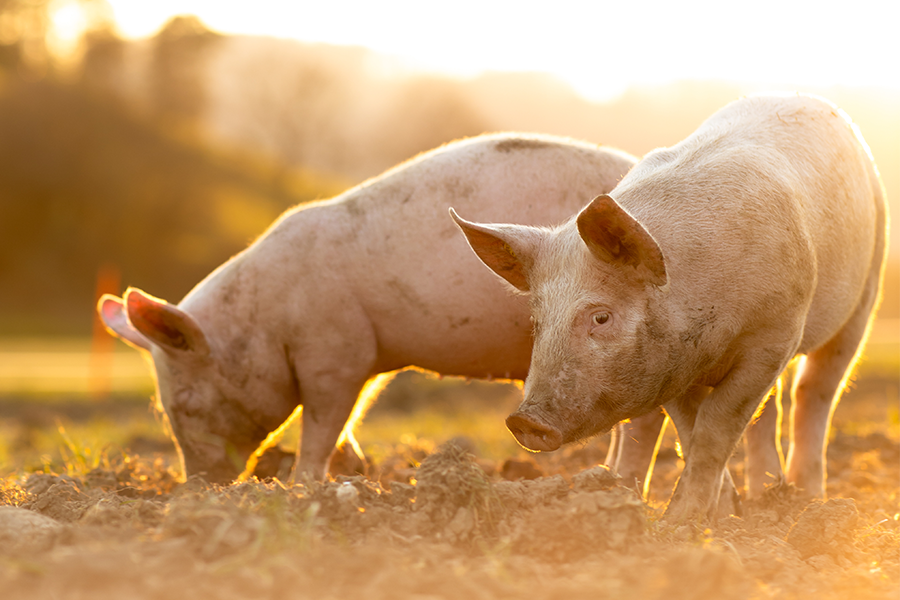
Higher welfare standards for British bacon and eggs could boost UK farmer incomes, as consumers are willing to pay more for food with labelled welfare scores, research has shown.
The proposals for higher animal welfare, laid out in the UK government’s new animal welfare strategy for England, published on December 22nd, have been welcomed as a step-change in farm animal welfare standards. The strategy, for example, identifies phasing out colony cages and farrowing crates as priority actions in farming.
But some farmers have expressed concern that more expensive, high-welfare UK produce could be undercut by lower-welfare, cheaper food imports.
Professor Richard Bennett from the University of Reading said his team’s research shows that consumers will pay more provided the link between higher prices and welfare standards is made clear.
“There is a clear public appetite for transparency, with eight in ten shoppers asking for welfare scores on food labels,” he explained. “Our evaluation tool provides a score out of 100 that could give clear, comparable evidence on the welfare standards of the animal-sourced foods we see on supermarket shelves.”
Bennett was commissioned by Defra to develop a standardised method for valuing animal welfare improvements in policy decisions. The animal welfare valuation tool was then used by the government to help inform its new strategy.
Within the tool, a zero score denotes extreme suffering of animals and 100 denotes the highest achievable welfare standard. Twelve welfare criteria were scored by an independent panel of 13 experts, including consideration of the mental states of animals and their whole life experience from birth to slaughter, with detailed reasoning behind their scoring.
Earlier research on endemic livestock diseases was also used to help show that animal diseases, often linked to lower welfare standards, cost British farmers more than £300m every year.
This higher welfare would incur additional production costs because animals would, for example, be better fed, have better housing and more space, better health and care, and more opportunities for normal social and other behaviours. These higher costs would result in more expensive meat, dairy, eggs and foods produced with these ingredients.
People’s willingness to pay for higher animal welfare was calculated from the results of an online choice experiment survey, from a representative sample of over 3,000 main household food shoppers in the UK.
For example, suppose a policy is likely to improve the welfare of broiler chickens from an assessed welfare score of 40 to a score of 45. The benefit of this policy in terms of willingness to pay is £22.14/household/year (yr). The total UK benefit is £628.8m/yr (£22.14 multiplied by 28.4 million households).
Currently, in the UK (to the nearest 10 point mark): laying hens have an average welfare score of 50/100; meat chickens 40/100; pigs 40/100; beef cattle 60/100; dairy cattle 40/100; and sheep and lambs 50/100.
The research shows that phasing out colony cages in egg production, as proposed in the welfare strategy, would increase caged laying hen welfare scores from 32 to 51 out of 100, a change for which UK shoppers would pay the equivalent of 20p more per egg, equal to £496m per year. Meanwhile, eliminating farrowing crates for indoor pig farming would raise welfare scores from 27 to 47, boosting the value of pork products to consumers by £1.4bn annually.
“Shoppers would pay more, but they need to be able to see the impact of their purchasing decisions on the welfare of animals,” said Bennett.
Sixty-six percent of respondents said concerns about animal welfare influenced their purchasing decisions. Most respondents agreed that food products from animals with high levels of welfare are healthier (68%), taste better (64%) or are better for the environment (73%).
Fifty-six percent agreed they feel well informed about how farm animals are treated, but 62% are concerned about the way farm animals in the UK are treated.
“We are committed to improving the lives of farm animals and to supporting farmers to produce food sustainably, profitably and to the high standards consumers expect,” said farming minister Dame Angela Eagle last week as she announced two consultations – one on phasing out cages for laying hens by 2032 and a second on updating the Sheep Welfare Code with the aim of minimising pain during lamb castration and tail docking.