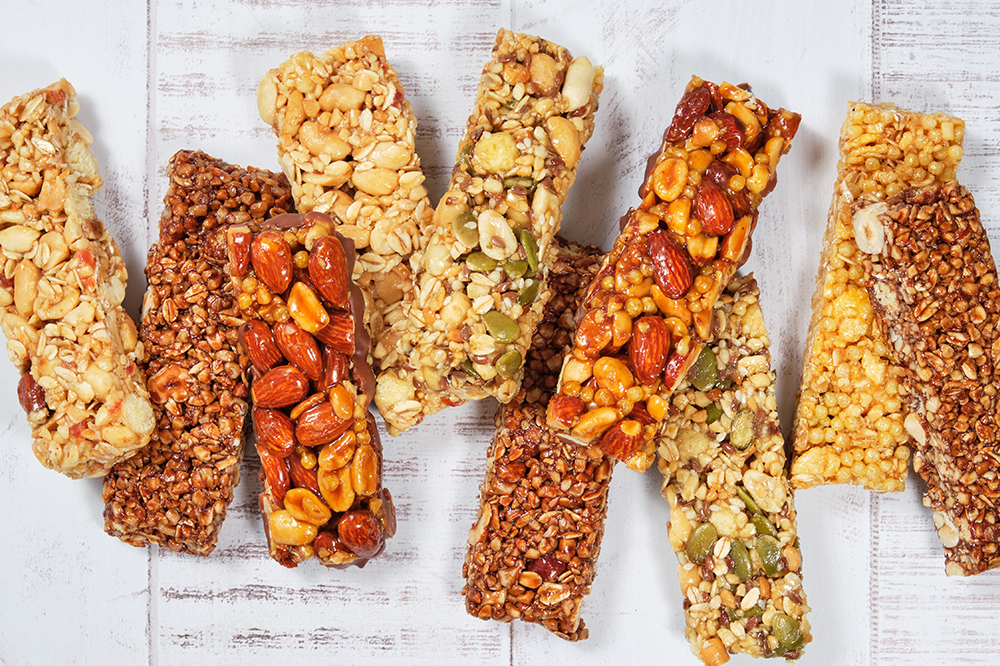
Snack bars masquerading as healthy options are hiding large amounts of sugar, according to new research.
Campaign group Action on Salt and Sugar surveyed 458 snack bars sold across 10 major retailers and found many carried health claims despite being classified as high in sugar or fat.
More than half (53%) of all bars carried a ‘protein’ claim, 18% a ‘high in fibre’ claim, and one-quarter were labelled ‘low sugar’ or ‘no added sugar’.
Among those boasting a ‘high-fibre’ claim, 31% were also high in sugar based on the UK’s voluntary traffic light labelling scheme. Action on Salt and Sugar said this illustrated how selective marketing can create a misleading “health halo”.
Overall, 37% of snack bars sold in supermarkets would be classified as high in sugar and 55% high in saturated fat.
Almost two thirds (64%) of products would be classed overall as ‘less healthy’ based on the UK Government’s nutrient profiling model, meaning they would not be allowed to be promoted in store or advertised on TV or online.
The charity said the results showed the UK’s current reliance on voluntary action, both in product reformulation and front-of-pack labelling, is not delivering meaningful public-health benefits.
Among a series of recommendations, it called for targeted levies to be introduced on salt and sugar in food to incentivise reformulation and shift purchasing towards healthier options.
Large food and drink companies should also be required to publish data on the healthiness of their sales and set clear, time-bound reduction targets; while front-of-pack nutrition labelling should be made mandatory.
“Consumers deserve honesty from food businesses,” said Nourhan Barakat, nutritionist at Action on Salt and Sugar. “Claims like ‘natural ingredients’, ‘high-fibre’, and ‘high-protein’ can be deceptive when products are still high in sugar and saturated fat. It’s unacceptable that an average bar provides nearly one-third of a child’s daily sugar limit.”