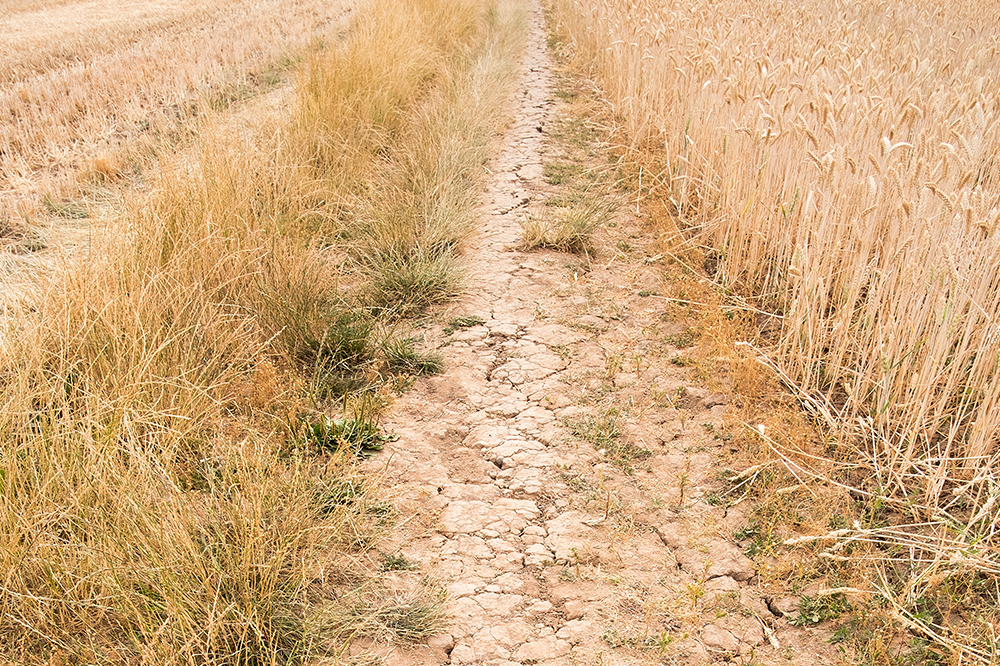
Drought conditions experienced across the UK this year are expected to cost arable farmers more than £800m in lost revenues.
Analysis by the Energy and Climate Intelligence Unit (ECIU) found that climate change continues to wreak havoc on UK agriculture with crop production hit by the hottest spring and summer on record as well as persistent drought conditions.
Arable farmers in the UK are facing a 20% reduction in revenues versus the ten-year average, worth £828m, following one of the worst harvests the UK has ever seen.
The analysis looked at wheat, spring and winter barley, oats and oilseed rape. Oilseed rape is forecast to be the worst impacted crop with total revenue down 38.4% on the 10-year average. Only milling oats (+21.5%) bucked the negative trend.
The poor harvest in 2025 has been compounded by low farmgate prices for these crops, which have come down from a peak in 2022. However, almost all of the shortfall in revenue estimated by ECIU is a function of lower production, with prices now close to the 10-year average.
“This has been another torrid year for many farmers in the UK, with the pendulum swinging from too wet, to too hot and dry,” said Tom Lancaster, land, food and farming analyst at the ECIU. “British farmers have once again been left counting the costs of climate change, with four fifths now concerned about their ability to make a living due to the fast changing climate.”
David Lord, an arable farmer from Essex, said recent years have seen near constant extreme rainfall, heat and drought. “As a crop farmer, it’s getting to the point with climate change where I can’t take the risk of investing in a new crop of wheat or barley because the return on that investment is just so uncertain.”