
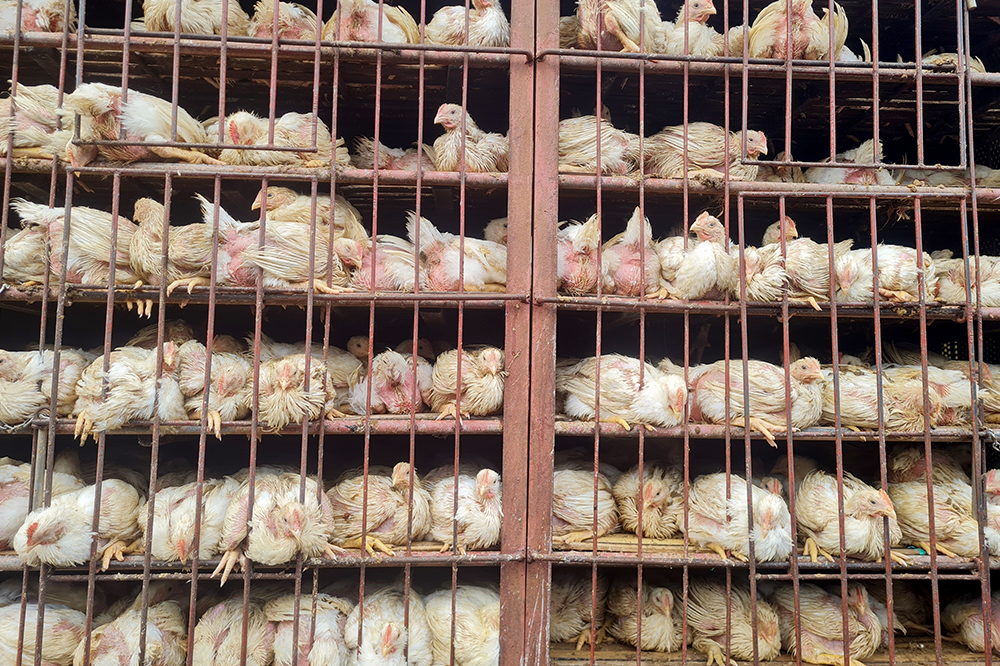
The UK Government’s commitment to move towards cage-free systems for all laying hens is being undermined by its import policies, according to the British Egg Industry Council.
Writing in the current issue of Poultry Business, BEIG chief executive Nick Allen explained: “Eggs laid by hens kept in barren battery cages have been banned in the UK since 2021, yet the government’s trade stratgey continues to allow them to be imported. This has led to millions of battery cage eggs entering the UK market every year, from countries such as Ukraine.”
Research by the council suggested a particular issue with foodservice, where country of origin and the production system are “often hidden from view. Our research shows consumers already feel mislead when imported egg products appear in foods such as quiches, sandwiches or mayonnaise,” Allen wrote.
The BEIC has raised the concerns following the launch of the government’s new animal welfare strategy, which includes a consultation on phasing out enriched colony cages for laying hens. Food production might simply be “exported overseas”, the council warned.
Compassion in World Farming has welcome the strategy’s proposals, which also include plans to promote slower growing broiler breeds.
In 2025, more than 30 leading European food companies urged the European Commission to end the use of cages in animal farming across Europe. Three statements signed by 18 companies – including Bompieri Group, Fumagalli Industria Alimentari, Coop UK, and Accor – were submitted to the European Commission on December 10th, each focused on a key species: hens, sows, and rabbits.
Sodexo, Lidl and Ferrero Group, who have already implemented cage-free supply chains for laying hens, were among 18 businesses to sign a joint letter in September calling for a ban on the use of cages in European legislation. Restrictions would “enable a level playing field amongst competitors as well as demonstrating European leadership in getting hens out of cages”, the companies said.
In November, nine investors representing $383bn in assets under management reinforced the call with a separate letter to the Commission.





Leave a Reply