Animal welfare remains high on the agenda as campaigners and corporates clash over labelling and transparency of industrial meat. By David Burrows.
Animal welfare campaigners met with MPs in the run-up to Christmas to highlight what they claim is “gross misrepresentation” of livestock by UK supermarkets.
Compassion in World Farming, Humane World for Animals UK and The Animal Law Foundation used the political briefing to call out the “misleading” language and imagery used by food retailers that give a “false impression” of the way in which many animals are farmed.
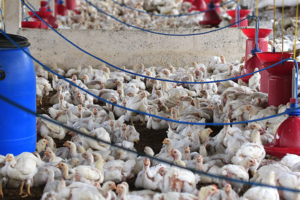
The 60 MPs who had gathered heard that the websites of all British supermarkets have pictures of animals roaming outside, yet “85% of UK farmed animals are being reared in intensive conditions”.
Claire Bass, senior director of campaigns and public affairs at Humane World for Animals UK, said consumers buying meat face “a minefield of misleading claims”.
There are laws to prevent such claims but these are “rarely enforced”, according to Edie Bowles, executive director at The Animal Law Foundation. Event sponsor, Sarah Dyke, Liberal Democrat MP for Glastonbury and Somerton, said the product labelling laws are “not fit for purpose”.
Dyke is backing the organisations in calling for mandatory method of production labelling to help balance what they feel is a “dishonest food supply chain and an unfair advantage being given to lower welfare farming systems”.
Chicken wins
The production of livestock was one of the hot topics in food sustainability last year. From the pollution reportedly caused by large poultry units and the role of ruminants in regenerative farming systems to the failure by foodservice companies to get anywhere near achieving the Better Chicken Commitment – animal welfare has rarely been out of the news.
There is little sign of things cooling down this year with the UK Government having last month unveiled its animal welfare strategy. Billed as the biggest animal welfare reforms in a generation, Defra noted how legislation, regulations and current practices have not kept pace with the latest evidence.
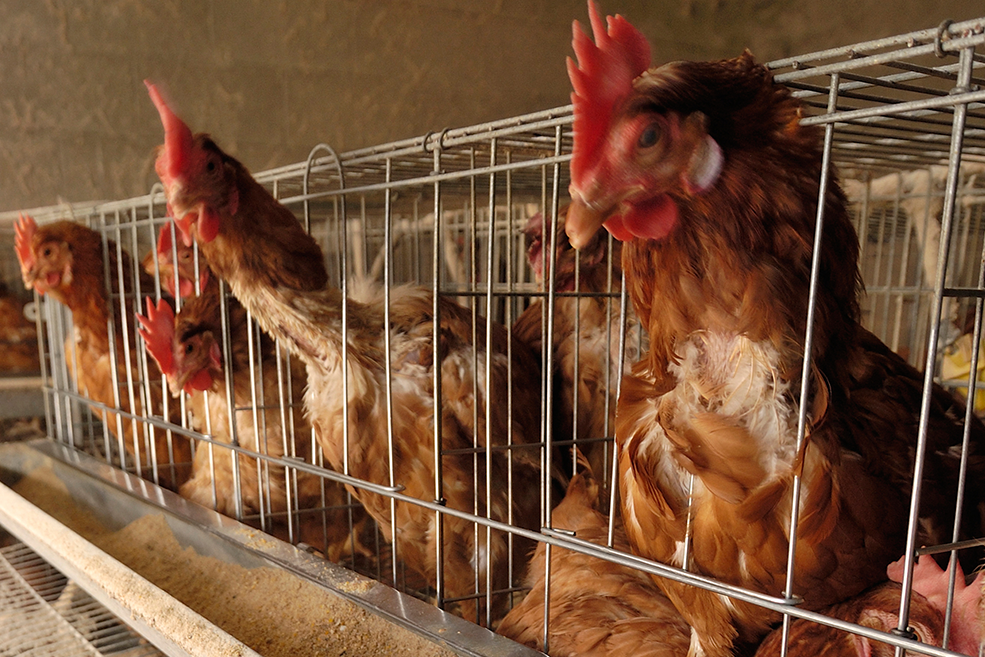
Proposals aimed at improving welfare for farmed animals include moving away from confinement systems such as colony cages for laying hens and the use of pig farrowing crates; addressing the welfare issues that arise from the use of carbon dioxide to stun pigs; and introducing humane slaughter requirements for farmed fish to spare them avoidable pain.
“We are committed to improving the lives of farm animals and to supporting farmers to produce food sustainably, profitably and to the high standards consumers expect,” said farming minister Dame Angela Eagle last week as she announced two consultations – one on phasing out cages for laying hens by 2032 and a second on updating the Sheep Welfare Code with the aim of minimising pain during lamb castration and tail docking.
Anthony Field, Head of Compassion in World Farming UK said the plans mark “an important and long-awaited step towards ending the cage age. We are optimistic that this will be the first of many meaningful and lasting changes,” he added.
Promoting the use of slow growing meat chicken breeds is another area the government has promised to look at. This is of particular relevance to a hospitality and foodservice sector, which despite progress in moving to lower stocking densities for birds, has struggled to transition to slower growing breeds under the voluntary Better Chicken Commitment.
Indeed, Footprint reported in November that in its latest update on chicken welfare, KFC did not include figures on the percentage of slower-growing breeds it is using across its Western Europe supply chains despite having included these figures in previous iterations of the report. Its 2024 progress report showed that in 2023 just 0.7% of the chickens KFC bought in the UK & Ireland were the slower growing breeds defined by the BCC.
The adoption of slower growing breeds is “a crucial part of higher welfare”, said Dan Crossley, executive director at the Food Ethics Council. “There are challenges involved, but I’m a firm believer that a committed and collaborative approach can turn most things from (so-called) ‘too difficult’ to possible. I’d love all the key players to step up and use slower growing breeds,” he added.
Costs
In December, the inaugural factory farming index was published, showing the welfare impacts of intensive systems. The authors calculated that the world’s reliance on intensively reared meat production is shortening lives and remains “largely unrecognised in international and national climate and biodiversity policymaking”.
Globally, factory farming is estimated to emit “21 million tonnes of pollutants – nitrogen and phosphorus – which cause eutrophication of water which can result in dead zones in rivers and seas. Overall, factory farming accounts for around 25% of all eutrophication caused by human activity,” the index reads.
Footprint has previously reported on the potential problems created from waste at intensive poultry and pig farms, which require an environmental permit if they are of a certain size. The government is also considering extending the permitting regime to large dairy and beef farms.
In November, the Environment Agency picked up a “clear pattern” in its latest report: “[…] while the number of farms is decreasing, pollution incidents are increasing.” The trend “likely reflects the intensification of farming practices”, wrote the agency’s chief regulator Jo Nettleton in her 2024-25 report.
She explained: “Farms are consolidating, often without the necessary infrastructure or management systems to support their expansion. Climate change and a longstanding lack of investment in the sector may also be contributing factors.”
Telling porkies?
Transitioning farm systems to be less industrialised, less extractive and more regenerative certainly won’t come cheap. Confidence among the agricultural sector is as low as ever currently, and despite considerable momentum behind regenerative approaches the UK and the world remains heavily reliant on intensive production systems.
There are challenges ahead, for sure – and it could get dirty. Recently, for example, the pig and poultry sector has begun to hit back at welfare campaigners. “While CIWF [Compassion in World Farming] presents the cage-free push as a natural progression for animal welfare, financial disclosures show that several of the UK’s most active campaign groups are supported by tens of millions of pounds in funding from a California-based foundation,” reported Poultry Business in December.
Coefficient Giving (known as Open Philanthropy until November) is headquartered in San Francisco and established by one of Facebook’s early investors. It has also become “a major backer of UK welfare NGOs, including CIWF, The Humane League UK and Open Cages, and legal advisory groups” the site reported.
An analysis of grants made between 2016 and May 2025 by a major international agri-business and seen by Poultry Business and Farmers Weekly reportedly showed more than $467m (£350m) has been distributed globally by Coefficient Giving. “Grants have gone to more than 170 organisations, with the top 10 recipients accounting for over half of all spending. Poultry-focused campaigns dominate, receiving about 40% of funding, and nearly half of all grants support global initiatives. Europe is the second-largest regional focus,” Poultry Business explained.
Sean Gifford, managing director at The Humane League UK, played down the funding. In a statement to Footprint he explained that the poultry industry “has one thousand times our budget” and “lobbies to confine animals in crowded, filthy factories. Some of our modest budget comes from the likes of Coefficient Giving, and it’s deeply welcome because it funds campaigns which try to align the UK food system with the democratic will of the public,” he added.
Gifford said the lifeblood of the league’s campaigns come from “our 40,000 supporters who take action for animals. Most of them are based in the UK and are average citizens that care deeply about animals.”
Dame Eagle said British consumers “want high animal welfare standards”. But they have also become accustomed to ‘cheap’ meat and eggs. Will they pay the price for happier hens? Research that Footprint reported last week suggests so – provided they have the information needed to make more informed decisions. That is not the case yet.