The Food Standards Agency wants to make it a legal requirement for out of home businesses to provide written allergen information for non-prepacked foods. Nick Hughes reports.
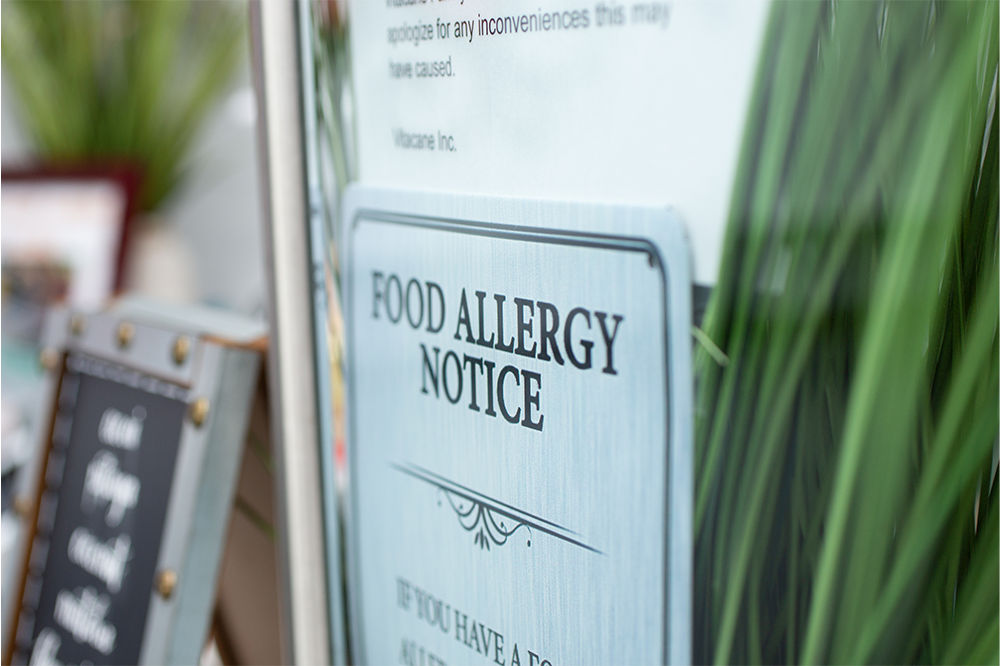
The way in which out of home food businesses provide allergen information to their customers is set for yet another major shake-up. In December, Food Standards Agency (FSA) board members unanimously agreed they would like to see written allergen information become mandatory for non-prepacked foods served in restaurants, cafés and other hospitality settings and now plan to make their case to UK government ministers.
The current requirement is for out of home businesses to provide information either verbally or in writing, with the precise method left to the discretion of the individual business.
The FSA has recently been reviewing the position as part of its ongoing food hypersensitivity workstream. A paperpresented to the board by officials at December’s board meeting had proposed “to create a presumption that there should be both written information and a conversation”, but stopped short of recommending new legislation. Board members, however, argued that the most effective way to achieve sector-wide uptake of written information would be to change the law and mandate it. “Written information is king,” said board member Margaret Gilmore during December’s meeting. “If we get it mandated then it’s dealt with.”
In addition to providing written information, the board also suggested there should be an expectation for a verbal conversation to take place between customers and staff to ensure an added layer of protection for consumers, although members considered it impractical to legislate for this.
The decision is a victory for campaigners who have long called for new legislation covering out of home settings with greater emphasis on written allergen information. They include the family of Owen Carey who lost his life in 2017 after suffering an anaphylactic reaction to a chicken burger purchased from a branch of Byron Burger. The menu did not mention that the chicken was marinated in buttermilk.
The Carey family have campaigned for a law that compels restaurants to state the allergens in their dishes, specifically on the face of the main menu. They believe this would eliminate the risk that exists at the point of order when a waiter does not fully understand, or is not trained enough to process the request, or simply ignores the customer’s concerns about allergens in each dish.
Maximising uptake
Explaining the agency’s decision, FSA chair Susan Jebb said board members felt there should be an expectation that food businesses like coffee shops and restaurants provide allergen information in writing as well as having a conversation. “The board also considers that to maximise the likelihood of this happening, written information should be a legal requirement, rather than just guidance,” she said.
Jebb intends to write to ministers in England, Wales and Northern Ireland, as well as her counterpart at Food Standards Scotland, to discuss the board’s decision in the hope that the new requirement can be taken forward on a four-country basis. It will then be for ministers to decide whether legislation is their desired approach. In the meantime, the FSA will develop new guidance for businesses on how they should provide written allergen information.
Political appetite?
It’s by no means guaranteed that ministers will acquiesce to the FSA’s request. In England, a number of public health policies deemed at risk of stoking inflation – such as a ban on volume-led junk food promotions – have already been kicked into the long grass, much to the frustration of campaigners.
New allergen rules won’t come cheap. The FSA estimates that the cost of going down the legislative route would be in the region of £250m for all businesses impacted, including £17.7m for one-off transitional costs, £223.7m familiarisation costs, and annual labelling costs of £13.5m. Local authorities would also face over £3m in costs relating to administration and enforcement.
Yet ministers have already shown a willingness to mandate new measures than can help those living with allergies make more informed choices. In October 2021, while the hospitality sector was still recovering from the coronavirus pandemic, ‘Natasha’s Law’ came into force requiring businesses to provide full ingredient lists and allergen information on foods pre-packaged for direct sale in England, Wales, and Northern Ireland (food labelling is a devolved issue in Scotland). The law change was the result of determined campaigning by the family of teenager Natasha Ednan-Laperouse who suffered a fatal reaction to eating a Pret a Manger baguette in 2016.
Business preference
Many businesses in the hospitality sector already choose to provide both written and verbal allergen information voluntarily – but many don’t. UKHospitality chief executive Kate Nicholls said businesses “take allergen management extremely seriously and do everything within their power to be transparent with customers about ingredients”. She added however that “the overarching message we receive from hospitality businesses, both large and small, is that dialogue between staff and customer can be the most valuable and effective way to cater for people with allergies, alongside other methods to communicate allergy information”.
Nicholls pointed to “the ever-changing nature of menu items and ingredients used” as a reason why “it’s often the case that blanket policies lack the nuance needed to deliver effective allergen management”.
Static or dynamic
The FSA acknowledges that written allergen information alone is not a silver bullet solution. Its policy paper states that written information can provide a high level of detail but is relatively static and that over-reliance by consumers and businesses could result in dynamic risks such as cross-contamination or substitutions not being fully communicated and understood.
It adds too that there are practical challenges in keeping information up to date with a risk that inaccuracies creep in unnoticed. “Written allergen information informs consumers about which dishes they should definitely avoid based on intended ingredients but will not inform them if the other dishes have ingredient substitutions or might have unintended contaminants,” it says.
Verbal conversations between staff and customers, by contrast, are much more dynamic and can capture changes in the moment, including specific needs and potential solutions. A conversation also allows for the possibility of some mitigations such as leaving out ingredients which could expand the range of options open to people with food hypersensitivities.
However, the FSA notes that verbal methods of information sharing put a lot of responsibility onto servers to remember to pass on information, and to ensure that the information they provide is accurate and up to date. Putting a greater emphasis on written information moves the responsibility for the accuracy of allergen information from staff members to the business itself.
Both methods clearly have their pros and cons which helps explain why the FSA’s preferred approach is for businesses to provide both written and verbal information. The board has gone a step further and recommended that the former become mandatory. It’s now over to ministers to decide whether their appetite for legislating on allergens has been sated by recent changes – or whether they feel there is room for more.