The European Commission has said its deforestation regulation (EUDR) will still enter into force on December 30th, 2025 for in-scope companies – but there will be a six-month grace period in enforcement. Smaller operators now have until December 30th, 2026, before having to comply.
So, after weeks of back and forth we at least have certainty. Not really, as law firm Linklaters explained in its summary of the announcement: “It is important to remember that at this stage, the proposal is just that – a proposal. The European Parliament and the Council must now discuss (and agree) the Commission’s proposal under the ‘ordinary legislative procedure’.” (Consultancy 3Keel’s visual of the changes is also worth a look, here).
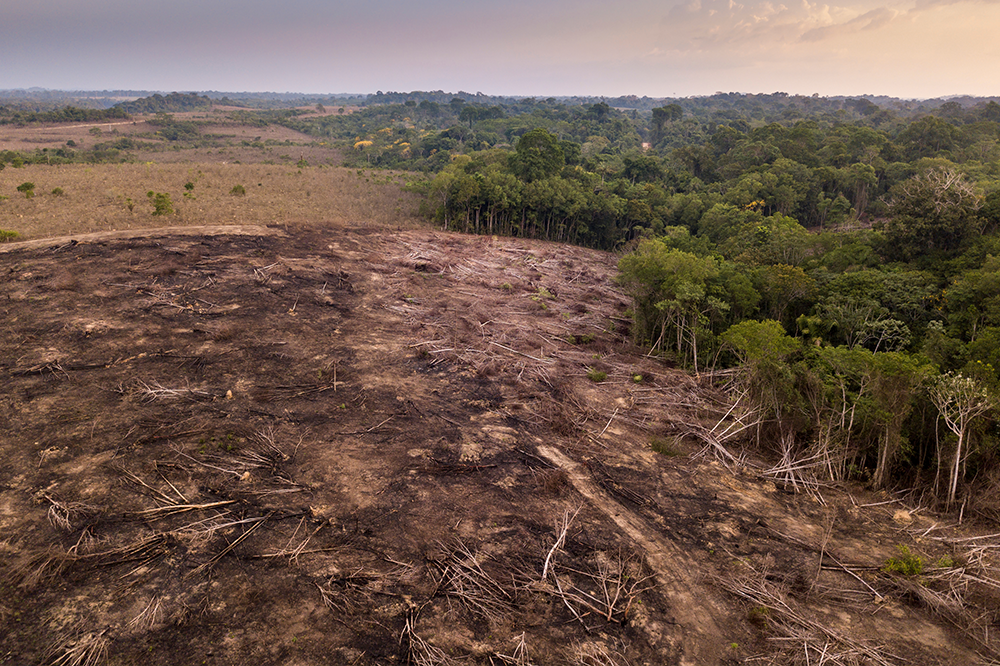
Global losses of forest have slowed in the past decade, according to the UN Global Forest resources Assessment. Annual losses averaged 11 million hectares per year since 2015, down from 13.6 million hectares in the 10 years prior to that, and 17.6 million hectares between 1990 and 2000. That is the good news. The bad, as reported by Carbon Brief, is that the Forest Declaration Assessment found that the 100-plus countries who pledged to halt and reverse deforestation by 2030 are off track.
Agriculture caused 86% of global deforestation in the past decade; it is also the major driver of biodiversity loss worldwide meaning food will be in the spotlight at COP30 next month. Taking place in Belém, Brazil, the home of the Amazon rainforest, the talks are being billed as ‘the nature COP’. Sir Keir Starmer confirmed this week he will attend the summit, because “net-zero is the economic opportunity of the 21st Century”, his spokesperson told reporters, adding: “We’re restoring the UK as a global leader on climate action and green growth, and you can expect to see the PM driving forward that agenda at the COP30 summit.”
Global leader? The UK certainly loves to make this PR play ahead of and during such major international get-togethers. Remember COP28, in 2023, when the Conservatives announced that its due diligence law relating to forest risk commodities would cover beef, leather, soy, palm oil and cocoa? “This move will protect the habitats of some of the world’s most precious and endangered species, including tigers and leopards,” the December 2023 statement read. Steve Barclay, environment secretary at the time said: “[…] we are cleaning up supply chains to make sure that big businesses in the UK aren’t responsible for illegal deforestation.”
Two years on and the (world leading) rules are still to come into force. And while the government continues to chew over the new anti-deforestation rules, the chopping of trees continues: research by Global Witness shows that since November 2021 the UK’s total ‘deforestation footprint’ linked to direct imports was more than 39,000 hectares – an area of land bigger than the UK New Forest.
Under Labour the policy seems to have dropped off the radar, according to experts at September’s DWF legal briefing for foodservice companies. Is it not a political priority? Or is alignment with the EUDR stalling progress on the (fairly straightforward) secondary legislation required under the Environment Act 2021?
“We need to get this right, so we are looking at the best regulatory approach to address deforestation,” said Baroness Hayman, parliamentary under-secretary of state at Defra, during a deforestation discussion in the House of Lords last month. “We also need to look at the compatibility and interoperability of the forest risk commodities approach, which is enshrined in Schedule 17 to the Environment Act, and the EU deforestation regulation.”
Alignment between the UK and EU would certainly make for easier collection of deforestation-related information, and the risk assessments based on them, according to DWF associate Kirsty Poots. “I do think the EUDR persistent delay (and industry complaints about it) have probably had an impact [on the UK Government],” she explained. “It might be that the UK Government wants to ensure EUDR is actually being applied before it decides whether to align or go its own way.”
The Conservatives were certainly keen to go their own way following Brexit. Less so Labour, who hold the keys to Downing Street. For now.
Indeed, as Halloween fast approaches, ENDS decided to put the frighteners on readers with a piece titled: ‘How environmental NGOs are preparing for a Farage-led government’. As well as contradicting prevailing scientific opinion, Reform, headed by Nigel Farage, wants to drop farming subsidies linked to sustainable approaches and return to direct payments.
Lobbying a political party that rejects established science is not going to be easy – especially when the papers are lapping it all up. ‘More air miles in the name of net-zero’, screamed the Daily Mail, of Starmer’s plan to attend COP30. That such tired arguments are once again gaining traction is the stuff of nightmares for sustainably-minded businesses.
And for those keen on more horror stories, there is James Murray’s social media post this week, in which the Business Green editor-in-chief provides a summary of the latest State of Climate Action report. “This may be coloured somewhat by the fact I’m recovering from covid, but in 20 years of writing about climate change I think this may be one of the bleakest reports I’ve ever covered,” he wrote.
Now for our other news this week:
- Emissions from meat and dairy majors compared to fossil fuel producers. More.
- Oatly blames greenlash and greenwashing for sales dip as it now targets fibre-fever. More.
- Thirst for food, animal feed and fuels bloats the world’s water footprint. More.