
This week’s standout figures highlight the rise in megafarms across Europe and how chicken sales are up for a controversial meat company. There is also promising new research on reducing methane from dairy farms as well as an exposé on the lack of transparency among tuna fish businesses.
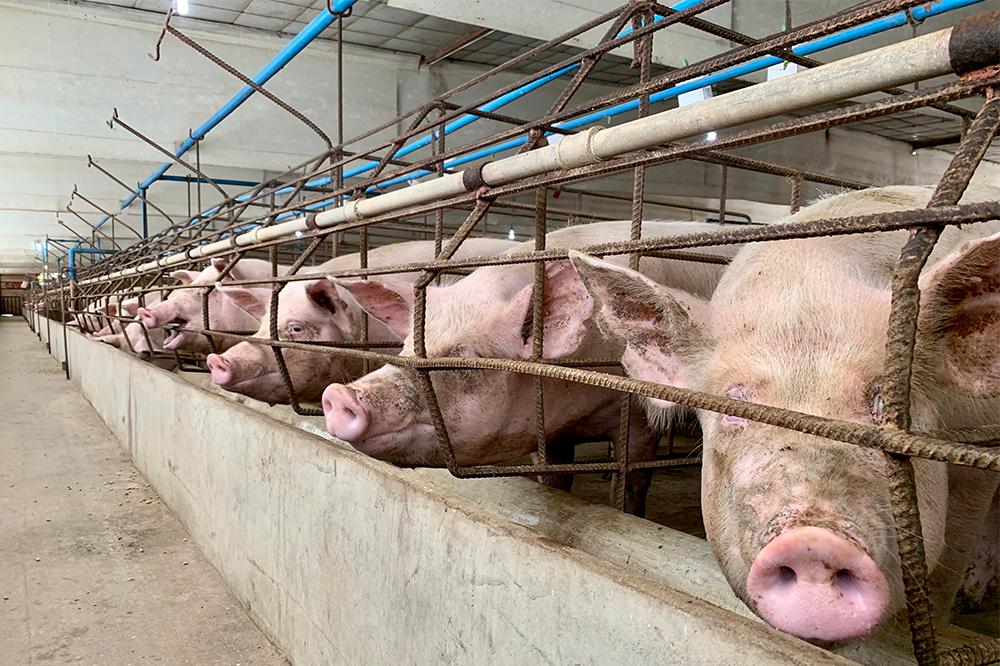
24,000. An investigation, carried out by a consortium of journalists in six countries, identified and mapped – for the first time – more than 24,000 large-scale pig and poultry units across Europe, and revealed how thousands of intensive farms were greenlighted over the past decade. Leading countries for industrial poultry farms were identified as France (with 2,342 permitted farms), followed by the UK (1,553) and Germany (1,521).
20.3%. Poultry revenue at Cranswick has jumped 20.3% in the past year, according to figures published in May. The meat company has been in the press for the wrong reasons too as footage emerged of pigs being mistreated on its farms. A veterinarian review of the company’s animal welfare policies and its livestock operations is now underway.
Dirty 30. An estimated 56% of the 30 largest tuna companies’ catch is untraceable, and many of them spend more time fishing with their tracking systems turned off than on, according to research by Planet Tracker. However, the NGO found that improving catch transparency creates a positive net financial outcome, as well as being necessary to reduce risks for investors.
80%. A new study from researchers at the University of California, Riverside, in the US, shows how anaerobic digesters – manure ponds tightly sealed to capture and re-use the methane they produce – can reduce atmospheric methane emissions by roughly 80% on dairy farms.