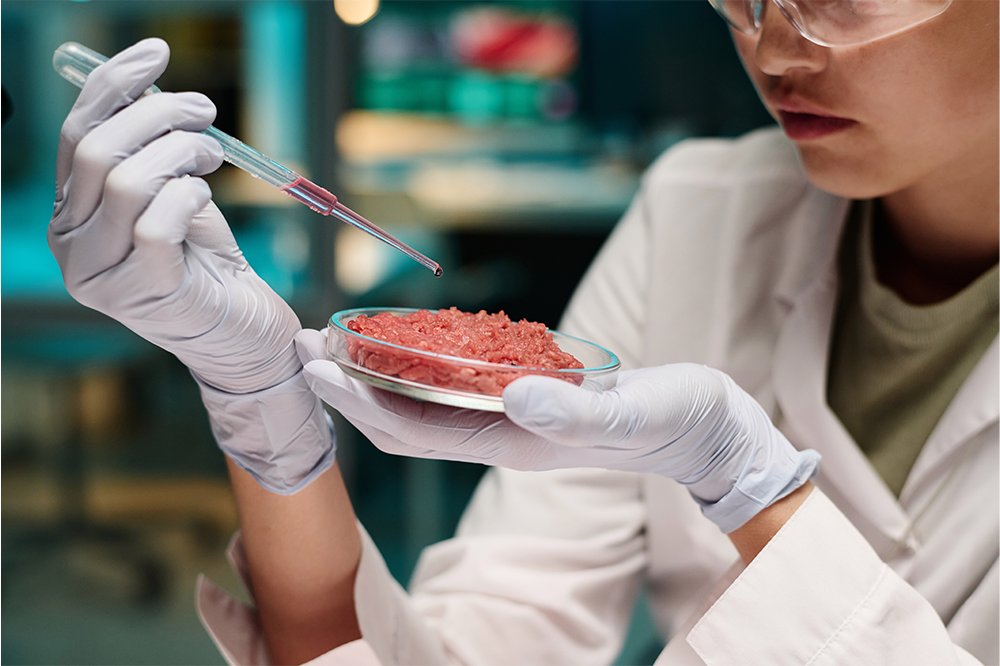
Scaling plant-based foods, cultivated meat, and fermentation-made ingredients could deliver major economic gains for the EU, while improving food security and agricultural resilience.
The research, by New Systemiq and supported by the Good Food Institute Europe, found that “[i]f treated as a strategic priority, alternative proteins could add €111bn a year to the EU economy by 2040”.
Through “modest investment and supportive policy” over the period next 15 years alternative proteins could help reduce reliance on imported crops and open new markets for farmers, the experts said.
An expanded plant-based sector could for example more than double demand for the peas, fava beans, lentils and chickpeas needed for raw ingredients for alternative proteins.
Fermentation-made foods would also raise demand for sugar and starch crops like sugar beet, offering alternative income streams as biofuel demand declines toward 2035.
EU imports of soy for high-protein animal feed could also be cut by 2.6 MMT, reducing overall demand for feed by 23 MMT.
Annual public investment of €690m in research and €720m in scaling-up infrastructure “could unlock innovation, reduce costs, make products more appealing to consumers, and catalyse private investment”, the experts wrote. This is, they added, “a small fraction of what the EU has backed in other industries, such as €10.6bn committed for green hydrogen in 2022 alone”.
The report also called for clearer, more predictable pathways to market for novel proteins, like cultured meats, while maintaining safety.