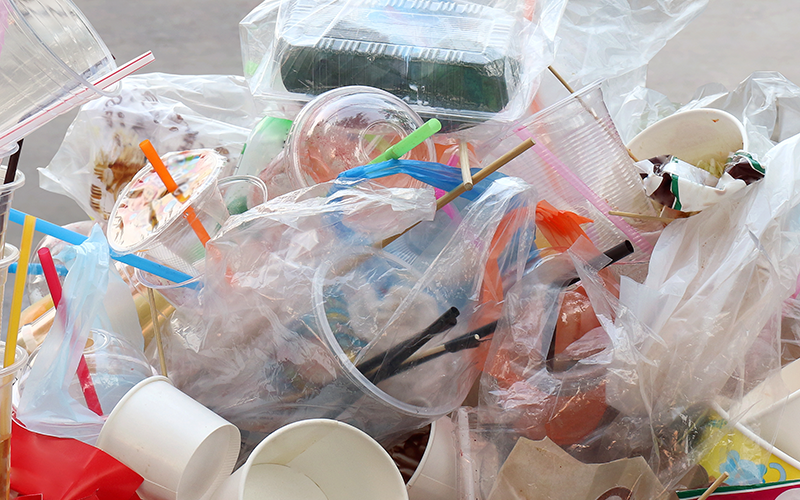
This week’s big – but entirely predictable – news story is Defra’s announcement that the extended producer responsibility (EPR) scheme for packaging will be delayed by 12 months until October 2025. The department said this would provide industry with “certainly” and “allows time for detailed co-design with businesses and local government to ensure the scheme is as efficient as possible”. Which makes you wonder what the point of almost five years of consultations has been?
“The Westminster government promised, in its 2018 resources and waste strategy, to sort out the longstanding problems with UK recycling, particularly in England. Nearly five years on, nothing has actually changed,” said Libby Peake, head of resource policy at Green Alliance. Adam Read, external affairs director at resources company Suez, said “years of government delay have made it difficult to know when and where to invest”. Local authorities are also annoyed that they will, for now, continue to foot most of the bill for management of packaging waste, with producers paying just 10%.
Others are of course delighted at yet another policy being delayed (or “deferred” as the government now prefers to call it). Simon Roberts, CEO of Sainsbury’s, welcomed the announcement, as did Paul Vanston, chief executive of the Industry Council for Packaging and the Environment (Incpen).
The cost of living crisis has already provided industry lobby groups with the ammunition to convince ministers to postpone deposit return schemes and pull back on policies designed to curb obesity. Rishi Sunak, the prime minister, faced questions this week as he and his team looked to backtrack on a series of other green policies – from expansion of the ULEZ and the 2030 ban on the sale of new petrol and diesel cars.
Lord Deben, who has just stepped down as chair of the Climate Change Committee told the FT this week that both the Conservative and Labour parties were “afraid of making some of the tough decisions, which need to be made, for electoral reasons”. He also reiterated his concerns that the government’s recently revised net-zero strategy relies too heavily on new technology “which we don’t have”, like sustainable aviation fuels.
Lord Deben said one of the fundamental issues is that Defra “has not been taken seriously for a long time” by the rest of government. Indeed, the raft of new packaging policies came during a period when Westminster heavyweight Michael Gove reigned at Nobel House (Defra HQ), but have since all been subject to delays and dithering.
Ditto food and farming policies. The Institute for Public Policy Research (IPPR) said last week that the ongoing failure by policy makers to meaningfully address the climate and nature crises and support farmers risks the UK being unable to produce enough of its own food. “The climate and nature crisis poses one of the greatest risks to the UK’s domestic food production, and the UK government has consistently failed to treat this threat with the urgency it deserves,” said Lesley Rankin, researcher at IPPR.
Rome this week hosted a UN summit on the state of the world’s food systems. The COP28 UAE presidency launched its food systems and agriculture agenda and a new leaders declaration. Governments are being urged to align their national food systems and agriculture strategies with their nationally determined contributions (NDCs), national adaptation plans (NAPs), and national biodiversity strategies and action plans (NBSAPs). One in four countries has signalled publicly that food systems need to be reformed in the face of the climate and nature crises.
Nations looking to set appropriate emissions targets for food systems should, by COP28, have a new roadmap to 1.5C for the sector, according to edie.net. There is also a drive to scale regenerative agriculture: a framework being developed by Regen10 will drive accountability by measuring progress against outcomes such as soil health, biodiversity, farmer livelihoods, food and nutrition security, and the reduction of greenhouse gases. This is currently being tested, with input from farmers, businesses and other actors.
“We are at a crossroads,” said Susan Gardner, director of the ecosystems division at the United Nations Environment Programme. “There is no real alternative other than a strong, coordinated response to what is a deepening crisis.” From the talks in Rome she hopes to see increased support for farmers who want to transition to more diverse and sustainable farming systems, with these practices integrated into national plans for agriculture, climate change and biodiversity preservation.It’s hard to move for stories about regenerative agriculture at the moment. And among our other stories this week is a study aimed at more sustainable whisky production: academics in Scotland are using ‘greener’ fertilisers made from algae and yeast to grow barley. There is also a report accusing supermarkets of greenwashing and research showing that multi-buy deals predominantly include junk foods