
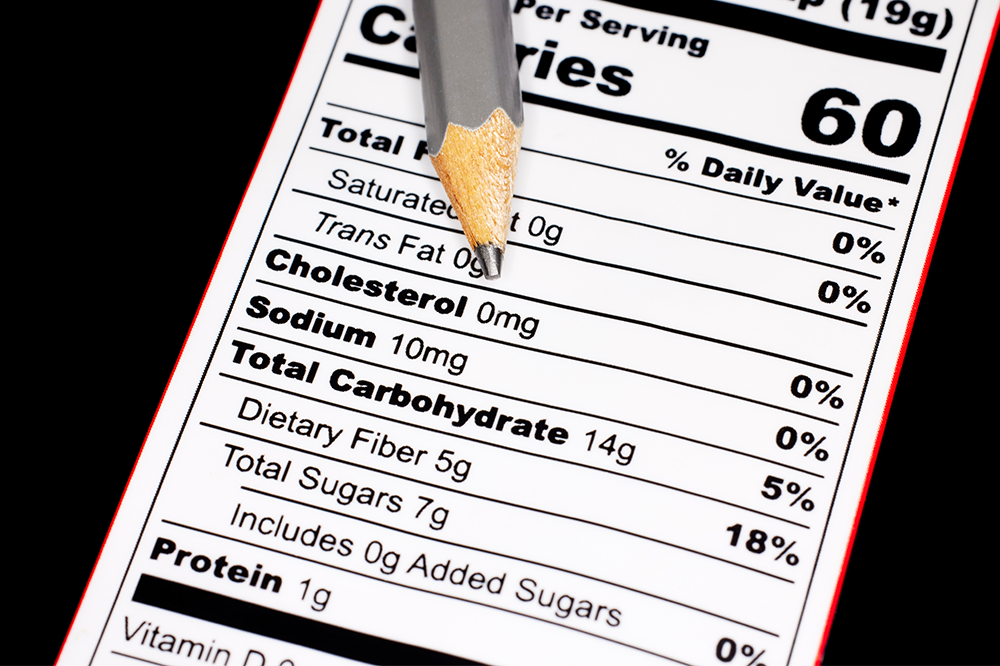
It was hoped the policy would reduce the calorie content of products being sold in out of home venues in England but new research points to an underwhelming impact. By Nick Hughes.
Counting calories. Three and a half years after calorie labelling was made mandatory for large out of home food operators in England, a first-of-its-kind study has looked at the impact of the policy on the calorie content of meals. The research, published in the BMJ Public Health journal, compared the energy content of menu items from 78 large operators across two periods (September 2021 and September 2022) several months either side of the policy coming into effect in April 2022. Data was scraped from websites using MenuTracker, a database of online menus, and spanned a range of business types including cafés and bakeries; pubs, bars and inns; restaurants; sports and entertainment venues; Western fast food; and Asian fast food.
Boris’s battle. The law applies to out of home businesses with 250 or more employees, meaning calorie labelling only currently captures the largest operators in the sector. It was introduced by the previous Conservative government as part of Boris Johnson’s short-lived war on obesity. Research had shown that when someone dined out or ate a takeaway meal they consumed, on average, 200 more calories per day than if they had eaten food prepared at home. Portions of food or drink consumed outside the home also contained on average twice as many calories as equivalent retailer own-brand or manufacturer-branded products, the original consultation document said.
Slim pickings. So has the policy worked? Not to any great extent, based on the results of the study. Calorie labelling was associated with just a 9 kcal (2%) reduction in the energy content of menu items across all businesses studied. Any reductions were primarily due to businesses removing high calorie items and adding slightly lower calorie items, rather than through reformulation of continuing menu items, of which there was little evidence. This stands in contrast to another flagship obesity policy introduced under the Conservative government, the soft drinks industry levy (SDIL), which led to widespread product reformulation as manufacturers tried to dip below the tax thresholds.
Nuance in the numbers. The headline finding masks some notable variations when drilling down into the results. More significant reductions in average calorie content were found in some product categories, particularly non-alcoholic beverages (-16.4%), burgers (-11.1%) and to a lesser extent main meals (-4.2%). Sandwiches, by contrast, had an average increase in calories post-policy of 15.8%. Sports and entertainment venues (-13.4%) and pubs, bars and inns (-8.8%) had the greatest average reductions among specific segments.
Supersize me. Researchers also looked specifically at changes in the highest calorie items, categorised as those containing over 600kcal per serving. Prior to the policy, 21.8% of menu items were over 600 kcal, a figure that actually increased to 22.2% once the policy had taken effect. Burgers, mains and pizzas were the food groups with the most items over 600kcal, while restaurants, and pubs, bars and inns were the venues where these items were most dominant. Although the proportion of +600kcal burgers (-9.5%), mains (3.4%) and beverages (-3.2%) all fell, the proportion of pizzas exceeding 600kcal increased by 9%.
The choice is yours. The findings come with an important caveat. Researchers were unable to analyse calories based on the volume of menu items sold, therefore what we’re left with is evidence of the change in the calorie content of items offered to customers rather than how those changes translated into actual consumption. If calorie labelling has nudged people into choosing lower calorie options, as was hoped at the outset, then judgements on the impact of the policy will need to be revised.
What’s next? Researchers said further studies are needed to assess the long-term effects of mandatory calorie labelling and develop strategies to enhance the policy’s impact. The UK Government had originally said it would review the policy within five years of its implementation and consider extending it to include smaller businesses. That kind of deep dive, although not in the offing, would feel timely right now. Unlike the SDIL, which carried a clear financial incentive for businesses to avoid the tax, there was no compelling business case at the outset for out of home businesses to reduce the calorie content of menu items (beyond the potential embarrassment of being seen to sell extremely high calorie items). Since April 2022, however, soaring rates of inflation for key ingredients like beef and dairy, coupled with a wave of cost increases linked to government policy, have eaten ever further into hospitality sector margins. The financial case for reducing portion sizes or substituting out certain high cost ingredients for lower cost (and calorie) alternatives is stronger than ever. An updated study comparing calorie contents in 2025 could potentially show a very different result.
