A survey finds concern over children’s eating habits as political parties are urged to take action on school meals. By Nick Hughes.
Political parties are being urged to put healthy, sustainable school meals at the heart of their plans in the run up to a general election this year.
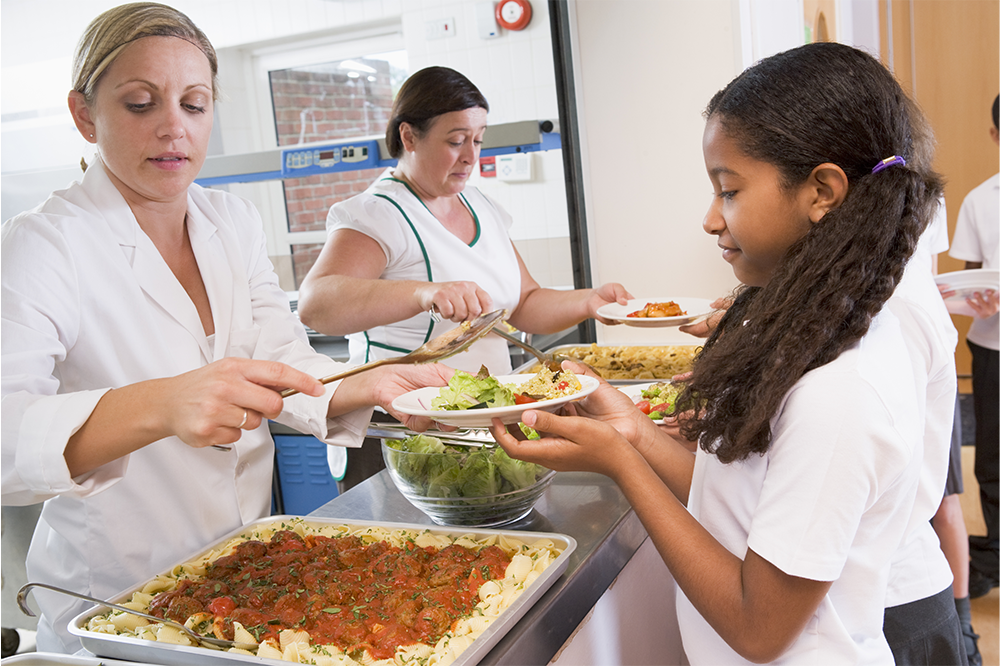
A poll of over 2,000 parents, commissioned by the Children’s Food Campaign, found that 55% believe their children’s school meals are currently nutritious, with parents of secondary school children expressing slightly less confidence compared to parents of primary school children.
A large majority (80%) of parents want to see tighter enforcement of school food standards and 84% would like to see more healthy options on school menus, including fruits and yoghurts instead of sugary puddings.
A majority also back adapting school menus to serve more planet-friendly food: 77% express support for policies that encourage schools to serve food that is good for nature and the environment; and 53% are in favour of schools having meat-free days or replacing meat and dairy with healthy plant-based options.
In April, a delegation of parents – coordinated by the Children’s Food Campaign, part of the Sustain alliance – delivered a manifesto to Parliament calling on the next government to make free, healthy and sustainable school food a priority for all children from nursery all the way up to sixth form and college.
It follows a survey, conducted by research company Savanta, which found 76% of parents say it is getting more difficult to ensure their children eat healthily.
The manifesto was developed on the back of the survey results coupled with workshops with 13 children’s food parent ambassadors. It also calls on political parties to commit to protect children from the flood of unhealthy food advertisements and marketing; ensure honest and trustworthy information on food and drink packaging; make nutritious food affordable and accessible for all families; and stop the sale of high energy caffeine drinks to children.
Of those surveyed, 86% of parents said they would support a policy to broaden access to healthy school food for a larger number of children, while 80% would like to see a requirement for all state-funded nurseries to ensure any food provided is nutritious and healthy.
The manifesto notes that school food standards aim to ensure schools in England give children balanced meals, which allows them to develop healthy eating habits. However, it claims the standards are not always being met, and there is insufficient data to identify success stories or cause for concern. There is also very little evidence on the overall quality of food in early years settings, the campaigners note.
Almost 9 in 10 parents (89%) said they would support the immediate expansion of free school meals to children of all ages living in poverty, while three quarters (75%) support the expansion to all children of all ages, from nursery to sixth form, regardless of background.
The manifesto also calls for an updated school curriculum that actively encourages children to learn about food, from farm to fork, and ensures that the whole school environment puts these principles into action.
Public procurement
Although unlikely to become a central feature of the election campaign, the state of public sector food has garnered interest from the two main political parties. In March, the UK Government commissioned Conservative MP Will Quince to carry out a review into public sector food procurement having previously consulted on proposals for 50% of public sector food spend to go on food produced locally or certified to higher environmental production standards.
Labour has made a similar pledge that at least 50% of food bought by the public sector will need to be locally produced and “sustainable” should the party form the next government.
Policies relating to healthy food, however, have been subject to delays in recent years. Government pledges to implement restrictions on volume-based promotions like ‘buy one, get one free’, and the advertising of less healthy products on TV and online, have been pushed back until 2025.
Meanwhile, the only food-specific policies in Labour’s recently published child health plan were to implement the delayed 9pm watershed for junk food advertising on television and ban paid-for advertising of less healthy foods on online media aimed at children, and to introduce free breakfast clubs for all primary school children.
Last week, the Jamie Oliver-backed Bite Back campaign group accused food companies of using bright colours and cartoon characters to manipulate children into wanting the sweets and crisps they sell. Nutrition experts were asked to analyse 262 sweet food products sold in the UK with packaging likely to appeal to children made by the 10 biggest food companies. They found 78% were ‘unhealthy’ because of their fat, salt or sugar content.