Meat is rarely out of the news these days, even at a time of year when the minds of many (the author included) are fixated on chocolate to an unhealthy degree.
A recent report from IPES-Food – the international panel of experts on sustainable food systems – took the novel approach of bringing some nuance to the divisive protein debate that perpetually rages across mainstream and social media. Indeed, the report titled The Politics of Protein explicitly calls out the fact that discussion over the role of meat, fish and plant-based proteins in our diets is “characterised by bold and conflicting claims, which offer competing visions of what problems need to be addressed, and how they should be solved”.
It’s not an easy piece of work to summarise succinctly, but in essence the report identifies a number of claims that are widely repeated and accepted as fact, despite being based on uncertain evidence or addressing only certain aspects of the problem. As an example, it suggests that sustainability challenges relating to animal source foods are often reduced to a single dimension – greenhouse gas emissions – ignoring other critical sustainability challenges like biodiversity loss, chemical pollution, land degradation, livelihood stresses, hunger, and micronutrient deficiencies.
It also warns that plant-based diets are often presented as a singular, standardised option that can be universally adopted in place of meat-based diets, despite the huge differences in impacts depending on how crops are grown and processed.
That’s not to suggest this is in anyway an anti-plant protein manifesto – far from it. The report notes, for instance, that in some contexts framing the issue around the need for “less and better meat and dairy” can be a useful sub-objective within a comprehensive sustainable food policy. It simply encourages consideration of issues in the round and engagement with the complexity of the challenges.
You could say it’s the antithesis of social media where nuance is as rare a spotted species as the Monarch butterfly or Great yellow bumblebee, both of which figure among the insects threatened by climate change and intensive agriculture, according to a report in the i newspaper.
Scientists from University College London are urging people in the UK to eat more seasonal and locally grown foodto help halt a catastrophic decline of tropical bees and other insects, whose numbers have slumped by almost 50% in some parts of the world.
Returning to social media and new research from dairy cooperative Arla Foods has found that more than a third (34%) of people in the UK admit to making choices about their food and diet based purely on information from social platforms. In total, nearly half (49%) said they would consider making a considerable change to their diet.
Arla said the research “highlights the need to balance the conversation when it comes to food and the health of our planet”, the subtext being that calls to ditch dairy for plant-based alternatives are not always based on fair and balanced debate – a not unsurprising conclusion for the global dairy giant to reach one might surmise.
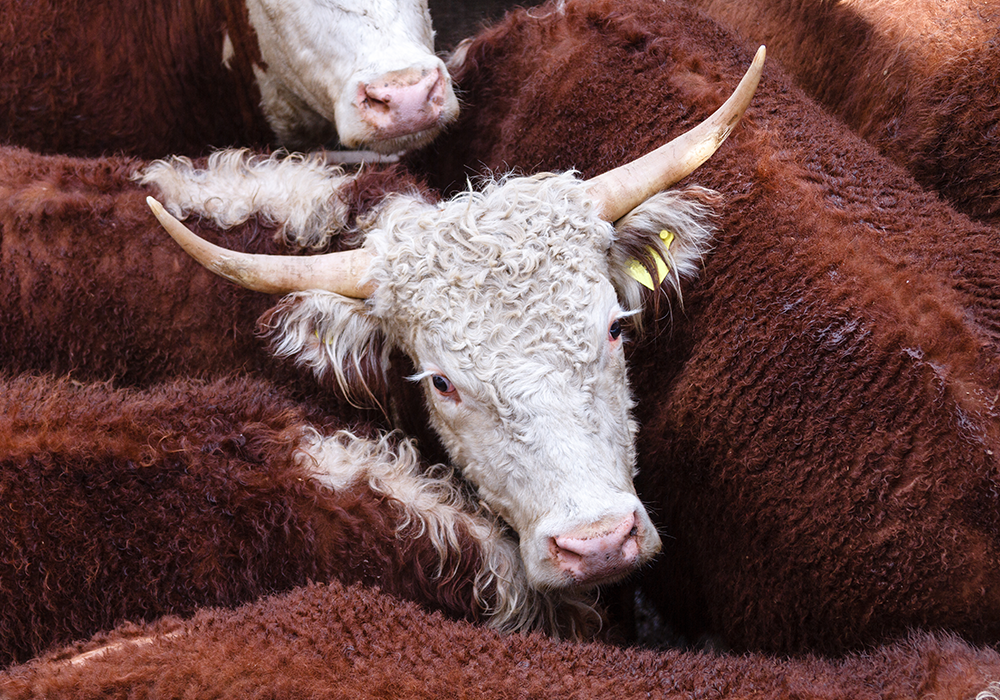
Still, Arla continues to do its bit to reduce the environmental impact from livestock production. BusinessGreen reportedthis week that a major on-farm pilot could cut methane emissions from cattle by almost a third. A pilot project will see 10,000 of Arla’s cows across three European countries given feed additives designed to curb the burps that release the potent greenhouse gas which alone accounts for 40% of Arla’s on-farm emissions.
Projects such as Arla’s can go some way to placating those campaign groups calling for decisive action to tackle emissions from livestock. Greenpeace was on the warpath this week as it renewed calls for UK supermarkets to cut ties with Brazilian meat giant JBS after figures from the Institute for Agriculture and Trade Policy showed the annual emissions of the company – which supplies meat to many UK supermarkets – increased by 51% from 2016 to 2021.
“Tesco recently claimed that remaining a customer of JBS was the best way to influence it. But the only way to show JBS that destroying the planet for meat production won’t be tolerated is to stop doing business with it immediately. Anything less makes supermarkets complicit and betrays a complete disregard for people, wildlife and the planet,” said Paul Morozzo, Greenpeace forests campaigner.
It’s not quite the temperate language used in the IPES-Food report; then again maybe some sustainability issues really are this black and white.