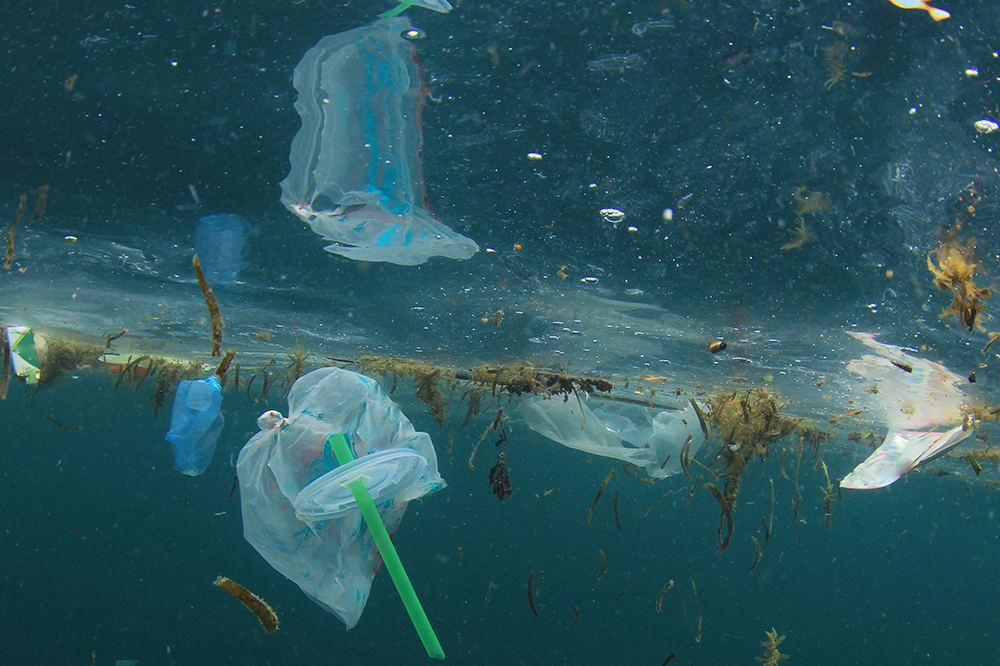
‘How our water went to sh*t,’ is the title of a report in this summer’s Prospect magazine that unpicks how privatisation of water companies has left England with leaky pipes, sewage spills and rivers not fit to swim in. Which is a shame given how bloody hot it is.
That Prospect feature had us looking at the water companies and ending up a few hours later with a recent academic paper on the screen showing how water and sewerage companies have prolonged this environmental disaster “through strategies that mirror those of large polluting industries in the past”.
The experts, led by Alex Ford from the University of Portsmouth, found that these firms were using 22 of the 28 greenwashing/deception tactics published in a framework in 2021. The approaches range from attacking study designs and gaining support from reputable individuals to impeding government regulation and blaming other causes. Another is to make use of ‘straw man arguments’ – in the case of the water companies this involves focusing on agriculture doing harm.
They do have a point: farming is also to blame for the dire state of our rivers. Water companies are responsible for 36% of England’s river pollution, which is behind the farming sector (40%).
That doesn’t let water firms off the hook. But the food companies that have got rich on the cheap chicken chain should note that the UK Government has announced that it’s to create a new “super regulator” for water, spanning economic, environmental and social impacts. And it’s not only the water companies – their leaky pipes, sewage surges and fat dividends – that will be on the watchdog’s radar.
NFU vice-president Rachel Hallos has noted “the huge pressure on water in this country be it resources, flooding, or quality. Ultimately, we need a joined-up approach that includes a comprehensive water management strategy that encourages investment in the country’s water infrastructure and allows us to collaborate better with government, local authorities and water companies, and prioritises UK food security as national security,” she explained recently.
Time will tell if the government can join up those dots – and find the £100+bn it wants to unlock in infrastructure investments (plus improved regulation) to ensure the target to halve sewage pollution by 2030 is met.
It’s not just rivers where sewage poses a pollution problem. A three-part investigation, by investigative journalists at Watershed and The Guardian, showed how millions of tonnes of “toxic sewage sludge” are being spread on UK farmland every year. “For decades, sewage sludge has been quietly spread across Britain’s farmland, marketed as a nutrient-rich fertiliser. But insiders and scientists warn that hidden within it is a mix of household and industrial chemicals such as Pfas (‘forever chemicals’), pharmaceuticals, pesticides, hormone-damaging chemicals and microplastics, threatening the long-term health of the land,” the final report reads.
Scientists reportedly “suspect” these contaminants are entering the food chain, Watershed claimed, quoting one water expert who said: “We’ve seen Pfas and pharmaceuticals accumulate in crops and livestock,” but there is no requirement to test food for these substances and therefore little data on it.
Hopefully our food isn’t going to shit too. Speaking of which, the plastic treaty talks in Switzerland were hanging in the balance, according to reports yesterday (as we went to press). Watch out for Monday’s Footprint for details of what happened next.
Other news items this week include new research on subsidies for plastic production, the gin bottle made from 100% recycled glass, and a call to ban the “inhumane” culling of make chicks in the egg sector.
- Subsidies are pushing promotion of virgin plastic and undermining the growth of recycled content, according to a new briefing. More.
- Gin bottle made from 100% recycled glass uses 40% less energy. More.
- Farming ministers urged to ban “inhumane” culling of male chicks. More.