NICK HUGHES
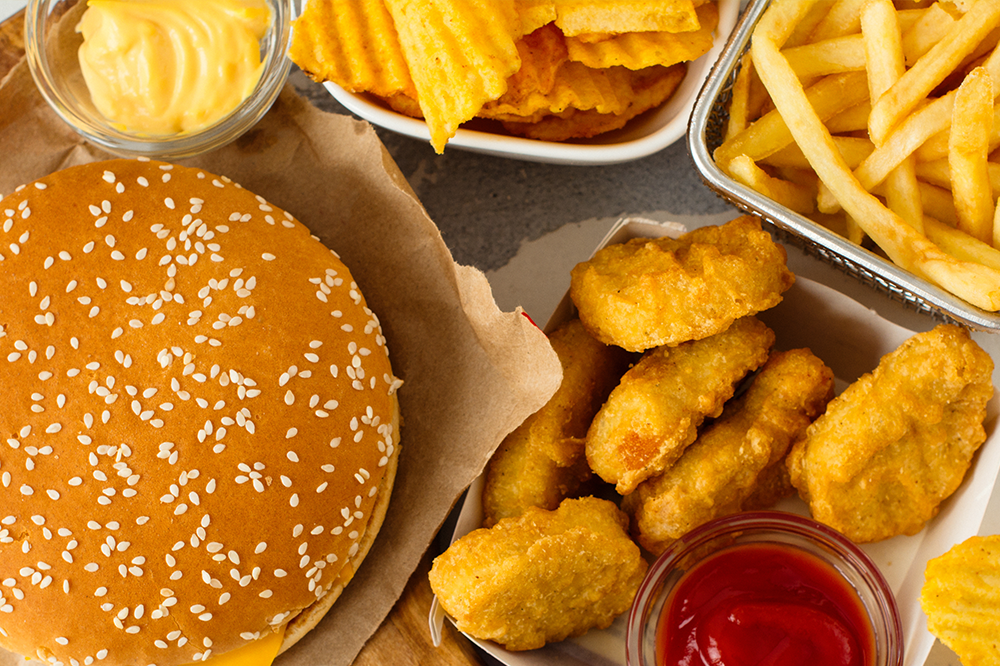
The stakes surrounding junk food marketing restrictions got a whole heap higher this week after the UK Government launched a consultation on its plan to apply a new nutrient profiling model (NPM) to food regulations.
Food and drinks identified as ‘less healthy’ by the government’s updated NPM would come into scope of bans on location and volume-based promotions, and advertising on TV before 9pm and online at any time, at the end of a planned 12-month implementation period.
Drinks like juices and smoothies are expected to feel the full force of the switch in model given a change to how the new version assesses sugar content.
NPMs categorise the healthiness of food and drink products based on their balance of nutrients. The UK’s previous 2004/05 model is more than 20 years old and doesn’t reflect modern dietary advice, according to the government. The newer 2018 model takes into account updates to nutrition science that have occurred since 2004, particularly regarding expert advice to significantly reduce sugar intake.
The proposal to slash sugar thresholds and measure ‘free sugars’ rather than total sugars is at the heart of a backlash from parts of the food industry against the change in model, which is set to pull many more food and drink products into the scope of marketing restrictions.
The free sugars definition covers both sugar that is added to products during manufacturing, but also naturally-occurring sugars found in foods like fruits and vegetables that have been released because the structure was broken down during processing. Children currently consume double the recommended amount of free sugars, which are distinct from intrinsic sugars found in whole, unprocessed fruits and vegetables. Free sugars are considered extremely challenging to isolate and calculate in food and drink products – one reason why some in the industry believe a long transition period from one model to the other is required.
Analysis by IGD following the publication of last year’s ‘10-year health plan for England’, in which the policy was first proposed, found that thousands of products currently sitting the right side of the 2004 NPM – often as a result of industry reformulation – would be categorised as HFSS (high in fat, sugar and salt) under the 2018 model. Beverages, including fruit juices, soft drinks and smoothies, are expected to be the most affected category with IGD citing a study across 45,000 retail products showing a 75% drop in products passing the NPM under the 2018 model. Breakfast cereals (11% fewer products passing), yoghurts (5%), and frozen foods (6%) would also be negatively impacted. The new NPM is also slightly stricter on points for saturated fat and energy, meaning more savoury snacks will be classified as ‘less healthy’.
The Food and Drink Federation (FDF) has consistently highlighted the multi-million-pound investments businesses have made over recent years to keep the right side of the current NPM. “We have serious concerns that changing to the new model will mean many healthier options could no longer be promoted or advertised to consumers, which runs the risk of them being delisted by retailers,” said FDF chief executive Karen Betts in February. “It also undermines investment decisions that businesses thought they were making in the longer-term, and the uncertainty is causing companies to pause investment in developing healthier products.”
The government said applying the new NPM to junk food advertising and volume price restrictions could lead to 110,000 fewer cases of childhood obesity and up to 520,000 fewer cases of adult obesity in the long term. Proponents believe it could also act as a driver of healthy innovation. A higher fibre content, for example, would bump up a product’s score, making it more likely to meet the healthy threshold.
Such is the seismic impact of the switch, we should brace ourselves for some forthright responses to the consultation, from both sides of the debate, ahead of its conclusion on 17th June.
Small Bites
UK braced for another food price shock
Analysts are predicting a fresh surge in food price inflation linked to the fallout from the conflict in Iran. IGD had previously forecast average inflation of 3.8% in 2026 but now expects this to reach 4.8% in a scenario where energy price shocks are moderate and 6.4% in a scenario where energy price shocks are intense. The food industry body explained how the food system was already under pressure from rising labour costs and regulatory changes, leaving limited scope for businesses to absorb further shocks even before the escalation of tensions in the Middle East. The Iranian conflict adds to these pressures, primarily due to the hike in global energy prices which has both a direct effect on operational costs and a knock on effect on the price of agricultural inputs like fertiliser. IGD expects increased costs to be passed through to consumers relatively quickly given the limited scope for food businesses to absorb them. The Food and Drink Federation (FDF), meanwhile, has urged the UK Government to protect the £42bn sector as new data showed growth in insolvency rates within UK food manufacturing between 2019 and 2025 was nearly triple that of the wider manufacturing industry. Food manufacturers saw production costs increase 4.4% on average in 2025, rising up to 5.3% for small businesses, according to the FDF.
Switch to sustainable farming can cut food bills
Scaling sustainable farming systems across the UK could deliver a 7% reduction in annual food bills by 2050, worth £240 per household, new research has found. The cross-party think tank Demos modelled the benefits of a wholescale shift to sustainable farming in a new report, produced in partnership with McCain Foods. As well as cutting food bills versus the current trajectory, it found the value of annual food production could benefit by £385.5m in a high yield scenario while farm profitability could grow by £1.6bn a year compared with current levels. Unlocking the benefits of sustainable farming could also boost the value of natural capital by a cumulative £56.3bn by 2050, according to Demos. The research is a follow-up to a 2023 report that focused on the barriers to scaling regenerative farming methods across the UK. The new research focuses on how to realise its benefits versus an alternative scenario where climate change, geopolitical instability and degraded land threaten to lock the UK food system into a future of higher prices, greater volatility and declining resilience. Writing the report foreword, former food and farming minister, Daniel Zeichner, said: “It is clear that we must stop treating “sustainable farming” as a niche environmental concern, and start seeing it as a cornerstone of our national food security. In an increasingly volatile world, a nation that cannot guarantee its own food supply is a nation at risk.”
McDonald’s urged to wield soy power
McDonald’s has been told to use its market influence to defend the Amazon Soy Moratorium (ASM). Environmental groups Greenpeace International and Mighty Earth have issued an open letter to McDonald’s CEO Chris Kempczinski, urging the fast-food giant to intervene as major soy traders abandon the zero-deforestation pledge. In January, the Brazilian Association of Vegetable Oil Industries (Abiove), which represents major soy traders, confirmed its intention to quit the moratorium that prohibits signatories from buying soybeans grown on Amazonian farms deforested after July 2008. The decision is linked to the removal of tax breaks for companies adhering to the ASM in the Brazilian state of Mato Grosso, a major soy-producing region. McDonald’s played a key role in establishing the ASM 20 years ago after Greenpeace exposed how soy grown on deforested land was entering the company’s poultry supply chain. The campaigners have called on McDonald’s to use its significant market influence to secure a renewed pledge from key traders – including the likes of Cargill, Bunge, ADM, and Louis Dreyfus Company – to remain committed to the ASM and make it “unequivocally clear” that it will cut ties with any suppliers that withdraw from or fail to uphold zero deforestation commitments.
Chef’s Special
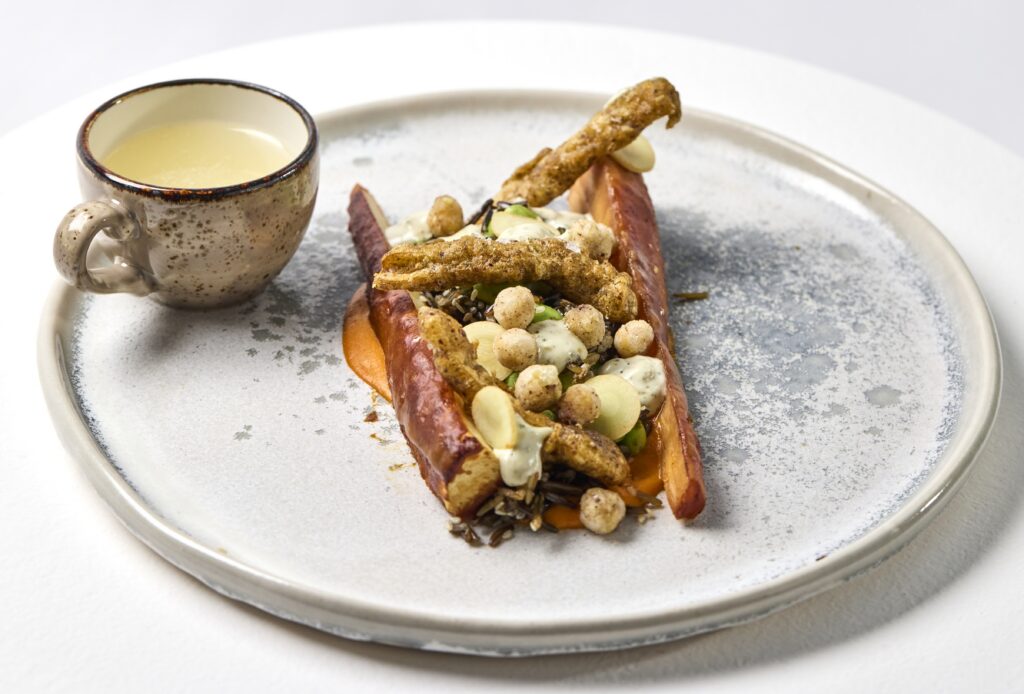
A dish celebrating the humble parsnip has scooped a prestigious prize for sustainable innovation. Gordon Carberry, a craft development chef with Sodexo Ireland, took home the ‘culinary innovation’ award at the Sodexo global Cook for Change! chef challenge 2026. The competition is designed to spotlight the central role of chefs in driving more sustainable and healthier food practices. Those competing in the culinary innovation category are judged on their ability to create a dish that delivers a memorable taste experience while embracing innovative and sustainable approaches. Carberry’s winning dish was ‘Meacan Bán’ (Irish for parsnip) featuring miso glazed parsnip, gouchujang, parsnip puree, popped chickpeas, wild rice, nori, citrus plant mayonnaise and crispy parsnip skins served with parsnip and apple shrub. Chefs from across Sodexo’s global business competed in a live cook off held in London this week. The overall Cook for Change! 2026 champion was Robert Janse from Sodexo Netherlands for his smoked Kohlrabi with miso, white bean cream and Kombucha beurre blanc.
Last Orders
Wales has given the green light to a deposit return scheme (DRS) that includes glass bottles. The Senedd this week passed the Wales Deposit Return Scheme regulations marking a major milestone in the journey to establish a DRS across the country. Unlike England, Scotland and Northern Ireland, which have aligned on a scheme due to go live in 18 months time, Wales has stuck to its guns and included glass bottles in its own DRS. Trade organisations have consistently called for a scheme that is interoperable across the four home nations, making compliance simpler for businesses and consumers. The Food and Drink Federation (FDF) urged the Welsh government to appoint a Deposit Management Organisation (DMO) for Wales as quickly as possible to ensure the scheme can go live across all four nations of the UK in October 2027. “We look forward to working with the next Welsh Government to find a pragmatic way forward on the inclusion of single use glass, which will currently be in scope in the Welsh DRS, at odds with the rest of the UK,” said David Harries, chief executive of FDF Cymru. “Industry must be empowered to work to find a solution, working as a supply chain to enable a stable, domestic circular economy.”




Leave a Reply