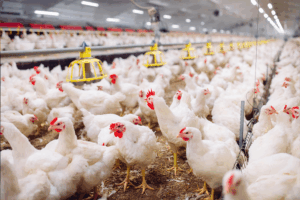
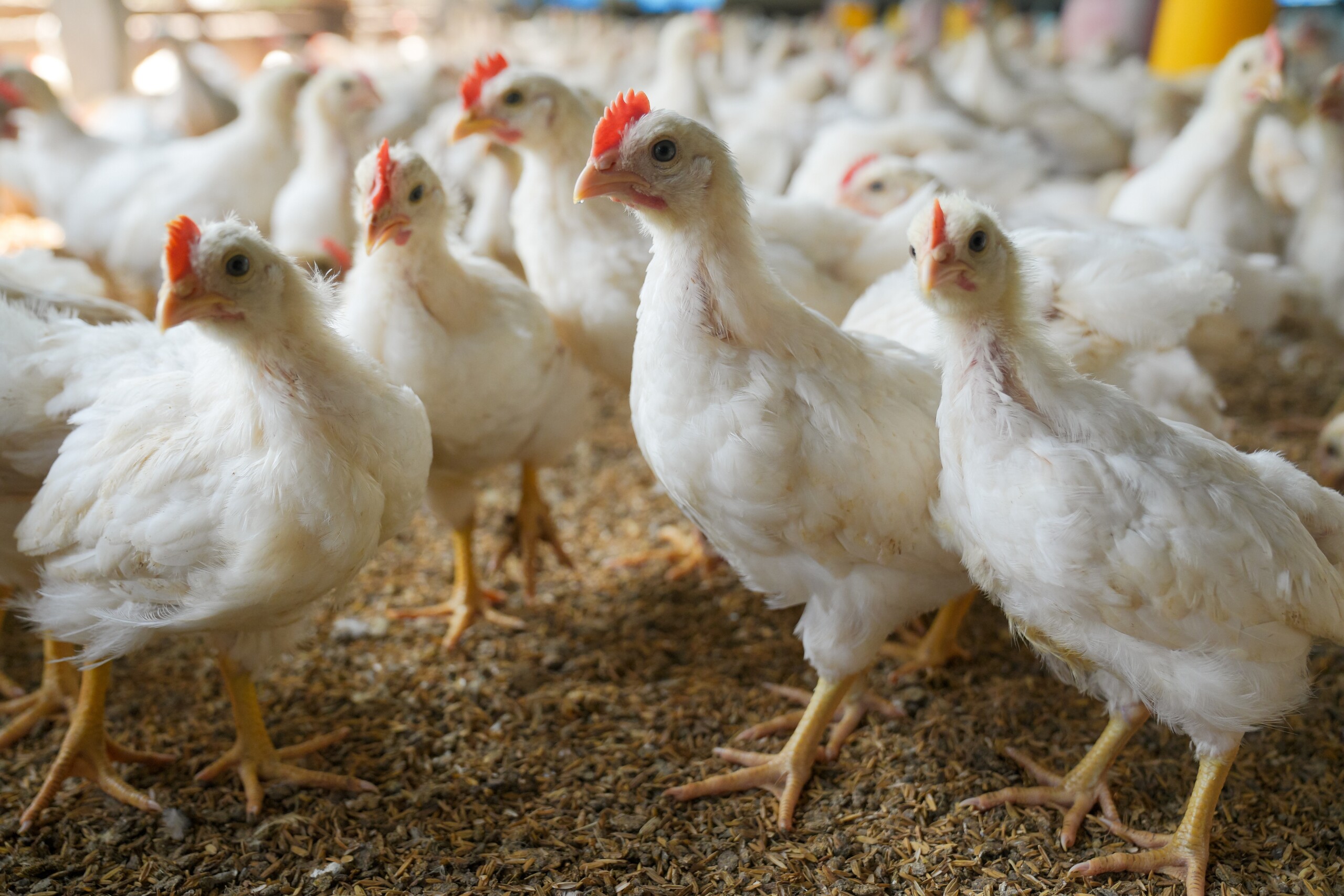
A schism has emerged over the best vehicle for improving chicken welfare after a group of leading hospitality operators responsible for 18 brands withdrew from the ‘Better chicken commitment’ (BCC)
The group, which includes the UK arms of Burger King and KFC as well as Nando’s and Wagamama, caused consternation among campaigners as they broke away to form a new industry-led ‘Sustainable chicken forum’. Forum members say they intend to take a more holistic view of chicken production, recognising that welfare, environmental impact and food security must be addressed together. Campaigners, however, accused them of putting profits before welfare.
At the heart of the split is the BCC requirement to transition to slower-growing breeds of broiler chicken that demonstrate higher welfare outcomes. Although UK signatories have generally made progress on BCC criteria like providing chickens with enrichment and natural light, and adopting more humane stunning methods, breed change has proved a far tougher nut to crack as has, to a lesser extent, a move to lower stocking densities. In the latest progress report for the BCC, published in March 2025 (a new update is due next month), a high proportion of foodservice and hospitality businesses, including restaurants, either did not report against slower growing breed criteria or reported minimal or 0% progress.
Businesses involved in the split say current supply chain dynamics make adoption of slower growing breeds unviable at scale, while noting they also carry a higher carbon footprint. Consumer demand for chicken continues to grow at a time when supplies are already tight, a situation that would be exacerbated by a move to slower growing breeds which take longer to reach slaughter weight, alongside a reduction in stocking densities.
In order to meet demand, production must expand, however businesses point to challenges in gaining planning permission to erect large broiler production facilities (such facilities have also been cited as contributing to local river pollution). Campaigners, however, point to the success of retailers Waitrose and M&S in increasing compliance on breed and say they are standing by ready to facilitate business collaboration to establish a critical mass of demand for slower growing breeds. “BCC-compliant chicken is available, and volumes will increase further as retailers like M&S expands its BCC fresh chicken supply. The foodservice sector should be capitalising on this rather than stepping back from the BCC,” said Compassion in World Farming in a statement.
With the BCC deadline of the end of 2026 fast-approaching, the group of eight businesses has decided to ditch the commitment altogether, suggesting it is no longer the right framework to drive the next phase of progress on welfare.“Our restaurants and food-to-go brands are critical parts of the high street and we know that consumer demand for chicken continues to soar,” said Allen Simpson, chief executive of UKHospitality. “However, this demand comes at a time of acute chicken supply pressures and operators rightly have to ensure consistent and secure supply chains, while continuing to improve welfare standards and cut their environmental impact.”
In response, Claire Williams, campaigns manager at The Humane League UK, said: “The ‘Better chicken commitment’ was designed by scientists to help animals – the ‘Sustainable chicken forum’ is a welfare-washing, PR-stunt designed to deflect criticism, and let these companies claim they are doing enough.”
Keep your eyes peeled in March when Footprint will run a two-part Footprint in Focus special on why the BCC has split the industry and what the future is for chicken welfare.
Small Bites
Can we have the Bill, please?
More than 100 organisations, including several large foodservice businesses, have called on the UK Government to introduce a Good Food Bill, which would lock in the change needed to build a food system fit for the future. The Food Foundation, Sustain and Green Alliance have led the development of a statement which has been signed by organisations ranging from investors, charities and academics to supermarkets, wholesalers and caterers. Bidfood, Elior and Sodexo are among the businesses to have signed up alongside Marks & Spencer, Danone and Co-op Group. They are calling for a bill that ensures progress in tackling key challenges like biodiversity loss, the collapse of vital ecosystems, and the potential for food shortages is not derailed by shifting political priorities. The statement warns that a failing food system is a threat to national security and public health and positions a Good Food Bill as a once-in-a-lifetime opportunity for the government to protect citizens, farmers and food businesses. New polling shows 65% of people support a food bill that would introduce duties and targets on government bodies to make healthy food more accessible and affordable. “Governments can achieve important wins within a single term, but only legislation can lock in change, providing certainty and protecting progress from shifting political priorities,” said Anna Taylor, executive director at The Food Foundation.
NFU hammers home resilience message
A resilient food system is a cornerstone of national security and should be backed up by a long-term plan for farming and food production, according to the National Farmers Union (NFU). Speaking at its annual conference this week, NFU president Tom Bradshaw called for a renewed focus on resilience at a time of geopolitical uncertainty. Resilience, he said, “means the ability to anticipate shocks, withstand the impact and recover stronger than before”. The latest data from the NFU’s farmer confidence survey shows low confidence among farmers and growers with 64% saying their profits are either declining or that their business may not survive. “Profit is not a dirty word,” said Bradshaw, but “the first step towards true sustainability”. He welcomed government plans to make it easier for farmers to secure approvals for new agricultural buildings as “exactly the sort of intent we need to see in other areas such as delivering on its manifesto pledge for half of all food purchased across the public sector to be locally sourced”. Bradshaw echoed a warning from Professor Tim Lang’s report last year for the National Preparedness Commission that the UK cannot assume other countries will feed it in future. “Building farming’s resilience is crucial, because if we don’t, our ability to produce food here, and therefore our food security, our national security, and our economic growth, will be under threat,” said Bradshaw.
Councils not ready for food waste rules
Almost a quarter of English councils will miss the deadline for providing separate household food waste collections, according to a BBC News investigation. Legislation requires councils to begin providing weekly food waste collections from March 31st, however more than 70 councils said they would not meet the deadline. Some blamed the delay on demand for new specialist vehicles, while others cited issues with funding. A small number of local authorities have been granted bespoke extensions where they have long-term waste disposal contracts in place. Environment minister Mary Creagh told the BBC that councils had had a significant uplift in this year’s budget to help make the policy a success. “Do it slowly, do it right but let’s get on with it,” she said. “We have been stagnating at these very low recycling rates for far too long.” The hope is that by requiring food to be separated from other types of waste the amount of food wasted each week will become more visible and therefore householders will be encouraged to take steps to reduce it. Businesses in England with 10 or more employees are already required to separate food waste for collection under simpler recycling rules, with micro-businesses coming into scope from March 31st 2027.
Chef’s Special
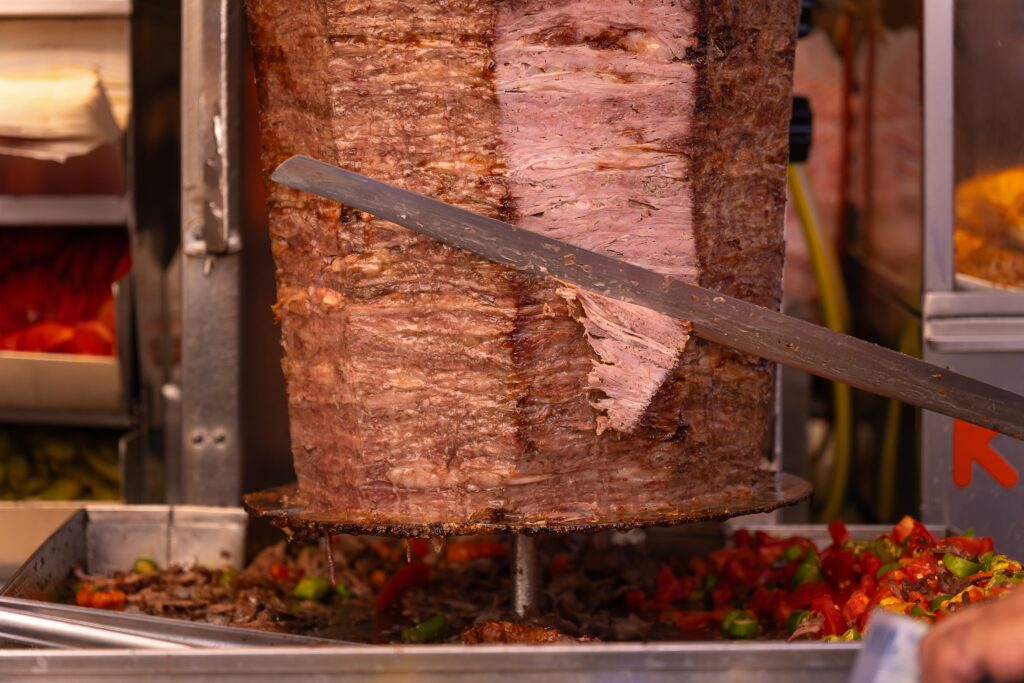
The kebab shop is a British institution, providing the stage for many a late-night culinary communion. This week, the industry celebrated its best-in-class as the 14th British Kebab Awards took place in London. Regional prizes were awarded to the best restaurants, spanning fine dining establishments and takeaways, as well as suppliers and mobile operators. Kemal Coşkuncay of Casa Rima in Liverpool and Mazlum Demir of Skewd Kitchen in London were crowned chefs of the year, while for those choosing to eschew traditional lamb meat on sustainability grounds, Great British Doner in Manchester was awarded the prize for best vegan kebab. Make mine a vegan shish and don’t spare the chilli sauce.
Last Orders
A switch to plastic beer barrels is fuelling a reduction in transport-related carbon emissions for craft brewer Beartown. The Cheshire-based brewer has rescued and refurbished 200 barrels from a brewer that has recently gone out of business, according to trade journal The Morning Advertiser. The barrels are lighter compared to the steel kegs commonly used for storing and transporting beer and are expected to reduce fuel load across regional deliveries thereby saving an as yet unquantified amount of carbon. Beartown will also save on the cost of renting the equivalent number of steel kegs, at around 25p per day, having paid just £50 in total to acquire the 200 plastic barrels.
Please send press releases and news to editorial@footprintmediagroup.com