
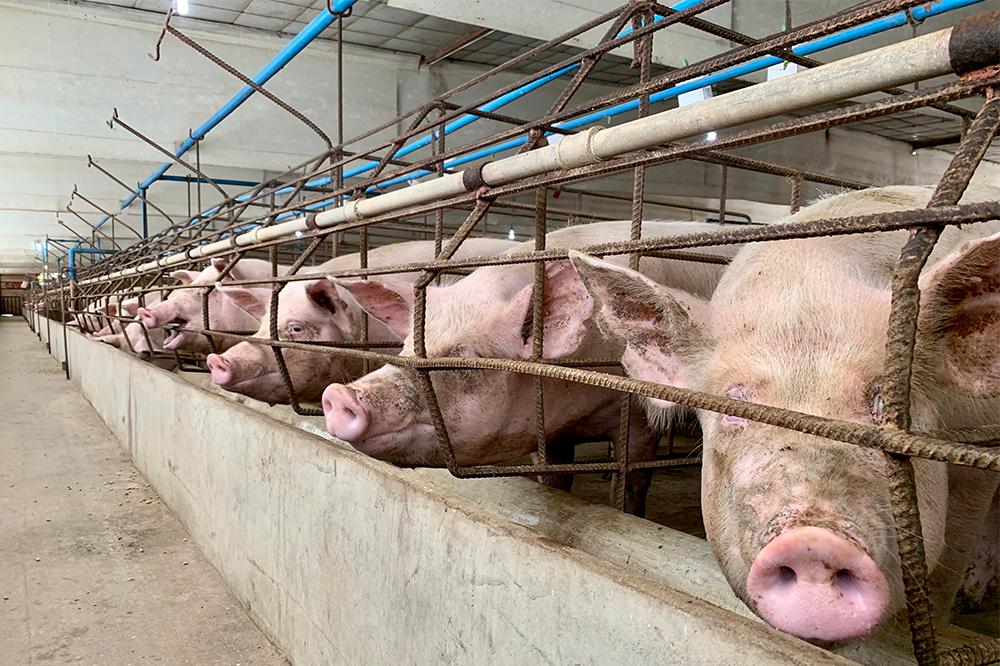
The inaugural factory farming index lays bare the environmental, welfare and health impacts of intensive livestock production. By David Burrows.
Tome for change. Produced by World Animal Protection, an NGO, and involving Joseph Poore, a highly-regarded researcher in sustainable agriculture at the University of Oxford, the factory farming index is presented as a “case for changing the way we feed our world”.
Tear jerky. The index is light on text but heavy on data – and that data sheds light on production that remains “largely invisible” to most. Farmed chickens for example live for just 5% of their potential natural lifespan, and pigs just 4%. This drops to 1.3% (35 days) and 3% (160 days) in the US. Cows reared for milk live for longer but the life they lead is often not the one often presented by processors, and perceived by the public.
Carbon counter. The evidence on emissions used by supporters of more intensive farming methods – which they claim are more efficient and have a lower carbon footprint – is also challenged. “While factory farming is often portrayed as climate efficient based on emissions per kilogram of meat, dairy or eggs produced, its heavy reliance on soy and maize feed – often tied to deforestation – makes the total climate impact much higher.”
Health kicker. Poore understands this better than most, having co-written one of the most detailed assessments of the environmental impacts of food. However, it is the health impacts that offer the index its sucker punch to the status quo. This reliance on intensively farmed meat production is also shortening our lives: on average, 1.8 years of healthy life is lost per person globally due to factory farming.
More meat. Excess meat consumption, particularly red and processed meat, is part of the problem here given that it is linked to colorectal cancer, heart disease, type 2 diabetes, stroke, kidney disease, and possibly dementia. The concerns extend beyond meat eaters, though.
Vegan victims. Reliance on antibiotics is another factor, and so too are the pollutants, greenhouse gas emissions, and other environmental impacts associated with this kind of system. For example, due to the large volume of animal excreta, factory farms emit ammonia, nitrous oxide and fine particulate matter which have been linked to a range of pulmonary health conditions, especially in people living or working near these facilities. “The index shows that even people who don’t eat factory farmed products, or any animal products at all, are victims of the industry, albeit to a lesser degree,” the authors write. “Put simply, the impacts of factory farming on human health extend beyond the impacts associated with the direct consumption of these products.”
Less and better. Tricia Croasdell, CEO of World Animal Protection, said: “This research is clear: in order to achieve a better quality of life for people, we need a better quality of life for animals. We need to support countries in looking to the future of how they feed their populations without damaging human health, animals, and our planet,” she added. Croasdell called for the prioritisation of plant-based diets and support for higher welfare small-scale farmers who want to incorporate agroecological principles to farming.
