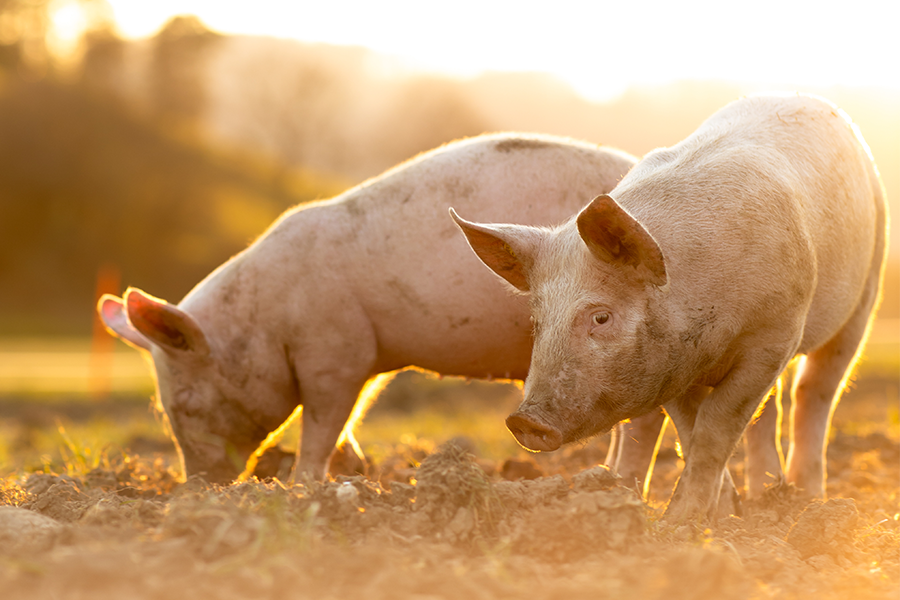
Ministers need to address the outsized environmental impact of the pig and poultry sectors within forthcoming food and farming strategies, according to a charity.
The Wildlife Trusts, a federation made up of 46 local Wildlife Trusts, is calling for a moratorium on new production units, and the expansion of existing units, in areas at risk from the pollution associated with intensive pig and poultry production.
It also wants to see a new cross-departmental government taskforce established to identify how the impacts associated with UK concentration of pig and poultry production can be best managed to minimise environmental impacts.
A report by the consultancy Cumulus for The Wildlife Trusts has sought to quantify the environmental risks from pig and poultry production in the UK across a range of indicators including biodiversity, climate, water quality, air quality, land and water use.
It found what the charity described as a “huge, hidden land take” in the production of pigs and poultry. Just to feed UK pigs and poultry requires around 520,000-580,000ha of wheat, equivalent to 34% to 38% of the UK’s total wheat crop, while imported soyabean meal uses an estimated 730,000ha of land overseas.
Feedstocks are often grown using a mix of artificial pesticides and fertilisers, which damage soils and expose rivers and waterways to pollutants whilst also posing risks to pollinators and other wildlife, according to the report.
It is estimated too that around 10 million m3 of excreta (waste) is generated every year by UK pigs and chickens, with the high level of nutrients found in the excreta making it hard to use the waste sustainably when it is applied to the land to provide soil nutrition.
Moreover, the research found intensive production is highly concentrated into ‘hotspot’ areas which often mean current regulations are insufficient to manage the potential environmental impacts of the operations. The well-documented nutrient pollution issues in the River Wye catchment highlight the impacts that locally-concentrated manure applications in excess of crop need and soil capacity can bring, according to the report.
Almost 1 million tonnes of pigmeat and 2 million tonnes of poultry meat are produced in the UK every year, equivalent to breeding, growing and slaughtering in the region of 11 million pigs and 1.1 billion broilers. The Wildlife Trusts said a high level of efficiency within the sector resulting from consolidation and supply chain integration has come at a cost to the environment.
“Assessment of the environmental impacts of pig and poultry production to date has largely focussed on the immediate risks of slurry pollution, but this research looks for the first time at the wider risks across the whole UK sector – in particular the vast land take for feed production,” said Barnaby Coupe, senior land use policy manager at The Wildlife Trusts.
“A requirement for nutrient management action plans and reformed permitting regimes can help address these issues, but crucially there must be support from both government and the industry so farmers are not landed with the burden of fixing this broken system.”
Coupe urged the government to use upcoming strategies and policies including the land use framework, revised environment improvement plan, farming roadmap, and a water reform bill “to support farmers to transition to a less polluting and more integrated pig and poultry system which in turn helps to clean up our rivers and meet our legally binding nature recovery and climate targets”.