
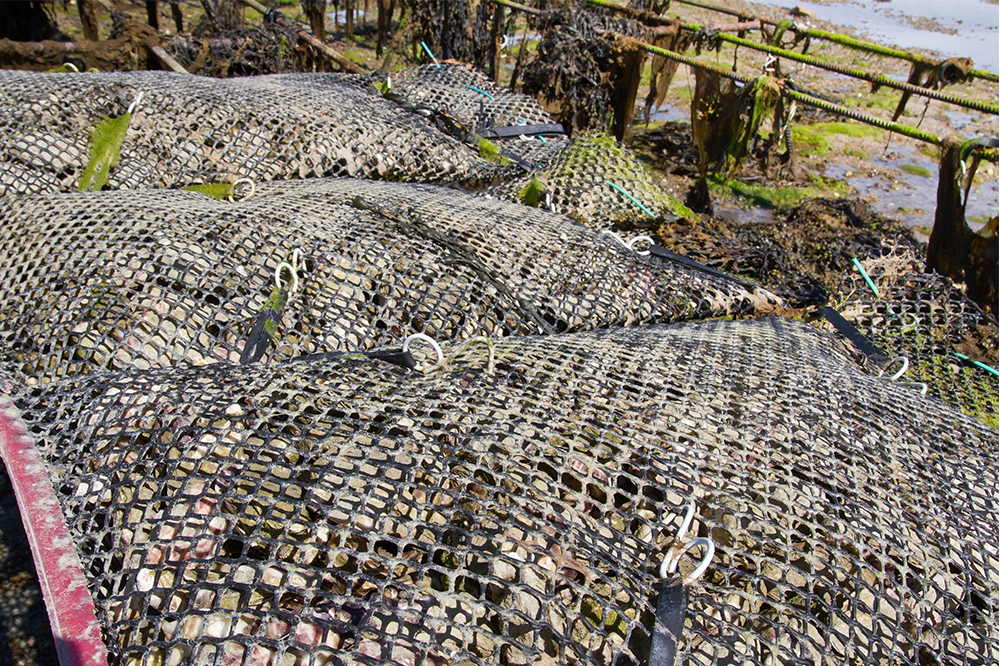
UK oyster populations could grow significantly over the coming decades as they benefit from climate change with seas warming across northern Europe
Researchers at the Centre for Environment, Fisheries and Aquaculture Science (CEFAS) have modelled how the number and distribution of 19 threatened marine species across the northwest European shelf will change under two different future climate change scenarios – ‘medium emissions, high mitigation’ and ‘high emissions, low mitigation’.
The results, published in the Marine Biology journal, found an overall increase in suitable habitat for the species and particular benefits for native oysters as well as spurdog, thornback and undulate rays.
Native oysters are considered a culinary delicacy, however populations have declined by 95% in the UK since the mid-19th century, according to the Native Oyster Network, and are now predominantly found in the Thames Estuary, the Solent and the River Fal.
As sea temperatures rise, the research found the native oyster’s suitable habitat is projected to expand into the North Sea and Irish Sea, with no clear areas of decline identified.
Although farmed native oysters are currently rated as a good choice under the Marine Conservation Society’s Good Fish Guide, wild-caught oysters in England and Scotland are rated as ‘needing improvement’ given the challenges facing populations.
Climate change is set to have a huge impact on marine organisms and ecosystems. Analysis has shown that 70% of UK fish species have already responded to warming in the region by changing distribution and/or abundance.
Although the CEFAS research found an overall increase in suitable habitat for the 19 species, it identified decreases in several threatened species including the slender sea pen, ocean quahog, sea fan and fan mussel.
Localised declines in species can have a knock-on effect on food chains and marine ecosystems. The researchers said some species may be able to expand and thrive in new areas that are not currently protected from human disturbance, while areas that are currently protected may no longer remain viable in protecting their designated features in the future.
They added the results will be especially useful in determining which species or areas may benefit from active interventions, to remove barriers to dispersal or provide protection, or from enhanced monitoring and surveillance to inform management.
Related articles

Will salmon’s growth come at environment’s expense?
As the UK negotiates lower tariffs for exports to India, the body certifying organic salmon has warned of unacceptable welfare outcomes on salmon farms
Does seafood hold the key to future food security?
With land under pressure from food production many believe our oceans can help meet the world’s nutritional needs