
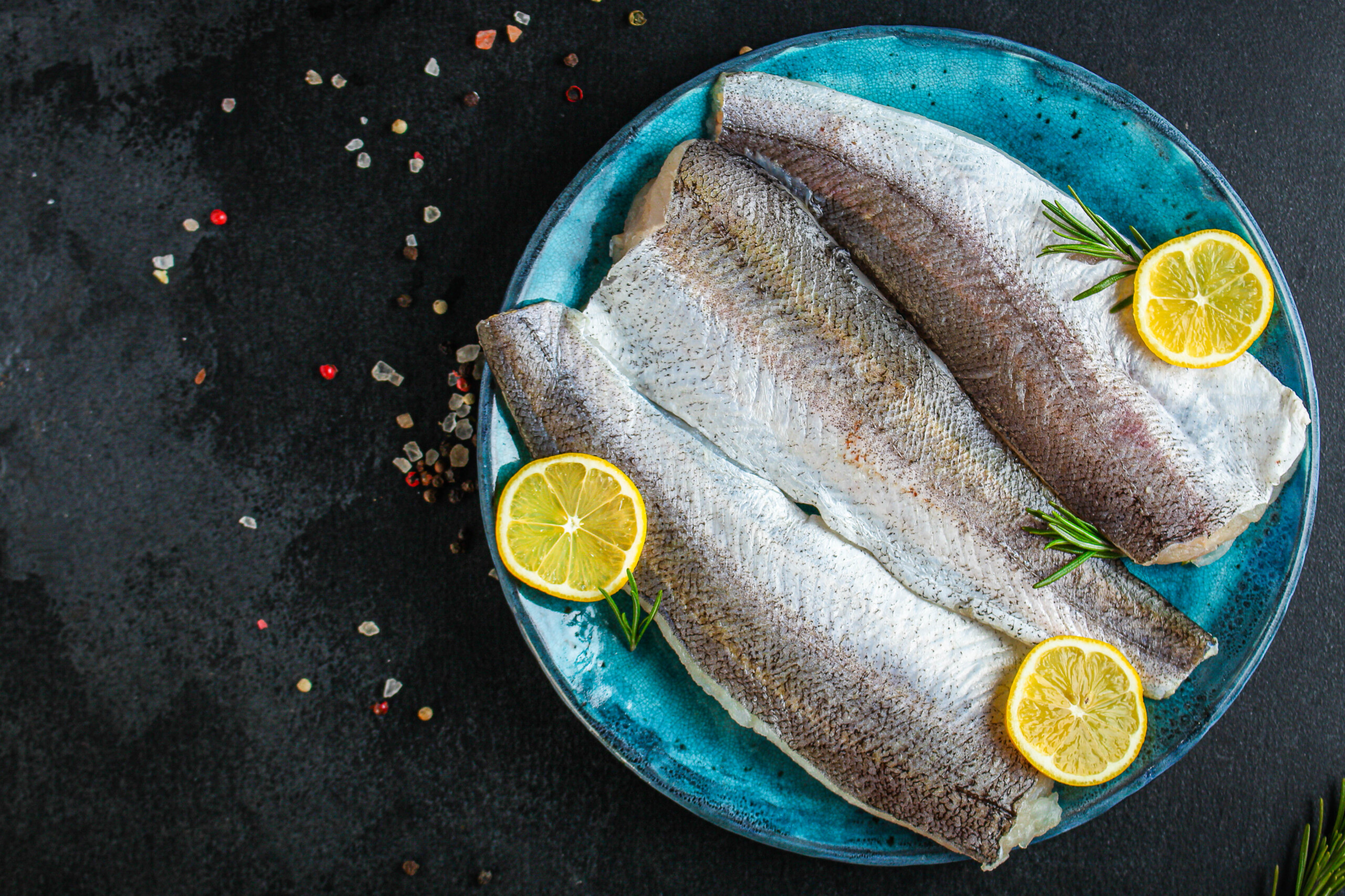
With land under pressure from food production many believe our oceans can help meet the world’s nutritional needs, but only if demand can align with sustainable supply
Floating like giant, mechanical jellyfish on the surface of the water, the cages that house farmed fish are a common sight off the west coast of Norway. Salmon has long been the dominant farmed species in this part of the world but in recent years another fish popular with the British public is starting to muscle in on the market.
Norcod started producing farmed cod in 2018 and now produces over 8,000 tonnes a year from eight sites dotted along the coastline of Norway (overall, Norway produces over 20,000 tonnes of farmed cod a year). Although still in its infancy, the market for farmed cod has never been stronger, according to CEO Christian Riben, with the product already being served up in sushi restaurants in London.
Riben was speaking at last week’s Norway UK Seafood summit, hosted by the Norwegian Seafood Council (NSC). Attendees heard how supply constraints on wild cod due to overfishing and reduced quotas have sent prices soaring. Cod prices are up 12% in the past 12 months and are expected to go higher still with 2026 expected to see the lowest cod supply since the Second World War. The impact will be felt keenly in the UK market where foodservice represents more than 50% of the cod volume sold, largely due to our love affair with takeaway fish and chips.
Advocates of fish farming say it can provide a low-carbon, nutritious source of calories without placing any further pressure on terrestrial land, while the application of artificial intelligence will drive improvements in efficiency and welfare. But for some environmental campaigners, news of a burgeoning farmed cod sector will give cause for concern given the criticism levelled against parts of the salmon farming industry over its environmental and social impact. The summit in London’s historic Fishmongers’ Hall was targeted by campaigners from Foodrise and Ocean Rebellion, who have accused the Norwegian salmon farming industry of “food colonialism”, by extracting huge quantities of wild fish from the Global South to feed to farmed salmon.
As well as its reliance on fishmeal, the sector has faced scrutiny over poor welfare practices and local pollution. In May last year, the Soil Association threatened to stop certifying organic farmed salmon unless meaningful progress is made on improving welfare and environmental standards within the sector.
And farmed salmon is not the only sector being urged to up its game. Compassion in World Farming (CIWF) recently unveiled the first ever scorecard assessing the welfare policies of farmed sea bass and bream producers and concluded there is a need for producers to prioritise welfare-focused policies and report their progress proactively and clearly.
Critical role
Yet for all the challenges and controversies surrounding the production of both wild-caught and farmed seafood, there is widespread acknowledgement that on a planet where terrestrial food production is reaching its sustainable limits, the ocean has a critical role to play in ensuring future food security.
The ocean alone covers 70% of our planet, but currently provides just 5% of our calories from food. When produced sustainably and ethically, so-called “blue foods” (including plants like seaweed and water spinach) can provide a low-carbon, nutritious source of protein. The Food and Agriculture Organisation (FAO) has said more food needs to come from the ocean; its 2021 ‘Blue transformation roadmap’ highlighted how aquatic food systems can make key contributions to food security and nutrition, help prepare for and buffer the impacts of climate change and, when properly transformed, sustainably increase the supply of nutritious food and contribute to community resilience, decent employment, equity, gender equality, and poverty alleviation. The roadmap included a target for at least 35% growth in global sustainable aquaculture production by 2030.
WWF is another institution banging the sustainable seafood drum. A report published by the conservation charity in 2023 modelled an 83% increase in seafood consumption in the UK by 2030 to achieve a net-zero aligned, healthy diet, mostly due to the nutritional benefits of seafood.
Nutrition focus
Much of the talk at the summit focused on how seafood can capitalise on a growing public desire to eat healthily. Protein remains one of the defining food trends of the 21st Century and one that seafood is well placed to meet, however Alexander Andersen, an associate from consultancy McKinsey, said seafood continues to lose out to chicken and convenience products with added protein like shakes and snacks. Andersen urged seafood producers and retailers to be more explicit about the high protein content contained within many species and to experiment with different formats that align with consumer demand for convenience products.
Seafood also stands to benefit from a trend towards positive nutrition including gut health and brain vitality, according to a UK market and retail trends report presented by NSC at the summit. “Seafood can play a meaningful role by supporting microbiome diversity, reducing inflammation and offering easily digestible, nutrient-dense protein,” the report states.
To unlock these health benefits in a sustainable way, those involved in the seafood supply chain will need to help people consume a greater diversity of species, which in turn can alleviate the pressure on stressed stocks. In order to meet its 83% figure, WWF said UK consumers will need to shift away from the big five species of cod, haddock, prawns, salmon and tuna that currently dominate UK consumption, and choose lower footprint seafood options where possible, particularly locally-produced seafood like mussels and more diverse species like sardines.
Behaviour change is never easy. Research by the University of East Anglia published in January found that more than 40% of consumers say they are willing to experiment with fish they’ve never tried before like sprat, sardine or flatfish. However, all too often, such attitudes don’t translate into purchasing decisions. Salmon in particular remains the engine of seafood’s growth with demand growing by 8% in value and 10% in volume year-on-year, according to the NSC report.
Lack of diversity
Presenting at the summit, Joe Shaw Roberts, business unit director for Worldpanel by Numerator, said the number of species UK consumers have been buying has been steadily declining over time to the point that 20% of consumers only buy one species (usually salmon). “It’s hard to drive repertoire,” he noted.
Mike Warner, CEO of consultancy A Passion for Seafood, pointed to the abundance of herring found off the east Suffolk coast, for which there is almost no domestic market, as an example of where demand is out of kilter with supply. He suggested alternative species would struggle to gain traction in the absence of a better narrative around their benefits, with people’s purchasing decisions still largely based on price, taste, habit and convenience. Although certification increasingly acts as a procurement filter for the retail sector (less commonly so for foodservice) sustainability rarely acts as a driver of consumer choice, said Warner.
Chefs’ role
Speaking on another panel, Michel Roux said he believes chefs with a high profile have a duty to champion sustainability in seafood “so that our guests are fully understanding of what this is”.
There’s certainly an argument to be made that chefs have a key role to play in encouraging greater species diversity by showcasing lesser known species on restaurant menus and giving customers the confidence to try them both in and out of the home. Last week, a fish and chip shop run by two brothers in Yorkshire was named as Britain’s best at the National Fish and Chip Awards. The Scrap Box in Dunnington has recently added hake and saithe (coley) to its menu to encourage customers to try alternatives to cod.
Yet there remains confusion among consumers over what sustainable seafood actually looks like on the plate, perhaps unsurprisingly since the answer can be dynamic and dependent upon factors like current stock levels and fisheries certification. Waitrose has just taken the bold step to suspend mackerel sourcing over sustainability concerns, a decision its head of agriculture, aquaculture and fisheries, Jake Pickering, characterised as the supermarket “taking a decisive stand against overfishing to safeguard the long-term health and sustainability of our oceans”.
Warner suggested the word sustainability is overused and has become a “cover all for everything”. He identified three pillars for seafood sustainability, all of which have to be in balance to achieve true sustainability: environmental sustainability including science-based management and ecosystem protection; commercial sustainability including profitable fisheries and predictable supply; and social sustainability including safe working conditions and thriving communities. Increasingly, there is a fourth pillar too – governance – which underpins the other three. “If one fails, the system weakens, and then it becomes inherently unsustainable,” said Warner.
The challenges facing cod supply serve as a warning for how our taste in seafood needs to be married with sustainability and diversity – alongside good regulation, properly enforced – if blue foods are to become the cornerstone of food security that many both inside and outside the seafood sector believe they can be.
Unless that balance can be struck, the nation’s favourite fish and chippie supper risks becoming a luxury meal in future, no matter how many cod farms start appearing along our coastlines.
More from Footprint in Focus

Is 50% procurement target still on the menu?
More than 18 months since Labour came to power a standout manifesto pledge for half of public sector food to be local or sustainable has yet to materialise

The food sector has reached a critical fork in its sustainability journey. Doing ‘less bad’ is no longer a credible strategy for the future