Defra has confirmed it retains ownership of the Good Food Cycle, but questions persist over the industry’s willingness to wait for government leadership
Has the government outsourced development of England’s food strategy to the private sector? That was the question causing confusion and consternation among certain stakeholders towards the end of September following the announcement by industry body IGD of its proposal to lead on the development of a ‘Food Nation 2040’ plan.
Fast-forward a fortnight and the picture has become somewhat clearer with Defra confirming to Footprint that Food Nation 2040 is not the next stage of the ‘Good Food Cycle’ food strategy, nor a rebranding under a new banner, and that the department will continue to lead on developing an overarching food strategy for England.
Food Nation 2040 has been billed by IGD as a “proposed set of prioritised actions to turn existing ambition for the food system into a practical framework for delivery and implementation”. The intention, the industry body said in an explainer, is to “build on the foundations of the Good Food Cycle” – the government’s food strategy for England launched to much fanfare in July 2025.
Amid initial silence from within Defra and conflicting media reports (including Footprint’s own account), speculation was rife within the food policy community that the Good Food Cycle was dead in the water, to be replaced by the industry-led plan.
The message being conveyed now is that IGD is proposing a framework of action to complement – not replace – the Good Food Cycle, with a particular focus on areas where industry action can have maximum impact. Defra, meanwhile, says it is on track to publish metrics early next year to show how progress will be measured towards the ten priority outcomes for a healthier, more affordable, sustainable, resilient food system set out in its original document from almost 15 months ago.
Despite slow progress in building on the foundations laid down in the Good Food Cycle, this clarity may go some way to easing fears among civil society organisations that the industry has captured the food strategy development process entirely. In a blog first published on October 5th, Glen Tarman, policy and advocacy director for Sustain, noted how there had been no ministerial statement and no published terms of reference for Food Nation 2040, with the only official record of it contained in a single paragraph in minutes from the meeting of Defra’s Food Strategy Advisory Board (FSAB) on 14th September – the expert advisory group set up to support the government in creating its food strategy.
“For a government strategy that affects everyone’s health, livelihoods and environment, that is not good enough,” wrote Tarman. “If Food Nation 2040 is not the next phase of the food strategy, the government should say so officially, and tell us what is.”
Sustain, as part of the Food Strategy Alliances group representing over 200 civil society organisations, subsequently wrote to food security and rural affairs minister, Stephen Morgan, asking Defra to clarify its position publicly.
‘Doomed to fail’
Amid an information vacuum, food policy commentators were quick to draw their own conclusions about the premise behind Food Nation 2040 and the extent to which IGD’s intervention should be welcomed. “With this level of big food and drink industry involvement and control this strategy is doomed to fail,” warned Dolly van Tulleken, the food policy consultant and campaigner.
Chris Elliott, the food security expert who carried out the government’s independent review into the horsemeat scandal, was more enthused by IGD’s intention for Food Nation 2040 to set some clear strategic priorities for the food system that can be actioned at pace. “What appeals to me is that it starts from a very sensible premise,” Elliott wrote in an article for New Food Magazine. “Britain does not suffer from a shortage of reports about what is wrong with our food system. There have been strategies, reviews, advisory groups, consultations and studies – many containing excellent analysis and sensible recommendations. The problem, rather, has too often been converting that knowledge into sustained action. I believe Food Nation 2040 represents an attempt to move this debate towards delivery.”
Elliott did express caution over “hints at emerging tensions and shifting power dynamics between industry and Defra” and stressed “there are some things only government can deliver: long-term policy stability that enables businesses to invest is top of my own list”. Yet he concluded this is no time for a “turf war” over who owns the food security agenda. “What Britain needs now is government and industry working together around a cohesive, detailed and deliverable plan, with clear responsibilities, investment commitments and measurable outcomes,” Elliott wrote.
Delivery focus
Defra’s confirmation that work on the Good Food Cycle will continue suggests Elliott may get his wish. A laser-like focus on short-term delivery is essentially what IGD is promising to bring to the table versus Defra’s more considered approach. Food Nation 2040 will “set out how industry, government and wider stakeholders can work together towards creating meaningful change towards a food system that is healthier, more affordable, more resilient, more sustainable and investable for the long term”.
A first draft proposal for the work was presented to the FSAB by IGD chief executive Sarah Bradbury during the September 14th meeting, which was chaired by Morgan and attended by Defra secretary of state Angela Eagle. The minutes state that: “Discussions covered healthy and affordable food, growth and investment, resilience and sustainability, and food culture and connection. The Board made specific suggestions about priority areas and advised strongly on the need to prioritise areas where action could be taken quickly, to maximise impact. Effective engagement across government, the food sector, and civil society would be key.”
Engagement, or rather a lack of it to-date, is one of the concerns highlighted by civil society groups regarding the work. Tarman in his blog suggested that “an industry-led framework cannot speak for the whole food industry, let alone the wider public interest”. He said he had written to Bradbury asking to meet before the first proposal for Food Nation 2040 is published. “We want to understand how civil society input will be able to help shape its priorities, who has been involved so far, how IGD separates its role on the [Food Strategy] Advisory Board from convening Food Nation 2040, and how the work will draw on the expertise of existing alliances.”
Health plan
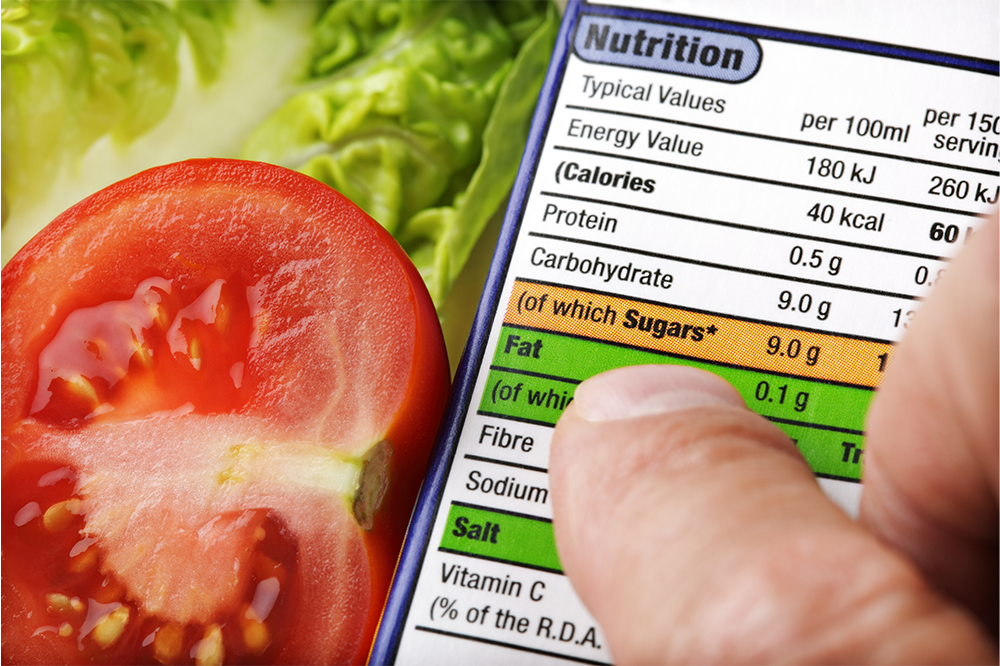
As with the Good Food Cycle, the cross-cutting nature of Food Nation 2040 – to be built around four interconnected missions spanning healthier and more affordable food; resilient and sustainable supply; good growth; and thriving food communities – will bring the plan into the orbit of other government departments, notably the Department for Health and Social Care (DHSC).
Here too a picture is building of a lack of government urgency around food policy development and delivery, leaving the path clear for businesses to set the agenda. Take the government’s plan to develop a healthy food standard – a standout policy announced in last year’s ‘10 year health plan for England’ that will require large food businesses to report publicly on the healthiness of their food and drink sales and meet future targets.
Fifteen months on from the plan’s publication, details have yet to be confirmed about what data companies will be required to report, how healthiness will be measured, and what targets businesses will be required to meet. In January 2026, the government said it was working towards a spring 2026 consultation on healthier food targets and reporting. By June 2026, it was clear that wasn’t going to happen, with the then parliamentary under-secretary Sharon Hodgson telling Parliament that DHSC intended to launch a full public consultation “soon”, without giving a precise date. Now, in response to an enquiry, a DHSC spokesperson says only that: “To build a healthier Britain, we are restricting junk food advertising on television before 9pm and at all times online, while giving local authorities stronger powers to stop fast food shops opening near schools. We will be consulting in due course on the other proposals set out in our 10-Year Health Plan to tackle obesity and promote healthy eating.”
As ministers and officials prevaricate, businesses have sensed an opportunity to get ahead of the regulatory curve. Last month, five leading food and drink manufacturers – Carlsberg Britvic, Danone North Europe, KP Snacks, Nomad Foods and Premier Foods – pledged to publish data on the healthiness of their product portfolios, with the significant caveat that their reporting would be based on a product’s current nutrient profiling model score, which underpins HFSS (high in fat, sugar and salt) regulations.
The government has stated its intention to replace the 2004/05 nutrient profiling model with a version developed in 2018 which takes into account updates to nutrition science and would bring thousands of food and drink products in scope of advertising and promotion restrictions.
DHSC recently closed a consultation on how to apply the 2018 model in policy. In this context, the decision of the five companies to voluntarily report measures of healthiness against the 2004/05 model looks like an attempt to offer transparency, but on terms favourable to them – and perhaps even to pressure DHSC into adopting the original NPM as the basis for the government’s own healthy food standard.
Food vacuum
Speculation over the government–industry dynamic is set to continue until the new Andy Burnham-led government provides a clear public steer over the future of food policy. During the recent Labour Party conference in Liverpool, it was announced that £10m will be invested in 45 communities across England to improve access to healthy, affordable food in areas with the highest levels of deprivation. The funding injection was welcomed by campaigners, as was the recognition that people living with food insecurity need help navigating a food environment that often makes the healthy choice the hardest. Yet just a week later, over 180 experts, academics, farmers and community food leaders joined forces to warn the prime minister that the UK is “complacent” and unprepared for coming food emergencies.
In his keynote speech to the conference, Burnham referenced food only once – in the context of a proposal to require private landlords to improve the worst quality homes or face councils acquiring them. “We don’t let people sell food which damages health. So why allow it with homes?” said Burnham.
That statement raised eyebrows within parts of the health community, coming as it did off the back of a new report by Professor Tim Jackson for the Food, Farming and Countryside Commission which estimated the health-related costs attributable to unhealthy diets at a staggering £298bn a year. “The UK spends vast sums managing chronic illness while maintaining a food economy that makes healthy eating difficult and, for many households, unaffordable,” said Jackson, in a statement that could easily have been written as a direct riposte to Burnham’s casual assertion.
Behind-closed-doors machinations over the future of food policy take place against the backdrop of a food system that is more vulnerable than ever to shocks, and weighing more heavily than ever on the exchequer.
Something has to change – clear communication over who is driving food strategy in England might be a good place to start.
Image credit: William Barton / Shutterstock.com
Further reading
Will Burnham warm to food and climate agenda?
As the new prime minister spends his early days in office focusing on living standards, could it be that the most useful clues to his views on food policy are to be found in his past?
Will health policies survive Labour reset?
The government is coming under growing pressure to pause the development of measures designed to encourage a shift to healthier, more sustainable diets
