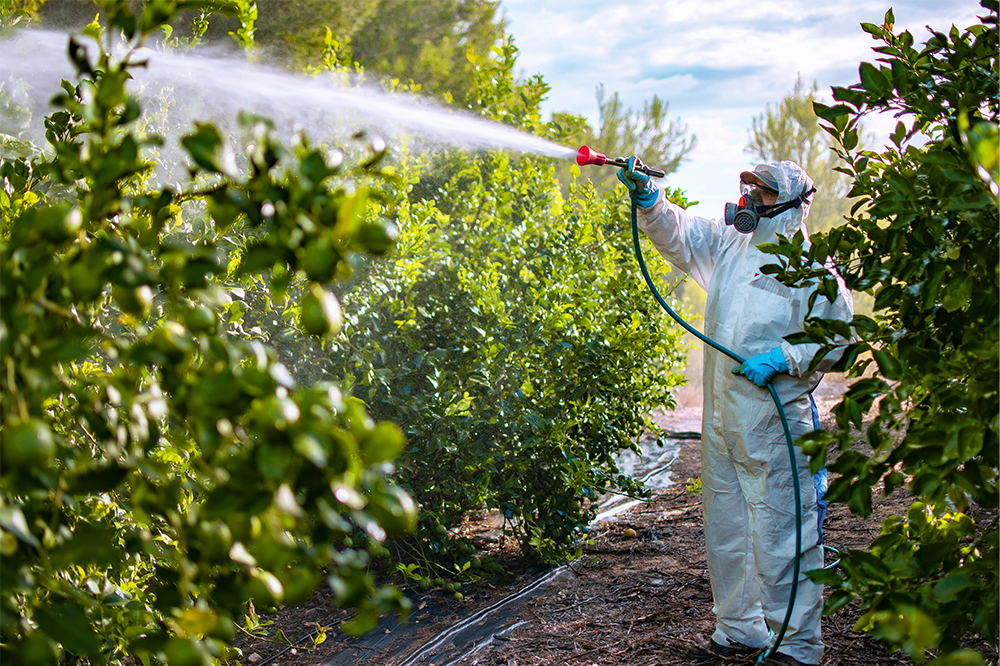
Pesticides are causing overwhelming negative effects on hundreds of species of microbes, fungi, plants, insects, fish, birds and mammals that they are not intended to harm – and globally their use is a major contributor to the biodiversity crisis.
That is the finding of “the first study” assessing the impacts of pesticides across all types of species in land and water habitats, carried out by an international research team that included the UK Centre for Ecology & Hydrology (UKCEH) and the University of Sussex.
“Our results question the sustainability of current pesticide use and support the need for enhanced risk assessments to reduce risks to biodiversity and ecosystems,” the scientists, led by East China University of Science and Technology, wrote in a paper for the journal Nature Communications.
The team analysed over 1,700 existing lab and field studies of the impacts of 471 different pesticide types – either insecticides, fungicides or herbicides – in agricultural, commercial or domestic use.
Wide-ranging negative effects were seen for over 800 species found on land and in water, including impacts on how fast they grow, their reproductive success, and even behaviour such as their ability to catch prey, find plants to forage upon, move, or attract mates. Pesticides can also affect organisms’ metabolism and damage cells.
“Pesticides are a necessary evil, without which global food production and farmers’ livelihoods would likely collapse,” explained Ben Woodcock, an ecologist at UKCEH and co-author of the study. “However, our findings highlight the need for policies and practices to reduce their use.”
Woodcock suggested this could include “bottom-up initiatives” led by farmers such as regenerative agriculture, as well as government policies such as Defra’s Sustainable Farming Incentive, which pays farmers to reduce insecticide use on crops.
Alternative options for farmers include planting wildflowers and beetle banks to support species that eat pests, allowing them to reduce spraying when there are high numbers of these natural predators present. Other measures include adjusting the timing of planting to avoid pests and rotating crops to break the species’ life cycles and reduce their numbers.”
The research follows the publication of the UK Government’s consultation on a new land use framework, which details how England balances nature with food production and other land use priorities. This will bring debate around sustainable intensification techniques whereby yields are increased without adverse environmental impacts.
Sustainable Food Trust chief executive Patrick Holden is among those who has expressed concern that farmland categorised as of the highest quality would remain intensively farmed and reliant on chemical inputs like fertilisers and pesticides to maintain self-sufficiency in staple products.
The topic will be a focus at the NFU conference next week. Ahead of the gathering, Jon Williams, BASF head of public and government affairs UK and Ireland, said: “One thing that is crucial amid the discussion is to not lose sight of where farmers earn their main income – from growing profitable crops, livestock and energy generation. […] we need to have frank and open conversations about the merits of introducing tools such as gene editing, the impact and role of low input and output systems have on production and ensuring that existing technologies critical to productivity, such as crop protection products are retained,” he added.