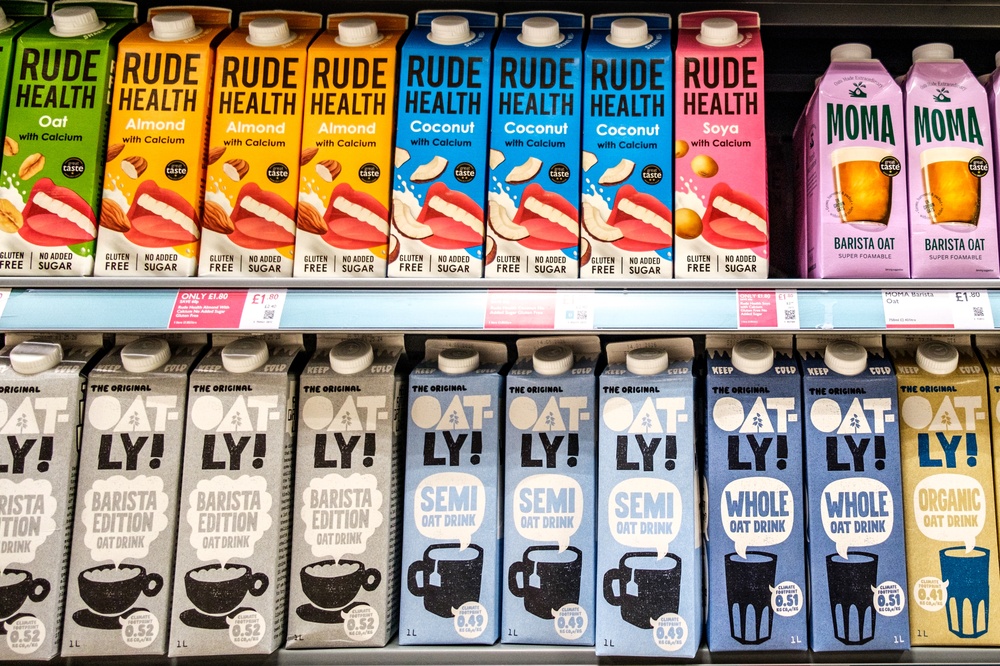
Arguments over the terminology used to describe plant-based meat and dairy alternatives reached a crescendo last week after Oatly lost a long-running legal battle over its use of the word “milk” in its marketing. By Nick Hughes.
The UK Supreme Court ruled that Oatly cannot trademark the slogan “post-milk generation” in the UK following a challenge from trade association Dairy UK which successfully claimed it contravened the rules protecting reserved dairy terms.
Oatly said the ruling creates unnecessary confusion and an uneven playing field for plant-based products, while Dairy UK said it would provide greater certainty for businesses and help ensure that long-established dairy terms continue to carry clear meaning for consumers.
The ruling could have significant implications for plant-based brands operating in the UK market. Although use of terms like “milk-free” or “dairy-free” will still be permitted as statements of fact, use of wording like milk, yoghurt or cheese in the marketing of plant-based alternatives now carries significant risk. And the ruling opens a can of worms too over how to describe hybrid products which contain a mixture of dairy and non-dairy products and represent a niche but growing segment of the retail and foodservice markets.
The court case is the latest front in a battle between a meat and dairy industry determined to protect what it sees as traditional product descriptions for animal proteins, and a plant-based sector concerned that consumers risk being taken for fools. Last year, the EU Parliament voted to restrict the use of commonly used terms such as “burger” and “sausage” for plant-based meat alternatives, with a potential ban set to be debated in trilogue negotiations between the EU Commission, Council and Parliament on March 5th.
A coalition of leading plant-based brands including Linda McCartney Foods, Cauldron, Quorn Foods and THIS, has written an open letter to EU policy makers urging them to maintain the current regulatory approach for plant-based product labelling. They stress that terms like “plant-based burger” and “vegetarian sausage” serve as practical tools for consumers, helping shoppers navigate products, understand preparation methods and make informed choices. Removing these terms, they argue, would not increase clarity but create confusion, particularly given differences in international labelling norms.
A recent YouGov survey of the UK public commissioned by The Vegetarian Society found over 90% of respondents (92%) have never bought, or cannot recall buying, a plant-based sausage or burger thinking it contained meat.
An EU decision to ban use of the terms could have implications for the UK market through plans for closer alignment of standards under a future trade agreement.
Small Bites
Bass and bream under scrutiny. Compassion in World Farming (CIWF) has unveiled the first ever scorecard assessing the welfare policies of farmed sea bass and bream producers. The charity assessed the welfare policies and public reporting of 13 major producers that together represent around 36% of global production for sea bass and bream. Producers were ranked on a scale of 1-5 against 11 welfare criteria, including stocking density, genetics and humane slaughter, based on publicly available information such as commitments, policies and reports. CIWF said its aim is to establish a baseline for a sector where public commitments have historically been limited. Most producers didn’t communicate widely about their welfare practices and their communication focused on just one or two criteria. However five out of the 13 assessed producers – Avramar, Cromaris, Kefalonia, Kiliç and Waterhouse – were found to have communicated about most of the criteria included in the assessment. Humane slaughter was the strongest-performing parameter with genetics being the weakest. CIWF said the scorecard shows the need for producers to prioritise welfare-focused policies and report their progress proactively and clearly. More than half of the seafood consumed today is farmed, making aquaculture the fastest growing food sector worldwide.
Compass joins the dots. Compass Group UK & Ireland has launched a new sustainability strategy designed to bring together its actions on climate, nature, waste and human health. The catering company said its ‘Our planet promise’ strategy reflects a belief that tackling climate issues in isolation is no longer enough and that a new “systems-thinking led approach” is needed. Compass has also pushed back its net-zero target from 2030 to 2040 in order to “deliver change at the scale the sector demands”. The report includes an update on Compass’s progress against its sustainability targets. Greenhouse gas emissions have fallen by 7.5% compared with 2019, the company’s baseline year, driven by a 84% drop in direct scope 1 and 81% fall in energy-related scope 2 emissions. With just a 6.5% decrease, scope 3 emissions reduction has been slower, in common with the wider sector, although removing acquisitions from the calculations would have seen the business achieve around a 23% reduction in scope 3 emissions thanks in part to sourcing less carbon-intensive ingredients. Elsewhere, Compass reduced food waste by 8% in the latest financial year and has ensured that 84% of single-use foodservice items are now recyclable, reusable or compostable.
Inflationary pressures ease. There was welcome respite for food and drink buyers in January as inflation fell to its lower rate in almost a year, according to new ONS data. Food and non-alcoholic drink prices rose by 3.6% in the 12 months to January 2026, down from 4.5% in the 12 months to December 2025. Prices fell for nine categories of product, with the largest drops for olive oil (-12.0%), flours (-6.6%) and pizza (-3.6%). Prices are still rising however for foods like beef and veal (24.5%), whole milk (15.7%) and chocolate (14.7%). Liliana Danila, lead economist for the Food and Drink Federation, welcomed the lower rate but cautioned that food and drink businesses are still susceptible to supply chain shocks caused by geopolitics or climate change. “We’ve previously seen the impact that this can have on inflation, with prices of ingredients like cocoa and coffee skyrocketing, so the UK’s recent extreme wet weather flooding farms is a concern for the year ahead.” Danila urged the government to incentivise investment in business resilience to help stabilise food inflation in the long-term and protect shoppers from future price spikes.
Chef’s Special
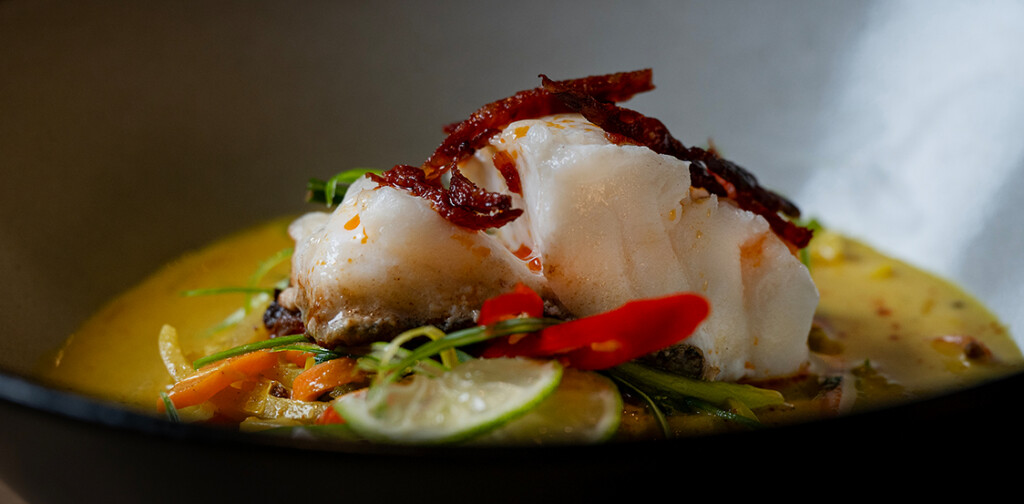
Skrei is popularly described as Norway’s fittest fish due to the arduous 1,000km migration it undertakes from the Barents Sea to its spawning grounds off the coast of northern Norway. A relative of the cod family, advocates say its athletic physique makes skrei leaner than most fish and high in protein with its fat stored in the liver rather than the muscles. We are currently in the peak of skrei season which runs between January to April. Marketing body, the Norwegian Seafood Council, says the fish is valued by UK chefs for its versatility and dense, flaky, snow-white flesh. Chef ambassador Michel Roux suggests serving skrei with cannellini beans and chorizo, while fellow ambassador Simon Hulstone has created a dish of skrei with parsnip puree and a verjus and spring onion butter sauce.
Last Orders
Ministers are being urged to rethink proposals to loosen restrictions in the planning system that could result in more pubs being converted into houses, shops or takeaways. Pub campaigning group Camra (Campaign for Real Ale) wants the UK Government to retain protections for pubs as vital community facilities as it consults on changes to the national planning policy framework. Under proposed plans, protections would only apply if a pub were the last one in the local area. Should they be adopted, Camra says the changes could spell the end for thousands of viable pubs across England. The number of British pubs has already fallen by nearly 7,000 since 2010 according to government figures – a roughly 15% reduction.
Please send press releases and news to editorial@footprintmediagroup.com