Farmed salmon has become a foodservice staple, but evidence of environmental damage, welfare failures and food colonialism raises the question: is this fish as clean as it claims?
The British love affair with cod and chips is a culinary cliché the world over but there’s no doubting where the nation’s true seafood passion lies. Salmon, and specifically farmed salmon, is the protein that has powered growth in the seafood sector in recent years.
Salmon now accounts for 31% of all UK seafood sales by value – worth £1.48bn – outselling cod almost three to one, with more than 92% farmed. It’s the UK’s highest-value food export, worth £828m in 2025, with Scotland alone producing 192,000 tonnes in 2024, up 27% year-on-year.
Salmon is not just a UK success story. Globally, farmed salmon is the fastest-growing food production system on the planet, accounting for around 70% of the market, according to WWF. That growth has been built on claims of salmon being a low-carbon, nutritious and increasingly efficient protein source. Yet a growing body of evidence, and the testimony of campaigners with first-hand access to farms, suggests the reality is far messier with salmon aquaculture facing a litany of charges relating to poor welfare outcomes, pollution of local ecosystems and food colonialism.
The farmed salmon industry has responded with investment in technology and new land-based systems, however for many campaigners large-scale production still poses material risks to the environment and society.
Scrutiny over farmed salmon has not gone unnoticed among foodservice businesses with some operators choosing to remove salmon from their menus altogether and replace it with alternatives such as trout and, in some cases, plant-based alternatives.
So can farmed salmon recover its reputation and demonstrate to campaigners, chefs and citizens that it can be sustainable at scale?
Salmon charges
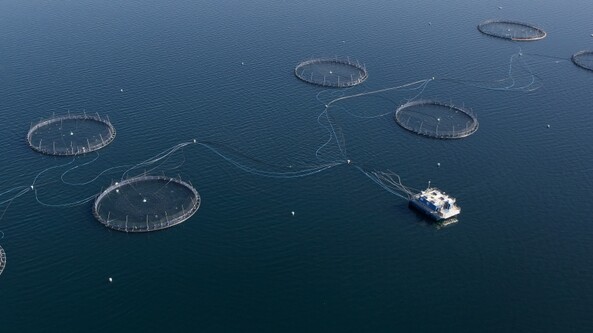
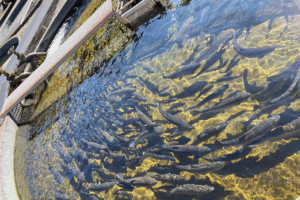
Open-net salmon farms sit in coastal waters with little barrier to the surrounding environment. Waste, feed, parasites and chemicals flow through the mesh, polluting ecosystems. Research published in May by the Sunstone Institute found that nutrient waste from Norwegian salmon farms – the world’s largest producer – released the nitrogen and phosphorus equivalent to the raw sewage from 17.2 million and 20 million people, respectively, contributing to oxygen level decline in the country’s fjords and the destruction of kelp forest ecosystems along its coast.
Escaped farmed fish interbreed with and threaten native wild Atlantic salmon, making them maladapted for life in the wild, at a time when dangerously low numbers have already seen Atlantic salmon rated as a ‘fish to avoid’ by the Marine Conservation Society.
Lice infestations are another key charge levelled against the industry. An Animal Equality analysis published in November found almost a quarter of Scottish farms are in breach of the industry’s own Code of Good Practice on lice at any moment in time. Lice treatment pesticides are acutely toxic to crustaceans – deltamethrin, commonly used on Scottish farms, has been found lethal to lobster larvae within a 40km radius.
Welfare failings have also drawn attention. A Guardian investigation in February 2026 reported more than 35 million unexpected salmon deaths at Scottish farms. Trade body Salmon Scotland countered that £1bn has been invested in welfare improvements and suggested activists often “present a misleading picture” of what is happening on farms.
Mowi, the world’s largest producer of farmed salmon, lost its Royal Warrant in November 2025, shortly after undercover footage of alleged welfare failures at its Loch Harport farm on the Isle of Skye was made public.
In May 2025, meanwhile, the Soil Association threatened to halt organic certification of farmed salmon unless meaningful progress was made on improving welfare and environmental standards within the sector. A January 2026 tribunal subsequently ruled it must release its inspection reports following a WildFish freedom-of-information battle. The Soil Association is now consulting on setting tougher standards, warning it could still withdraw from the sector unless progress is delivered by summer 2026.
Another serious charge is food colonialism. Farmed salmon are carnivorous and are fed a diet that includes processed fishmeal or fish oil made from wild fish. These are often caught in waters off West Africa and South America and would otherwise feed some of the world’s most food insecure people. A 2024 Foodrise report estimated that Norwegian farms alone extract almost 2 million tonnes of wild fish for feed annually, impacting the ability of up to 4 million people in food insecure regions to meet their nutritional needs. A joint DeSmog/Guardian investigation in March 2026 found thousands of tonnes of wild fish being illegally turned into fishmeal off the West African coast. Catalina Cendoya, director of the Global Salmon Farming Resistance (GSFR) campaign group, is forthright in suggesting such practice is “depriving a population of their own fish in order to feed salmon”.
Industry response
A major part of the industry’s response has been to improve feed ratios and make technological improvements. The Global Salmon Initiative points to genuine wild fish reductions, with fishmeal content falling from 65% to 18% and feed conversion ratios reaching approximately 1.15kg per 1kg of fish. However, flaws in the way the fish-in-fish-out ratios are calculated could mean these figures don’t represent true impact. A 2024 study in Science Advances found corrected fish-in-fish-out ratios for salmon may be as high as 5.57, meaning a farmed salmon may consume close to six times its weight in wild fish before harvest.
In either case, as Agustina Copello, coordinator of GSFR, puts it: “Even though feed conversion has improved, you need much more feed to supply the growing demand for salmon. So wild fish and feed is still an important issue.”
A FAIRR report, written for the investment community last year, concluded that the salmon industry’s continued dependence on wild fish and lack of targets to reduce fish-based feed ingredients poses material operational, regulatory and reputational risks.
For other concerns, the industry is looking to technology to supply the answers. At this year’s Norway UK Seafood Summit, Mowi, the world’s largest farmed salmon producer, outlined its “Mowi 4.0” strategy: AI, automation and real-time data deployed across genetics, biometric monitoring, automated feeding systems and underwater robotics. The ambition spans fish welfare, worker safety and ecosystem impact – from early detection of disease and injury in individual fish, to robot cleaners taking over the physically demanding work of net cleaning, to more precise feeding systems designed to reduce waste entering the surrounding water.
Red flags
First-hand accounts from inside aquaculture facilities have suggested that in some cases there remains a gap between industry narrative and on-farm reality. GSFR representatives visited one of Norway’s largest, newest salmon farms – described by its operator as among their best-performing by key performance indicators – and observed AI cameras flagging fish with deformities. Staff dismissed the alerts as camera error. “Either the AI doesn’t work, or the welfare was awful,” says Cendoya. That same flagship farm had to relocate several kilometres because the seabed beneath it was so polluted the sludge required off-site treatment, and could only operate part of the year. Staffed by just a handful of people during office hours, workers admitted that “if there was a situation of an escape outside of office hours they wouldn’t notice it until ten or twelve hours later”, says GSFR coordinator Agustina Copello.
Land-based aquaculture systems, sometimes presented as a cleaner alternative to open-net salmon farms, remove some of the problems relating to escapes, sea lice and marine pollution, but do not resolve the feed issue. Campaigners such as Foodrise have also raised serious concerns around poor welfare, mass mortality, effluent, energy and water use.
Certifications and regulation
When navigating such choppy waters, consumer-facing brands often seek comfort in certification. 41% of global farmed salmon production is certified by the Aquaculture Stewardship Council, but as Copello asserts: “In some cases they keep the certification even when standards have been breached.” A DeSmog investigation also uncovered what it characterised as deep conflicts of interest between the industry and its certifying bodies.
Regulators are beginning to move, albeit slowly. The government’s animal welfare strategy for England proposes introducing humane slaughter requirements for farmed fish, subject to consultation, while Scotland’s good food nation national plan sets out plans to explore welfare standards for farmed fish and publish guidance on slaughter. Neither represents binding change yet.
Operators act
For foodservice operators, the pressure to act is growing. Wagamama’s switched from Norwegian to Scottish farmed salmon following campaigner pressure, but this response failed to appease Foodrise, which argued it left the fundamental problems of open-net farming untouched.
If businesses want to serve salmon at all, the Marine Conservation Society’s Good Fish Guide currently rates Pacific salmon as a good choice while classifying Atlantic salmon – both wild and most farmed – as “fish to avoid”, given the pressures on wild Atlantic populations and the issues with open-net farming.
A number of operators, including Butcombe Brewery, the Pig Hotels chain, Chantelle Nicholson’s Apricity, Lussmanns Sustainable Kitchen, and the Tate and the V&A, have gone further by signing up to Off the Table, a WildFish-led coalition which commits signatories to remove farmed salmon from their menus.
Anthony Pender, founder of sustainable seafood restaurant Faber in London, says the transition away from salmon may be less daunting than operators fear. The answer, he suggests, is to diversify. “We have some of the most diverse, incredible shorelines in the UK, and probably some of the worst eating habits of seafood in the world,” says Pender.
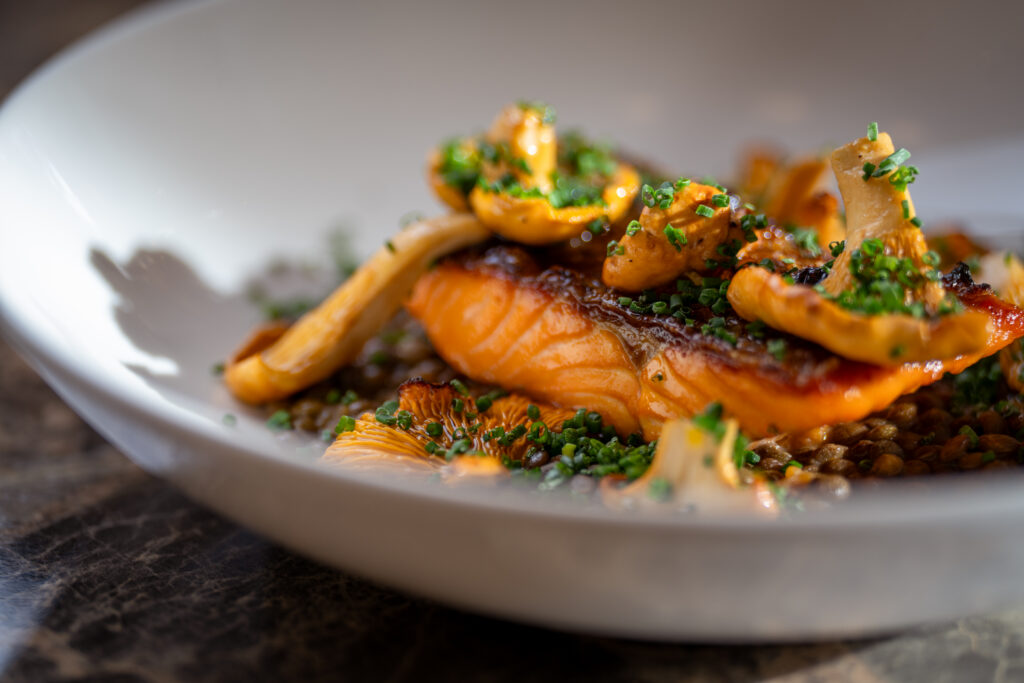
His restaurant uses chalk stream trout as its primary salmon alternative, sourced from ChalkStream Foods. Pender doesn’t just rely on ChalkStream’s Global GAP-certified and RSPCA Assured certification, he and his staff make personal visits to ensure production methods meet their high bar for sustainability.
Pender does not believe replacing salmon with more sustainable alternatives will impact on sales or customer satisfaction: “If salmon’s there, someone will choose it – but give them a delicious alternative, and no-one will walk out because salmon isn’t on the menu,” he says.
The GSFR’s ask to operators goes beyond farmed-to-wild swaps. “The main ask would be not to buy that product while salmon are at risk,” says Cendoya. The wider direction of travel is to move demand lower down the food chain entirely – towards shellfish, bivalves and non-carnivorous species. “We are eating the lions of the sea,” says Copello. “The smartest thing would be to eat lower in the food chain.”
Open to alternatives
Research indicates consumers are more open to alternative fish options than operators may assume: a 2025 University of East Anglia study found between 30-40% willing to try sprats, sardines and flatfish.
For operators wanting to retain a salmon-like dish, chalk stream trout – as used by Faber – offers a close culinary match: similar texture, natural pink colour and comparable omega-3 content.
Plant-based alternatives are also gaining ground: carrot ‘lox’ can be used as a smoked salmon substitute, and tofu ‘salmon’ – often flavoured with seaweed to replicate the umami of fish – is appearing on menus.
Seaweed itself, rich in omega-3s and requiring no feed inputs, represents a longer-term opportunity the industry is only beginning to explore.
The farmed salmon industry is working hard to address charges from feed to welfare and ecosystem impact, but campaigners argue change isn’t coming fast enough. For foodservice operators that have moved away from farmed salmon, the transition has proved manageable. For those still serving it, the reputational risk is real, and the environmental credentials remain hard to defend.
FOOTPRINT AWARDS 2026
June 11, 2026
73 Waterloo, SE1 8TY



Leave a Reply