

The decision by leading hospitality brands to quit the ‘Better chicken commitment’ resurfaces age-old questions over the challenge in marrying commerciality with ethics.
Hard won consensus over how best to improve chicken welfare shattered spectacularly last month when eight businesses responsible for 18 leading hospitality brands announced their decision to withdraw from the ‘Better chicken commitment’ (BCC).
Companies including Yum! Brands, which owns KFC and Pizza Hut, and Nando’s UK & Ireland, said they no longer believe the BCC is the right vehicle for delivering the next phase of welfare progress and have launched a rival ‘Sustainable chicken forum’ (SCF) with the aim of balancing broiler welfare with environmental sustainability, carbon reduction and supply pressures.
The Humane League campaign group accused the companies of “welfare washing” and putting profits before ethics, and has joined fellow campaigners Compassion in World Farming (Compassion) and RSPCA in urging the group to demonstrate ethical leadership by rejoining the BCC.
The split is a huge blow to the BCC which already lacks the support of some of the UK’s biggest food retailers including Tesco, Sainsbury’s, Morrisons and Asda who have decided to plough their own furrow on chicken welfare. The announcement came just weeks before Compassion published its latest BCC progress report which showed continued improvement on key welfare criteria like provision of natural light, enrichment and the use of controlled atmosphere stunning, along with gradual improvement on a move to lower stocking densities (albeit from a low base), but little to no improvement on transitioning to slower growing breeds.
It is this last criteria that has proved a sticking point for out of home businesses and has ultimately led to the split. Compassion says it is prepared to offer timeline extensions to support companies with implementing the more challenging BCC criteria, specifically regarding breed change. Those involved in the breakaway SCF, however, say market and operational dynamics make the transition to slower-growing breeds unrealistic and suggest that by signing up to extended deadlines companies would simply be, in the words of one industry consultant, “kicking the can down the road”.
It remains to be seen whether other hospitality and foodservice businesses will join the group of eight in the relative comfort of an industry-led forum, free from the BCC’s requirement for full transparency. That’s a question for another day. For now, it pays to understand how we’ve reached this point and, in light of the split, whether chicken welfare can now remain on a continuous upward trajectory?
Chicken split
To understand the origins of the split and the commercial and operational dynamics at play, Footprint has spoken with those either directly involved with or close to the creation of the SCF, all of whom spoke on condition of anonymity.
The full list of members of the new forum is BKUK Group (Burger King UK), Lemon Pepper Holdings (the UK franchisee of Wingstop), Loungers UK (Brightside Roadside Dining, Cosy Club, Lounge Café Bars), Nando’s UK & IRE, PLK Chicken UK (Popeyes), The Big Table Group (Banana Tree, Bella Italia, Las Iguanas, Frankie & Benny’s), The Restaurant Group (Bar Burrito, Brunning & Price, wagamama, trgc), and Yum! Brands (KFC UK & Ireland, Pizza Hut UK, Taco Bell UK).
When they went public back in February, the group said the forum would bring together hospitality businesses, farmers, independent experts and industry groups to take a more holistic view of chicken production.
A key complaint is that by focusing narrowly on broiler welfare, the BCC has ignored other important aspects like food security and environmental impact, including business commitments to net-zero (slower growing birds create more carbon per kilo). This has led to accusations from some campaigners that carbon reduction is being used as a fig leaf to mask the real issue which is around price and the unwillingness of operators to pay the premium commanded by higher welfare chicken.
Others point to the fact companies knew what they were signing up to when they made the commitment to the BCC, which for many businesses was in the two to three years following its launch in 2017. Many brands enjoyed positive PR at the time: when KFC published its first annual welfare report in 2020 having signed up to the BCC the previous year, Tracey Jones of Compassion described the restaurant chain as “a shining example of leadership”. Fast-forward six years and KFC is the highest-profile chicken chain to have severed relations with the BCC.

A changed world
Industry sources insist businesses signed up to the BCC in good faith and note that, back when pledges were being made, companies themselves tended to look at issues of welfare, environmental impact and food security in a siloed rather than holistic way.
They also point to the fact the world has changed since the BCC came into existence. “We were in a completely different place to where we are now,” says one hospitality sector expert, citing the Covid-19 pandemic and the subsequent cost of living crisis alongside global conflicts which have fuelled supply chain disruption. Recent cost increases driven in part by taxation mean “it’s never been this bad in terms of viability for certain parts of the sector”, according to the same source.
The other main argument put forward for why the BCC is no longer seen as viable is that the issues associated with chicken welfare are just one aspect of a dysfunctional UK chicken supply chain which, at its heart, concerns a tension between supply and demand.
While trends in UK meat consumption are generally on a downward trajectory, chicken has been heading in the opposite direction. In a report published in September 2025 titled ‘Driving growth through a thriving food system’, IGD noted that poultry (meat and eggs) is now the UK’s dominant protein, with consumption rising as more people switch from other forms of protein. UK poultry meat demand grew from 2.5 million tonnes (Mt) in 2015 to 2.9 Mt in 2024, driven largely by chicken meat. And demand is not expected to slow any time soon: although the UK’s per capita chicken consumption is the third highest among G7 countries at 35kg per capita per annum, the fact it still lags behind the United States (53kg) and Australia (49kg), suggests we may be some way from reaching peak chicken consumption.

Restaurant brands have responded by pursuing aggressive expansion. Fast-food chains like Wingstop, Popeyes and Slim Chickens have followed market leader KFC’s lead in setting out plans to significantly grow their UK presence in the years ahead. US chicken shop giant, Church’s Texas Chicken, alone is targeting up to 500 UK sites over the next 15 years from a standing start.
Consistent consumer demand for chicken has encouraged brands operating in rival sectors to seek a piece of the action. Last year, pizza giant Domino’s announced the launch of a new Chick ‘n’ Dip concept designed to capture a share of one of the fastest growing markets in casual dining.
Supply strains
Although UK poultry meat production has grown consistently over the past decade, it has not done so fast enough to meet demand, notes IGD, prompting a sharp increase in imports from countries like the Netherlands, Ukraine, Brazil and Thailand. The UK currently operates at around 70% self-sufficiency for poultry meat, however retailers take a large share of this volume in order to meet their commitments to British sourcing, leaving foodservice brands to scrap over the remainder. Global production has also been put under strain by recent outbreaks of avian flu, adding competition to international markets. These pressures, combined with growing global demand and the increased cost of energy, feed and labour, mean the price of wholesale chicken has increased sharply since the turn of the decade, making the commercial case for sourcing higher-welfare chicken at a premium even harder to make.
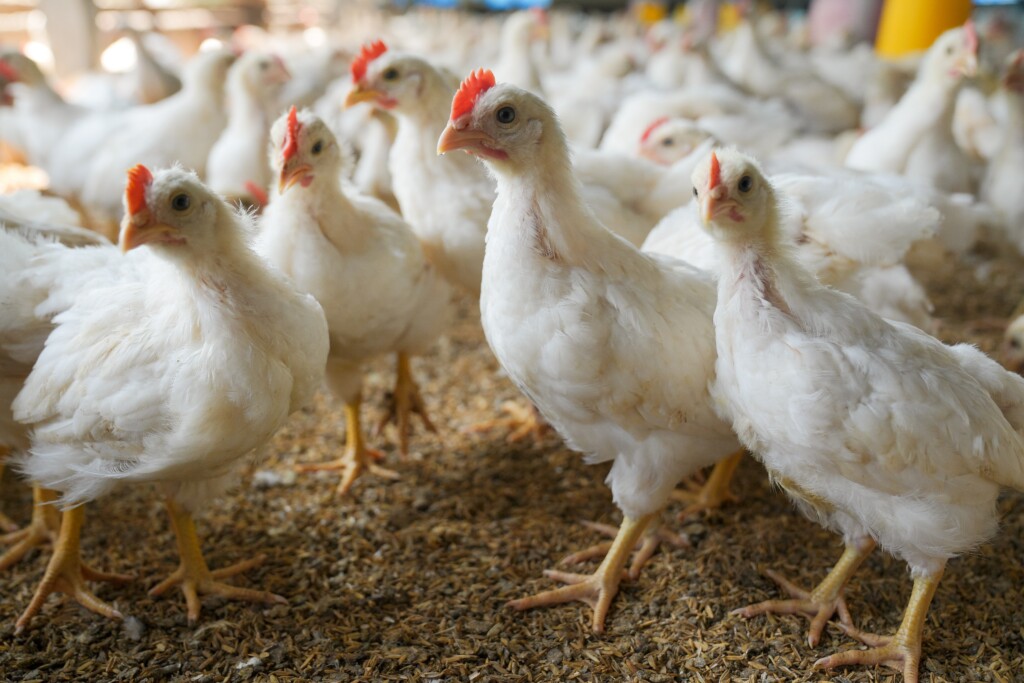
If we accept that demand for chicken will continue to grow in line with market expectations (more on that later), supply constraints will need to be removed in order to meet that demand from UK production. This brings us back to the issue of breed change, which adds an extra dimension to the challenge of matching supply with demand. When chickens take longer to reach slaughter weight, they occupy space in sheds for longer meaning capacity needs to expand in order for the volume of supply simply to stand still – an issue exacerbated by a move to lower stocking densities. A roll-out of slower-growing breeds across Europe would cut poultry production by 44%, according to a report by European poultry producer representative body AVEC, which was cited by the SCF in its launch announcement. A complex and, some argue, restrictive planning regime for erecting new chicken production facilities in the UK means that extra capacity is not readily available, which in turn means shortfalls in supply must be filled with imports from countries who may have lower welfare standards than the UK baseline (this is not universally the case, say campaigners, who point to Thailand as an example of a country that has invested in higher chicken welfare).
Industry figures cite this paradox as a key reason why the BCC in its current state is flawed. “Basically, we’re going to make less British chicken available, and we’re going to have to import more. So there’s just a contradiction at the heart of this issue,” says one source.


In addition, those advising the SCF argue that high welfare outcomes can be achieved with faster-growing breeds, which are more resource-efficient, allowing welfare and sustainability to be delivered in unison. Campaigners, however, reject the notion that you can adopt a ‘pick ‘n’ mix’ approach and argue that breed requirement is fundamental to chicken welfare as it underpins all the other BCC criteria. Without transitioning from fast-growing breeds to more robust, slower-growing strains, chickens cannot fully benefit from improved housing and enrichment. “All of the criteria have a proven scientific background,” says Dan McAlpine, senior food business manager at Compassion. “They all come as a package. You can’t really pick and choose the ones you want.”
Campaign groups like Compassion maintain that animal welfare is integral to sustainability and that transitioning to slower-growing breeds can bring wider sustainability and public health benefits including lower mortality rates, fewer carcass downgrades and reduced antibiotic use.
Those on the opposite side of the debate contend that a focus on slower-growing breeds ignores the knock-on impacts of switching to these breeds, which currently make up around 5% of UK production, including their higher carbon footprint and water usage. The SCF cites the AVEC report which found slower-growing breeds produce 24.4% more greenhouse gas emissions and require 34.5% more water than industry-standard broiler chickens.
The SCF has won notable support in the shape of the Zero Carbon Forum (ZCF), which is leading the hospitality sector’s drive to net-zero. “Improving chicken welfare while reducing carbon emissions is a complex but important challenge for the sector. We welcome the ‘Sustainable chicken forum’s’ ambition to decouple increases in emissions from welfare improvements and to adopt a more holistic, system-wide approach,” said ZCF director Bob Gordon.
A question of capacity
Important as they are, debates around the environmental impact of poultry production and, within that, different breeds (and it should be noted the numbers spat out by LCAs remain fiercely contested, with the sustainability of poultry feed amid a continued reliance on imported soya adding complexity to the issue) are arguably a sideshow versus questions around capacity and whether current and future market dynamics can support a transition at scale to birds that live longer and in greater comfort.
Compassion points to the success of retailers Waitrose and M&S in increasing compliance on breed as evidence that a transition is possible. The latest BCC results show Waitrose has completed its transition to slower-growing breeds, jumping from 14% to 100% compliance in the past year alone, a result that means it has achieved full BCC compliance ahead of the 2026 deadline. “BCC-compliant chicken is available, and volumes will increase further as retailers like M&S expands its BCC fresh chicken supply. The foodservice sector should be capitalising on this rather than stepping back from the BCC,” said Compassion in a statement following the industry split.
Yet critics point out that not only do upmarket retailers like Waitrose and M&S attract shoppers willing to pay a premium for higher-welfare birds, retailers can also offer tiers of chicken with different welfare standards at different price points – a luxury not afforded to caterers and restaurants. They note too there is scant evidence that a critical mass of consumers is prepared to pay a premium for higher welfare chicken when eating outside of the home.
More fundamentally, they say there has not been a wholesale market shift towards higher welfare birds, especially slower growing breeds that still only account for around 5% of UK production. “When people signed up [to the BCC], there was a feeling that there’s a wave of this coming,” says one adviser to the SCF. “That wave hasn’t come.”
Power dynamics
Although many of the retailers that sit outside the BCC have been investing in chicken welfare (Compassion has been tracking their progress in benchmarking reports) they have failed to move en masse towards slower-growing breeds. This has meant producers have not been incentivised to invest in the infrastructure needed to boost supply.
A common complaint made by foodservice and hospitality businesses is that they alone do not have the power to shift supply chains given their size and the fragmented nature of the eating out of home sector. The largest chicken restaurant, KFC, buys around 3% of the UK’s chicken and around 1% of the EU supply. “The reality is that individual hospitality operators just don’t have the capability to change the battleground,” says the SCF adviser.
Campaigners don’t accept this argument. Part of Compassion’s theory of change is that when a critical mass of businesses make a commitment to source higher welfare chicken it gives producers the confidence to invest in the necessary infrastructure to meet those criteria. By withdrawing from the BCC, SCF members have diluted the sector’s ability to shape chicken supply chains rather than improved it.
McAlpine explains how Compassion has created a ‘Better chicken business network’ to bring together buyers who are seeking higher welfare chicken and match them with suppliers interested in delivering those volumes, including those based overseas. “We don’t stand on the outside saying ‘you must do this, see you in six months’,” he insists. “We try to find out the barriers with them and then work through solutions.”
Policy blockers
One point on which both sides can agree is that government policy is a key barrier to unlocking higher welfare chicken at scale. In its recently published animal welfare strategy for England, the UK Government committed to support voluntary efforts to transition away from slower-growing breeds. But without reform of the planning regime hopes are not high that this vague pledge will amount to anything concrete. “There are already very tight restrictions about how you get a poultry house in the UK, and I do not see [….] that things are going to change in the short term,” says one poultry industry consultant.
Industry sources make the point too that campaigners pushing for slower-growing breeds generally oppose further expansion of poultry sheds, whose proliferation in areas like the River Wye catchment have been associated with local environmental issues including water pollution.
There have been calls in some quarters for ministers to write higher standards into legislation. Former Defra secretary of state, George Eustice, weighed into the debate on social media when he described the exodus of restaurant brands from the BCC as “a kick in the teeth for the government’s animal welfare strategy” and suggested “tougher legislation is now the only viable option left to improve welfare outcomes for broiler chickens”.
Although campaign groups generally support stricter rules, McAlpine makes the point that new regulations would need to protect UK chicken producers and not simply “export the problem abroad” with cheaper imported chicken produced to lower standards replacing UK volumes.
Less and better
Amid all the noise around welfare, one subject continues to garner little attention – the issue of consumption. Perhaps it’s naive to believe that ever-increasing demand for chicken can somehow be reversed, thus allowing less chicken to be produced to higher standards with less overall impact. Even campaigners tread delicately around the subject of consumption. “We are aligned with having to eat less [chicken] but of a better quality,” says McAlpine, before adding: “It’s never easy having those conversations with companies. They have growth models [and] they need to be able to show growth within their sector.”
Those in the business of selling chicken point to the relative efficiency of chicken production and argue that a continued consumer shift away from red meat to chicken is beneficial for key indicators like carbon emissions (plant-based proteins tend to have the lowest emissions of all). More fundamentally, there is no sign of the public losing their taste for chicken any time soon. “I believe that we have to deal with the world as it is,” says the SCF adviser.
McAlpine is resolute in his belief that the BCC remains the right vehicle to drive continuous improvement in chicken welfare and that the criteria remain the right ones. The eight founding SCF members have concluded otherwise. Those close to the group say that reporting on welfare will continue, although the forum will allow a degree of flexibility as to what this looks like in practice. They also stress that a panel of experts advising the forum will include “critical friends” and insist they remain on a continuous trajectory towards better chicken welfare. Critics, however, will argue the formation of the SCF amounts to the industry not only marking its own homework, but choosing the questions it wants to answer.
Related articles
Cage against the machine
Animal welfare remains high on the agenda as campaigners and corporates clash over labelling and transparency of industrial meat
Crying fowl
A schism has emerged over the best vehicle for improving chicken welfare after a group of leading hospitality operators responsible for 18 brands withdrew from the ‘Better chicken commitment’ (BCC)
