
Farmers adopting regenerative principles want to help grow the market for their produce but need help removing barriers. Nick Hughes reports.
At a recently held Footprint Forum in association with Nestlé Professional on the community benefits of regenerative agriculture, the question of how to scale regenerative approaches formed a key part of the discussion. Speaking directly to a room full of foodservice and hospitality sector buyers, three food producers were clear about the challenges they face and the opportunities they see to increase the supply of food produced in harmony with nature.
1. Connecting the chain
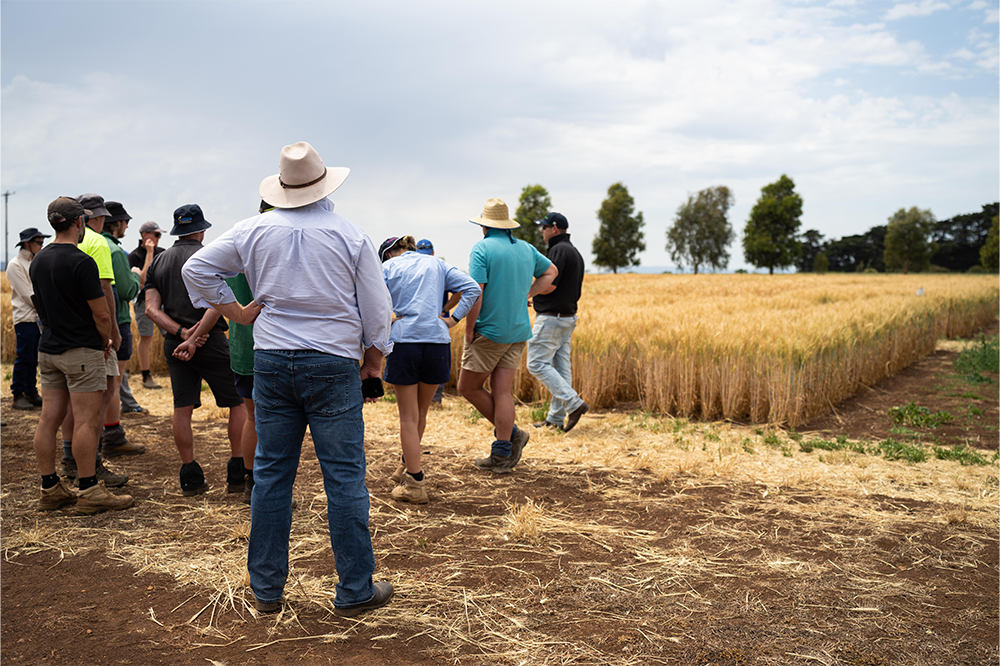
For many producers, relationship building – both with like-minded farmers and with buyers – is what sets regenerative agriculture apart from conventional farming. Food produced in conventional farming systems mostly passes invisibly through the value chain to the end consumer with no connection back to the farmer. Shropshire beef farmer and Grassroots Farming co-founder James Evans said the moment he gained visibility over where his beef was going was the moment he moved, in his mind, from being a commodity producer to a food producer. It’s through building these personal, physical connections that Evans believes a market for regenerative food can be scaled. As well as having customers, including restauranteurs and chefs, frequently visit their farms, Grassroots farmers visit the restaurants of the businesses they are supplying with their beef. “When I was farming full time, the thought of being in the same room with a restauranteur or a chef was unheard of, yet we’re all in the food business,” said Evans. “I don’t know whether we’ve been kept apart on purpose or for no reason, but I think what we’ve learned is by us understanding your industry, and hopefully you understanding our industry, there are huge strides that can be made.” He added: “If we can understand the problems in the industry that chefs, restaurants and foodservice face, we can tackle those together.”
2. Sharing of risk

Suffolk arable farmer Patrick Barker has been on a journey towards more regenerative farming over the past decade, embracing techniques such as cover cropping and integrated pest management, which is a key part of the government’s new pesticides action plan. Barker, who helped establish the High Suffolk Farm Cluster with the support of the Landscape Enterprise Networks programme, noted how farmers are generally open to doing things differently but those embarking on a transition to nature-friendly farming currently carry all of the risk. “We do the farming, we choose the crops, we choose the varieties, we battle the weather, we work out how to do things,” he explained. Barker is working within the cluster and with buyers, like Nestlé, to explore how that risk can be better shared moving forward and how to create value for things like wildlife, biodiversity, and clean water that don’t have a monetary value. “There’s a big piece of work […] going on looking at, actually, how can we just make this easier for everyone in the whole supply chain by sharing the risk at the start?”
3. Accessing land
Small food producers breaking the conventional farming mould often face physical barriers to scaling their operations. One of these is access to land. At the Chiddinglye Estate in West Sussex, Full Circle Farms is pioneering a small-scale model that combines commercial regenerative farming with community support. One section of the farm is given over to growing fresh vegetables for corporate customers to use in their restaurants, while the other acts as a community garden where people facing mental health issues like depression or anxiety benefit from “horticultural therapy”. Founder Tom Morphew told the Forum how he has gone from farming a quarter of an acre to 10 acres in the space of four years – but he wants much more. Currently, contract caterer Sodexo has three plots of land supplying its Sodexo Live, Good Eating Company and schools and universities segments with a wide variety of vegetables and herbs. Morphew says demand from Sodexo and other big hospitality companies is “huge” but physically scaling the operation remains a challenge due to a lack of availability of affordable land in the south of England. “There’s an appetite there to take more [produce] from us. We’re just a bit restricted in how much more we can produce because [we are] running on 10 acres. We are currently trying to find a bigger farm to move to.”