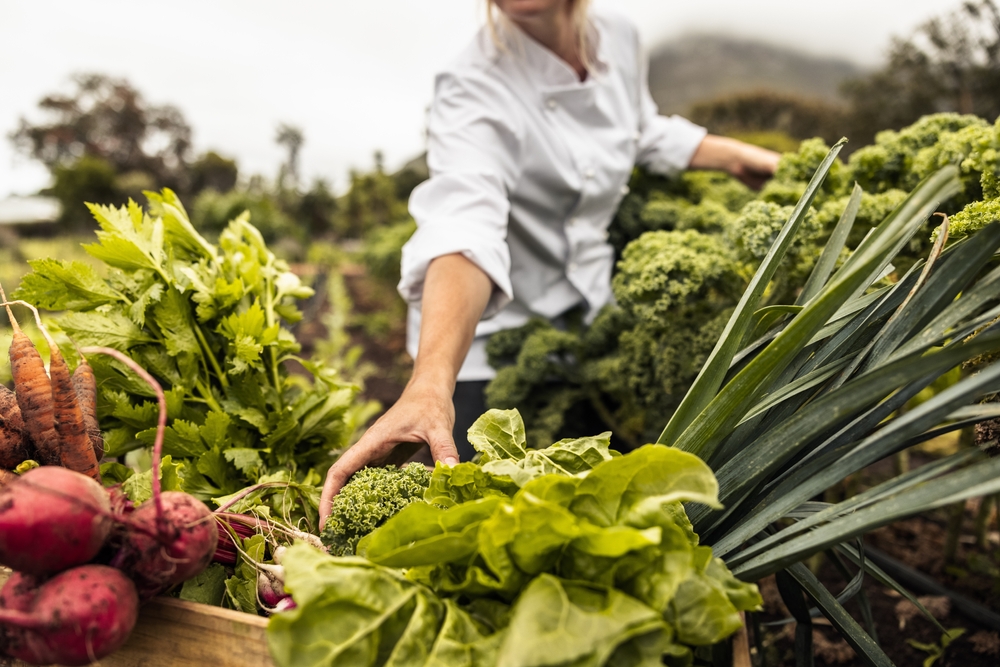
Dame Angela Eagle turned up at an organic farm last week, wellies at the ready. Rumour had it the Defra minister for food security and rural affairs was going to launch an organic action plan aimed at boosting domestic production of foods grown with fewer chemical inputs and in systems that protect and restore nature.
Adrian Steele, co-chair of the English Organic Forum (EOF) and a farming advisor with organic certification body the Soil Association, was buoyed by the visit to Riverford, the organic veg box supplier hosting the ‘announcement’ at its farm and packing centre near Peterborough. Steele saw the minister’s presence as “recognition that organic can support government ambitions by delivering resilient food production with healthier soils and more biodiversity, without relying on synthetic inputs”.
As it turned out, Eagle was only there to announce her ‘plan to write a plan’. But less than a week later she had been (re)shuffled out of Defra and into a new role at the Home Office as security minister, to be replaced by Stephen Morgan – leaving those who have been pushing for an organic plan with a bitter taste.
The wait for a plan to boost England’s organic sector has certainly been a long one. Whether the bubble created last week has already burst is unclear. What is clear is that the country is falling behind its neighbours.

Scotland has a plan and a target and is now the driving force behind growth in UK organic production, according to figures recently released by Defra. Progress in England and Wales continues to stagnate, however, with demand increasingly met by imports.
Supermarkets are pushing organic food more than ever, according to Soil Association research published earlier this year, which also showed a 14th consecutive year of growth for organic food and drink in the UK.
However, sales across the UK foodservice sector fell 1.5% in 2025, a trend that will be explored in detail in Monday’s Footprint in Focus feature (bucking the trend was the Food for Life Served Here scheme, available to public sector caterers, which posted a record year).
Seton Leung, out-of-home practice head at Circana UK, is not surprised by the figures, with cost and availability both major barriers. “Pub, bar and restaurant visits have fallen by 2% in the last year … and when the sector is performing so badly it is hard to justify additional costs,” she told Footprint.
Some of the larger players have bought into organic for one or two products. Sceptics suggest this is to create a menu ‘halo’ but there are also opportunities to make savings in greenhouse gas emissions.
McDonald’s, for example, sources organic milk from Arla – the UK’s biggest dairy cooperative and the world’s largest producer of organic dairy products – for coffees, teas and milk for its Happy Meals. Arla’s own research shows lower carbon footprints are possible on organic farms, which also tend to use less fertiliser.
The two companies recently launched ReNature – a biodiversity project that aims to identify the existing state of nature on organic farms and help farmers improve biodiversity, soil health and promote habitats for wildlife – across 60 UK farms.
Small Bites
Tesco plays down PFAS research
Testing of foods bought from Tesco showed toxic chemicals in every single sample, including conventionally farmed and organic products, with some containing “worryingly high” levels. Environmental campaign group Foodrise commissioned the University of Birmingham to analyse a wide range of meat, dairy and fish products from the UK’s largest supermarket for the presence of PFAS, or forever chemicals, which research increasingly links to a risk of developing cancers, immune suppression, infertility and developmental problems. In recent months they have become a high profile issue, especially for businesses in the food sector. Used in everything from cookware and waterproof clothing to grease-resistant food packaging, the chemicals are soon to be subject to bans and limits in the EU. The UK has published a PFAS plan but is playing catch up, so for now it is up to businesses to act. In response to the findings, Tesco said: “Our products and packaging are safe and comply with relevant UK and EU legislation. We have reviewed the claims from Foodrise and the products they tested are below EU legal limits for PFAS. We are also working closely with our own brand suppliers to meet the incoming EU legislation for food packaging.”
Cafés in the dock over dairy-free diddle
Starbucks, Tim Hortons and Foodtastic are facing a class-action lawsuit in Canada on the premiums applied to drinks made with plant-based ‘milks’ rather than dairy ones. “By its own admission, Starbucks […] charges consumers more than six times the cost it incurs when it replaces cow’s milk with plant-based or lactose-free milk in its beverages,” Justice Catherine Martel, a judge in the Superior Court of Québec, in Canada, noted in her judgement, reported by Green Queen. Starbucks charged $0.80 to customers for a switch that cost just $0.12 to the company. The court calculated that Tim Hortons charged Canadians $0.50 for a $0.28 milk swap, while Second Cup imposed a $0.80 levy for a $0.43 substitution. The case could set a precedent for other food-to-go outlets. More coffee shops chains are dropping their surcharges for alternative milks like oat and soy, according to The Daily Grind website, although it can be trickier to do for smaller businesses because the alternatives remain more expensive than dairy milk.
Plant-based but not a planet saver
More evidence of so-called greenhushing – whereby businesses deliberately downplay their environmental achievements and credentials – has emerged from Spain. “This saves your dinner, not the planet,” is the slogan displayed in large print on an outdoor advertising panel for Spanish plant-based food brand Better Balance Foods. The sentiment has created quite a stir on social media since it flies in the face of a long-time trend for brands to promote the planet-saving credentials of their product or service. “We seem to have arrived at a weird place where sustainable brands are embarrassed to be sustainable,” noted Gill Wilson, adjunct professor of sustainable marketing at IE business school in Madrid and an independent consultant, in a post about the advert this month. The advert appears to push plants as something good to eat rather than doing good. “I understand the thinking behind it,” wrote Wilson, “but there’s a difference between saying sustainability isn’t the primary reason people buy something and saying it has no relevance at all”.
Chef’s Special
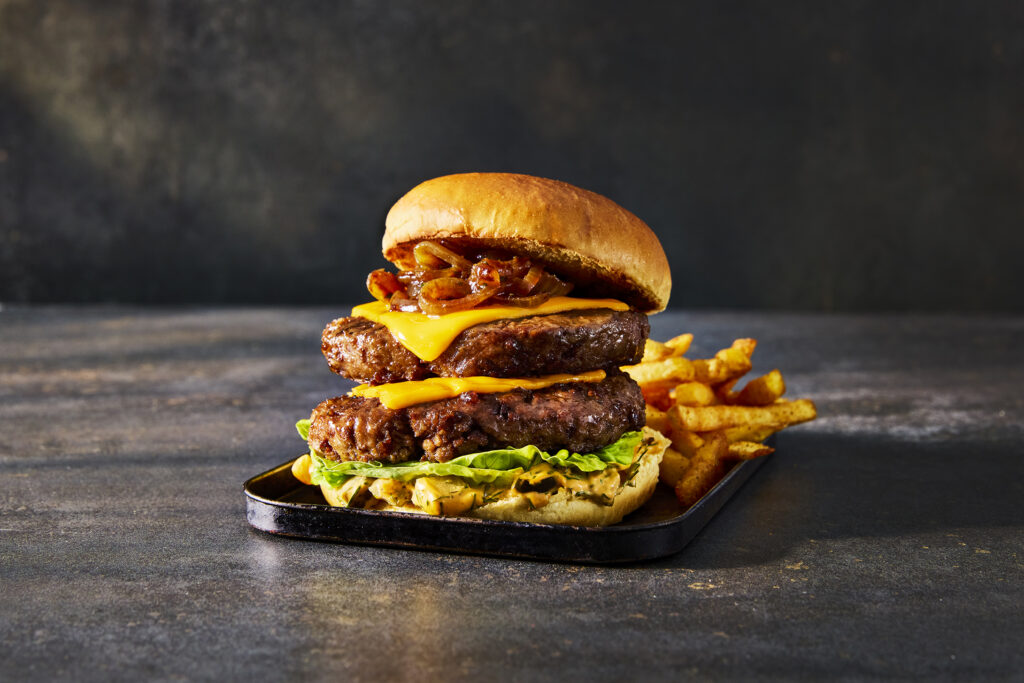
Brakes is offering fast savings on carbon emissions with a new range of blended burgers, meatballs and mince. Developed by William White Meats and Quorn, the UltiMeat range combines mycoprotein with “responsibly-sourced” beef to “meet growing demand for lower-carbon, cost-effective menu options without compromising on flavour, texture or kitchen performance”. The range offers “up to 40% lower carbon footprint” (based on data from carbon footprinting platform Kilmato), cook loss of just 5% (versus 18% for standard beef), lower saturated fat, added fibre and fewer calories. This is a “straightforward route to improving yield, margin and sustainability credentials simultaneously”, noted William White Meats director Rebecca Marks. David Flochel, CEO of Quorn Foods, said the blended meats produce a “practical bridge for operators and diners who want to reduce meat consumption without removing it entirely”.
Last Orders
Beware the hidden plastics in drinks containers. So warned Sian Sutherland, co-founder of A Plastic Planet, in an interview with BeverageDaily.com. “Most consumers have no idea that the inside of a drinks can is typically lined with plastic or that cartons marketed as sustainable often contain layers of plastic polymers fixed with paper and aluminium,” she explained. “The industry has become extraordinarily skilled at disguising plastic in plain sight.” Plastic is still widely seen as the least sustainable packaging option by brands and consumers, however aluminium and paper packaging producers who choose to obscure their use of plastic liners may not fly under the radar for much longer. Scrutiny among regulators and campaigners is growing over the chemicals present in all kinds of food contact materials (see, for example, steps taken by the EU to curb people’s exposure to PFAS). “All plastics contain hazardous chemicals that leach into foods,” explained Jane Muncke from the Food Packaging Forum. “Aluminium can liners contain bisphenols, endocrine-disrupting chemicals that have no toxicological threshold. Who would want that in their drink?”