Compass Group UK & Ireland has reported a near 10% reduction in greenhouse gas emissions across all scopes in the past four years as it published what it described as the largest food and drink carbon impact assessment undertaken and openly shared by any foodservice provider to date.
The business reported an absolute reduction in emissions of -9.4% across scopes 1, 2 and 3 for FY23 against a FY19 baseline, inclusive of 20% business growth. It said this translated into a 25% reduction in carbon intensity calculated as total emissions for each pound of revenue earned. Its overall target is to achieve climate net-zero by 2030.
The biggest reductions were made in scope 1 and 2 emissions which fell 68.8% and 89.2% respectively. Scope 3 emissions fell by 8.5%. These account for the vast majority of Compass’s total with food and drink alone responsible for 62.5% of the caterer’s FY23 footprint.
Compass published the data in a climate transition plan that is aligned to the ‘gold standard’ final disclosure framework developed by the UK government’s Transition Plan Taskforce (TPT). The framework is intended to help companies develop and deliver their own climate transition plans.
In calculating its footprint, Compass said it had analysed 2.2 million rows of data, of which over 1.7 million accounted for food and beverage. Some of the main scope 3 reductions were made through chef-led reformulation and rationalisation of recipes to reduce their carbon impact. Compass said a quarter of 8,004 centrally analysed recipes now have A and B rated footprints as part of its work with sustainability-focused tech company Foodprint. The remaining 75% of recipes still have C-E rated footprints and are targeted for reformulation in FY24.
Compass also announced that its procurement arm, Foodbuy, is launching a new net-zero pipeline for FY24, where category buyers will assess the environmental implications of one product against another. Fifty potential carbon reduction initiatives have already been put forward in emissions intensive categories such as beef and dairy.
“We always knew setting a 2030 target was ambitious, but it has helped to accelerate change in our business and drive positive behaviours as we seek to operate more sustainably in all that we do,” said Robin Mills, CEO of Compass Group UK & Ireland.
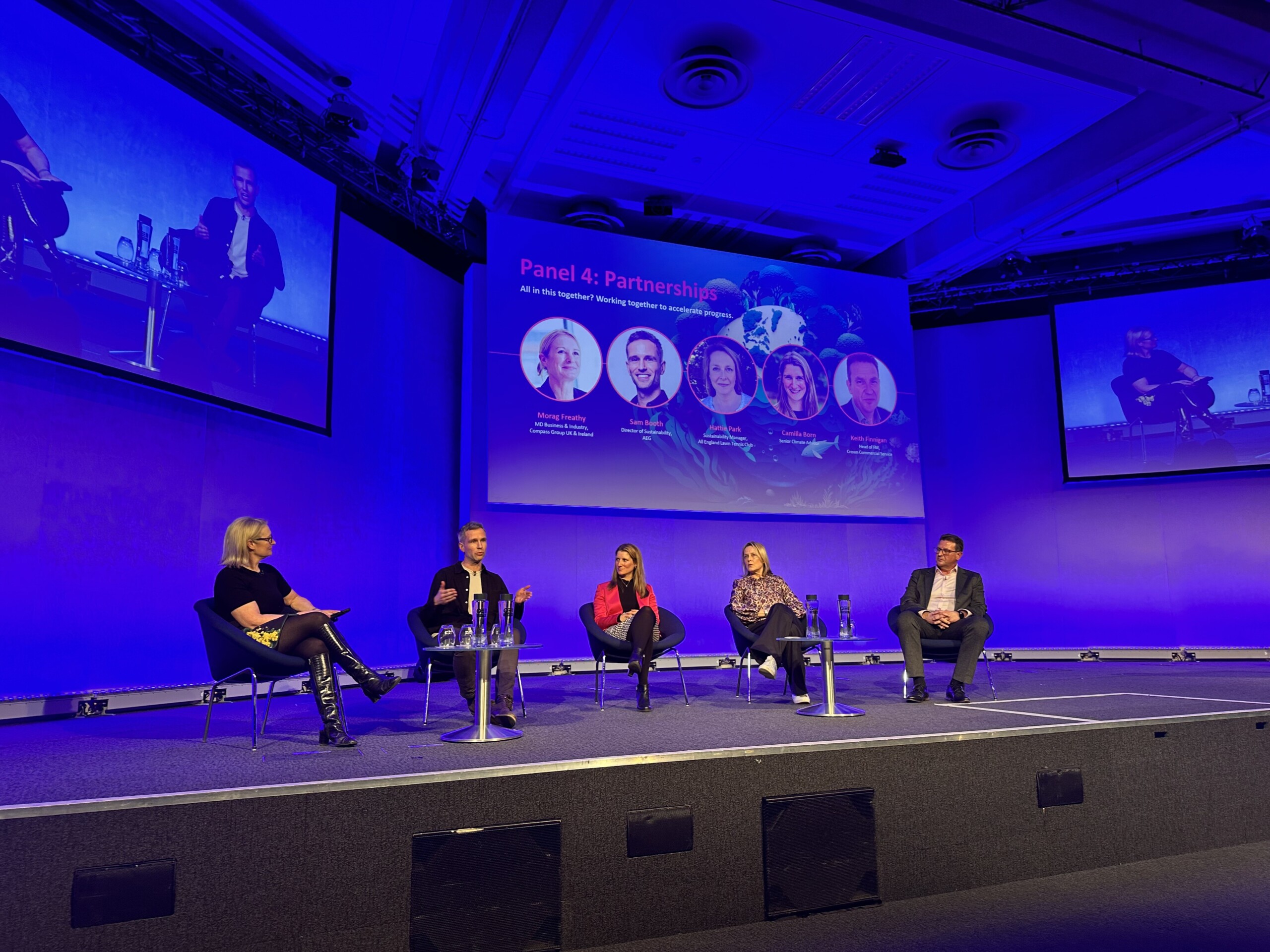
Compass launched its transition plan at an event in London this week attended by around 400 supply chain partners, clients and other stakeholders. Presenting key insights from the plan, the company’s, director of delivery for net-zero, Carolyn Ball, said Compass’s work on climate was allowing it to better understand the interconnectedness of climate with other issues such as water stewardship, animal welfare and biodiversity.
Compass plans to publish a second iteration of the transition plan in FY25.
