
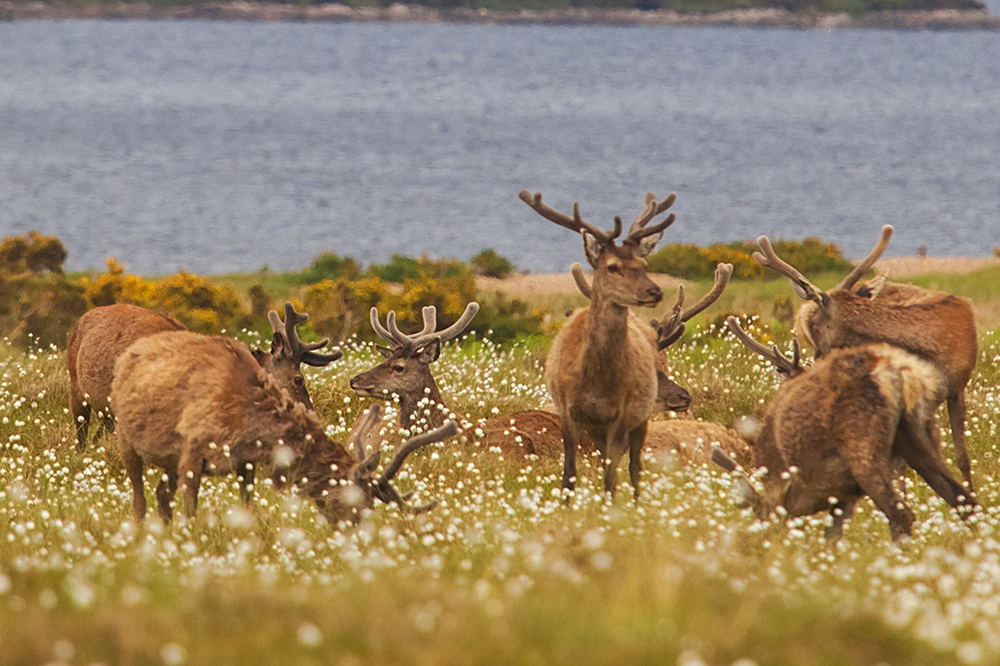
From football fans to squaddies, wild venison is being introduced to new audiences as a more sustainable, affordable alternative to beef
When the writer and photographer Linda Mellor penned a plea to remember ‘Britain’s forgotten meat’ last autumn, her acute sense of frustration leapt from the page. “Venison ticks every box consumers claim to care about: local, high-welfare, low-impact, nutritious,” Mellor wrote in a blog for The British Deer Society. “In a rational food system, venison would sit beside beef, pork and chicken. Instead, it is treated like a visiting aristocrat: wheeled out seasonally, dressed up in juniper and port, then retired until autumn.”
It’s a nice turn of phrase that no doubt contains more than a grain of truth, yet it also overlooks the fact that in the catering sector this forgotten meat is enjoying something of a renaissance.
At the Gtec Community Stadium, home to Brentford Football Club, wild venison burgers have replaced beef burgers as the half-time staple for fans. Pies have also made the switch from beef to venison as events caterer, Levy, looks to introduce venison to a mass audience.
Venison is also finding a home on hospital menus. Within the NHS in England 23 tonnes of wild venison was served in 2025, up from just 4 tonnes in 2023.
Caterers are increasingly favouring wild venison for its nutritional value, sustainability credentials (versus other red meats) and, increasingly, its cost saving potential. The soaring price of beef has made British wild venison an affordable alternative thanks to a ready supply. Although there’s no reliable national count of the number of wild deer in the UK, it’s generally agreed that numbers are extremely healthy with some estimates suggesting there are more deer now than at any time since the Norman Conquest.
Deer have had no natural predators since wild animals like wolves and lynx were eradicated from Britain centuries ago. Wild deer forage on plants and shrubs that form habitats for other, rarer species, and can also damage young trees as they grow. As a result, thousands are culled every year to control populations and prevent overgrazing, with the aim of preserving biodiversity and keeping the balance of local ecologies in check.
Hospital visit
Forestry England, which manages England’s 1,500 forests and woodlands, culls deer as part of its sustainable forest management programme. It was on Forestry England-managed land that the NHS initiative to get more venison onto hospital menus first took root back in 2021. A collaboration with the supplier, Highland Game, and the East Lancashire Hospital Trust saw wild venison from the Forest of Bowland near Blackburn end up on the trust’s menu. Since then, other hospitals have followed suit, including those operated by Guy’s and St Thomas’ NHS Foundation Trust in London.
Tim Radcliffe, food programme manager for NHS England, says the desire to put venison on the menu has largely been driven by its relatively low carbon footprint in comparison with other red meats. Footprinting data varies but Radcliffe says wild venison produces around 35% lower greenhouse emissions than beef. “We need to reduce our carbon footprint to net-zero by 2040 in the NHS, and 6% of emissions come from catering,” he explains. “The over reliance on beef, and the carbon that has, means there needs to be an alternative.”
Levy, working in partnership with data provider Foodsteps, has calculated an even greater saving of 85% from sourcing wild venison versus beef or farmed venison. The Compass Group-owned caterer expects to save up to 1,182 tonnes of CO2e annually by switching from beef to wild venison at venues including the Gtec Stadium and the Allianz Stadium, Twickenham, where wild venison burgers were on the menu at the women’s rugby world cup final last September.
Levy’s sustainability director Kevin Watson says the biggest driver of lower emissions is the fact there is no land use change associated with wild venison and no requirement for feed since deer eat a natural, foraged diet.
There is an argument too that any environmental impact assessment should reflect the fact that wild deer would exist regardless of whether they are killed for meat. Forestry England has previously stated that the main objective for culling is always forest management, rather than wild meat production.
Any claim that venison is the UK’s most sustainable meat must be caveated with the observation that not all venison is created equally. NHS England has a strict requirement that venison supplied into hospitals must meet the British Quality Wild Venison standard, an assurance marque whose development it supported. This requires that the venison must be wild not farmed, it must not be shot as a sport but only as part of deer management, and it must not be shot with lead shot which carries the risk of entering the food chain.
Positive nutrition
Alongside its environmental credentials, venison is also finding favour for its positive nutritional profile. This is part of the reason why ESS Defence, another arm of Compass Group, has partnered with The Lean & Wild Co to integrate wild venison sourced from the Ministry of Defence estate into its defence menus where it is served up to armed forces personnel. “As a lean meat high in protein it ticks the nutrition box,” says Scott Freeman, culinary director for ESS.
According to Compass, a 100g serving of wild venison typically contains around 2–3g of fat and 158 calories, while an equivalent portion of minced beef can carry 8–15g of fat and over 250 kcal, depending on the cut. Venison also provides more protein per gram than beef and is rich in iron, B vitamins and beneficial omega-3 fatty acids. The NHS, meanwhile, has noted how venison has been found to be easy to consume for patients with swallowing problems.
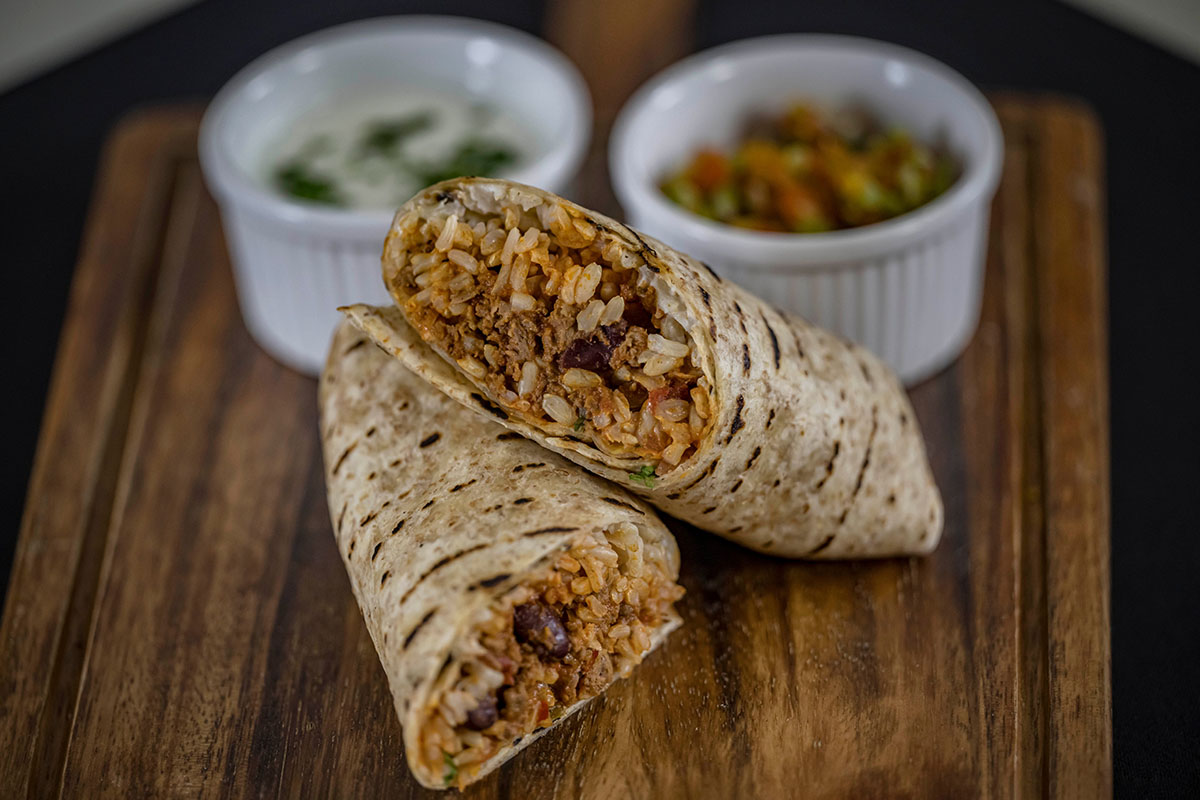
Venison has featured on ESS menus since November, replacing beef in its entirety. Dishes include a venison double smash burger, venison burrito and venison sausage Lyonnaise, as well as venison-based versions of traditional beef dishes including bolognese, lasagne, chilli con carne, madras and cottage pie.
Freeman says venison is a cost-effective way of keeping red meat on the menu. “It also tastes good,” he says. “I wouldn’t put it on the menu if it didn’t taste nice.” Before ESS incorporated venison into its dishes, tasting sessions were carried out to gauge the response of customers, particularly among more junior armed forces workers “because we felt they might be the ones who might push back on things they’ve not tried before”. “In the event, the dishes were well received. “On the first day of it being on the menu, we sold 8,000 portions of [venison] bolognese across all of our sites,” says Freeman, adding that demand has remained stable ever since.
Best seller
In NHS hospitals, so-called wet dishes like cottage pie and lasagne are also popular vehicles for getting venison into dishes. At Blackburn hospital, venison and mushroom casserole sourced from the nearby Forest of Bowland (and marketed as such) is the best selling dish, says Radcliffe.
Use of venison is also helping hospital caterers serve more blended products that contain a mixture of meat and plants. “Because of the taste profile of venison and its high protein content you actually need less of it than beef,” explains Radcliffe. To further reduce the carbon impact of meals, dishes like lasagne and pies contain a mixture of venison and lentils without compromising on taste, he adds.
Freeman highlights venison’s favourable yield versus beef as another advantage. “From a chef’s perspective cooking this food, when you drop it into a hot pan there’s very little water that comes out of it [and] there’s very little fat, so there’s less shrinkage,” he says.
Putting venison to use in a variety of dishes – from burgers to casseroles – also allows for better carcase utilisation. “You can’t just keep on serving steaks because that’s not beneficial to anybody,” says Watson. “[We’re looking at] what can be done with the likes of the minces, the chucks, the dice and all that type of stuff, because high end restaurants are taking the prime cuts. That’s been a real win for us.”
Despite burgeoning interest from caterers, consumption of venison is still dwarfed by that of beef and lamb, not to mention white meats like pork and chicken. A recent blog by the standards body, British Quality Wild Venison, highlighted several challenges that venison suppliers must overcome to grow the market including competition from import markets like New Zealand where deer are farmed on a large scale, and a lack of knowledge among consumers about where to buy venison, how to cook it and its benefits.
There is no immediate risk of demand for wild venison exceeding supply but should those barriers to growth be overcome the sustainability argument may take on a different dimension. As climate data scientist Hannah Ritchie noted in a BBC News article from last year, the question of whether venison can form part of a climate-friendly diet is one of context, and particularly scale. “It might be a reasonable – and low-carbon – choice for a small percentage of the UK population to eat wild venison, but the numbers just don’t work for any critical mass of people,” she said.
Watson suggests Levy will maintain a flexible position over the sustainability credentials of wild venison as the market continues to develop. “We see it as a really good lever for us to pull at the minute,” he says. “[But] it’s not to say that lever won’t change in the next five years.”
