
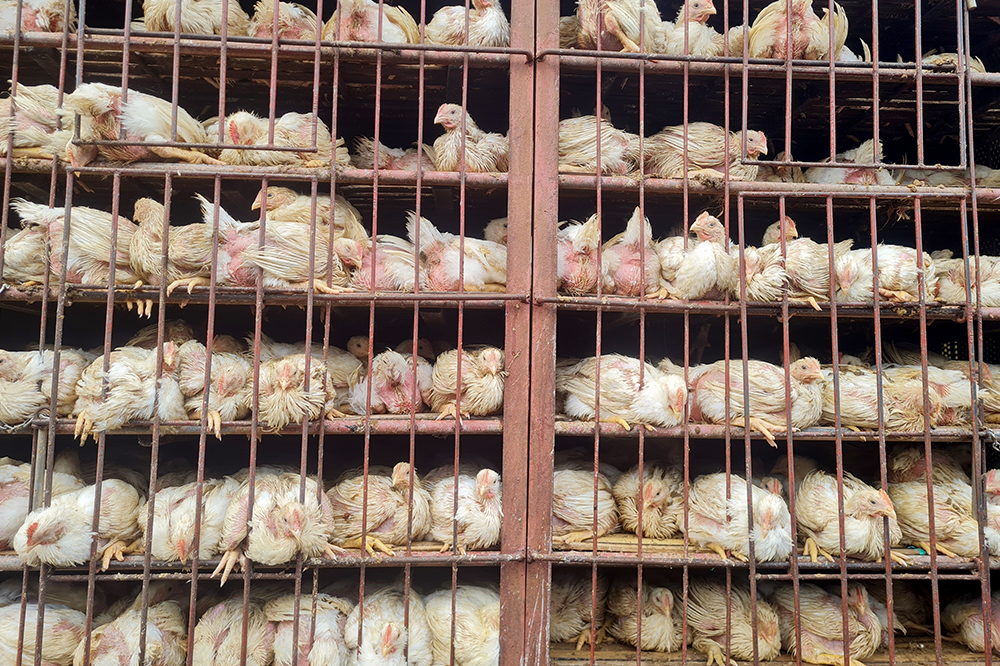
Pollution from farms is on the rise. In part this is due to increased inspections and monitoring of agricultural businesses, but the Environment Agency (EA) has noted a “clear pattern” in its latest report: “[…] while the number of farms is decreasing, pollution incidents are increasing.”
The trend “likely reflects the intensification of farming practices”, wrote the agency’s chief regulator Jo Nettleton in her 2024-25 report. “Farms are consolidating, often without the necessary infrastructure or management systems to support their expansion. Climate change and a longstanding lack of investment in the sector may also be contributing factors,” she added.
Transitioning farm systems to be less extractive and more regenerative certainly won’t come cheap. Confidence among the agricultural sector is as low as ever currently, and despite considerable momentum behind regenerative approaches the UK and the world remains heavily reliant on intensive production systems.
This month the inaugural factory farming index was published, showing the welfare impacts of such systems. The authors calculated that the world’s reliance on intensively reared meat production is also shortening our lives: on average, 1.8 years of healthy life is lost per person globally due to factory farming.
The index also challenges claims that more intensive farming methods are ‘low carbon’. Globally, factory farming also “emits an estimated 21 million tonnes of pollutants – nitrogen and phosphorus – which cause eutrophication of water which can result
in dead zones in rivers and seas. Overall, factory farming accounts for around 25% of all eutrophication caused by human activity,” the index reads.
Footprint has previously reported on the potential problems created from waste at intensive poultry and pig farms – which require an environmental permit if they are of a certain size. The government is also considering extending its permitting regime to dairy and beef farms.
However, campaigners said the current regime is too lightweight and enforcement too lax. Megafarms continue to be approved for planning despite a failure to fully disclose greenhouse emissions, according to recent research by Sustain and DeSmog.
Nettleton said her teams at the EA are increasing regulatory presence through “record farm inspections, stronger enforcement, and active engagement with farmers”.
Last year, the Environment Agency carried out 4,767 targeted inspections at non-permitted farms, up from 4,675 in 2023. This compared to 2018/19 when there were just 403 visits to registered farm businesses – which meant farmers could expect to receive an inspection from the regulator once every 263 years, according to Salmon & Trout Conservation (S&TC).
The EA said most farmers have been positively engaging with the changes and improvements they need to make in order to reduce pollution risks.
