“If we are to shift the national diet to include more veg and beans, school kitchens are the place to begin. Expand free school meals and buy well; we’ll nourish children, normalise better diets and support British producers.”
The words of Henry Dimbleby – author of the School Food Plan and the National Food Strategy – as he welcomed a new report detailing the “£600m opportunity” for British farming and food that the government must seize.
The Follow the Carrot report, published by Sustain’s Children’s Food Campaign, Bremner & Co and the Ampney Brook Foundation with support from Impact on Urban Health, details the surge in demand for produce next year as children in households receiving Universal Credit in England become eligible for free school meals.
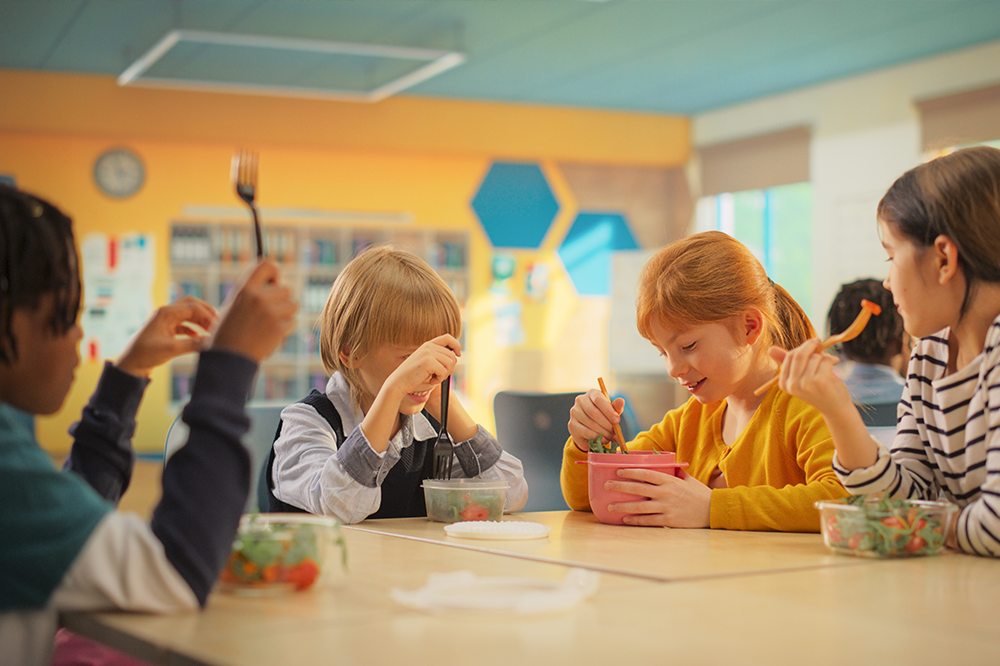
An extra 540 million plates of food will be served up, but the government was urged to invest in British food and drink to help deliver healthier school meals. “Proper funding”, investment in local supply chains and procurement infrastructure, and stronger support for catering teams to deliver higher-quality food are all needed, the report’s authors explained.
“We’re on the brink of the most important expansion of school meals in a generation,” explained Barbara Crowther, Children’s Food Campaign Manager at Sustain, which commissioned the research. “Our report shows we have a really exciting opportunity to use this to deliver a triple whammy of delicious, nutritious meals for children, investment in sustainable British farming and benefits to our wider economy. The government simply cannot afford to miss it,” she added.
The government has set a target of 50% local, sustainable and British produce in public sector food. A review of current school food standards is also underway.
Raising standards and enforcing compliance to ensure nutritious, sustainable food in every school is crucial to achieving this, the research noted. There must also be fair and transparent funding that reflects the “true cost” of delivering high quality school meals. Public procurement frameworks must also be updated to create flexible, accessible systems that support small and medium-sized businesses. Sourcing, spend and standards compliance must also be closely monitored and reported.
The authors also recommend scaling-up of “proven local models that deliver benefits for both children and farmers”, with the report including a number of case studies to highlight what is possible. This includes the BeanMeals project in six Leicestershire schools showing how simple, familiar dishes like stews and bolognese could incorporate more beans and less meat.
The Welsh Veg in Schools initiative is also demonstrating how to replace frozen vegetables sourced from outside Wales with fresh, organic produce from local farms.
“The government has set a great ambition of getting more British veg in our schools – a real win-win-win for our farmers and growers, for our kids’ health, and for sustainability,” said Myles Bremner, former director of the School Food Plan and the new report’s author. “But we need to make sure the school food system is resilient and able to cope with more fresh produce in our kitchens. That means proper kitchens, well-trained staff, and appropriate funding.”
