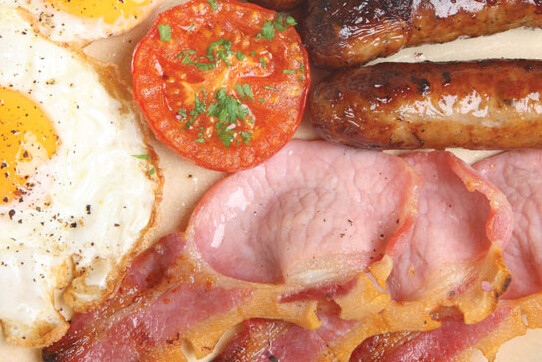
In Episode 5 of The Small Print podcast, Nick Hughes is joined by food safety and security expert Professor Chris Elliott to discuss the issue of nitrites in processed meats.
Professor Chris Elliott is a global expert on food safety and security and a leading voice in a coalition campaigning for the use of nitrites to be banned as additives in cured meat products. As data shows falling demand for bacon, Chris tells Nick Hughes why he believes the direction of travel is towards an outright ban on nitrite-cured ham and bacon, and why foodservice operators need to move quickly to offer their customers nitrite-free alternatives.
Subscribe to the podcast



Further reading
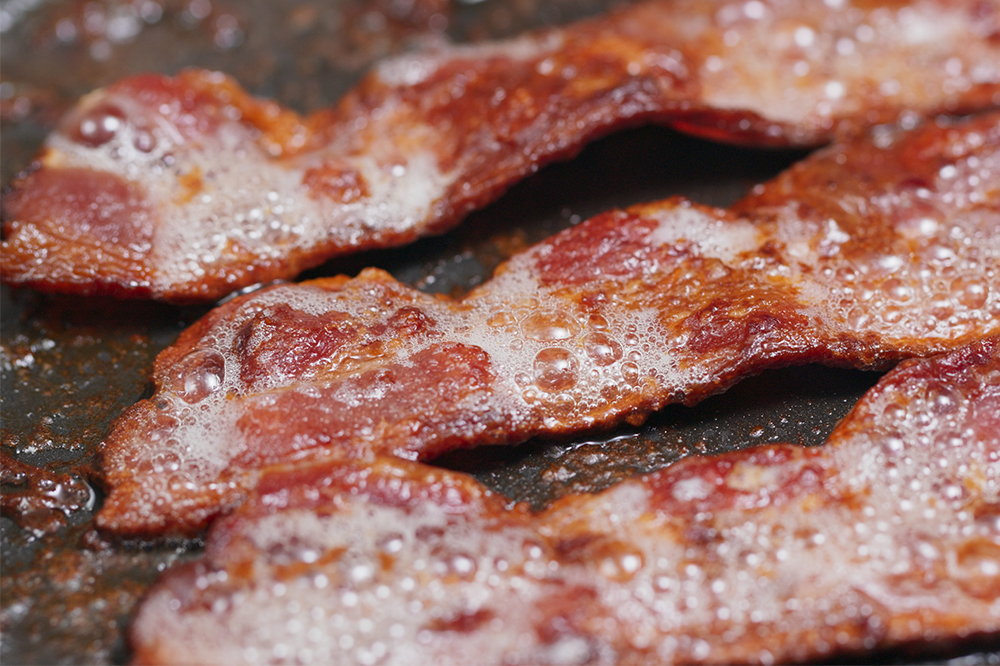
Is the future of ham and bacon nitrite-free?
The risk to health associated with eating nitrite-cured meats is starting to gain traction with the public
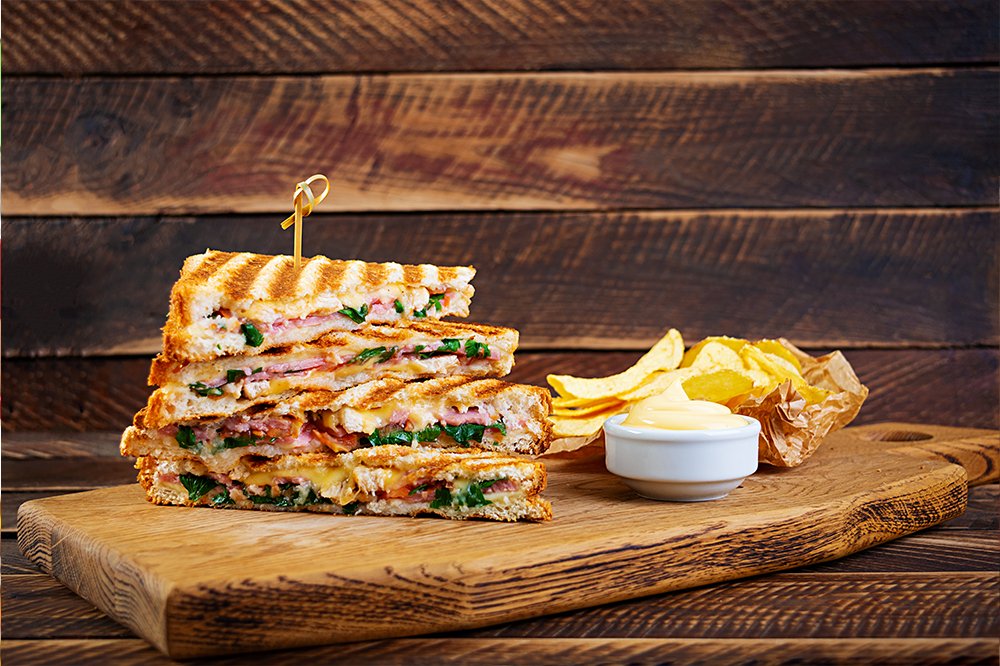
Brits demand nitrite-free ham and bacon
UK consumers want to be able to choose nitrite-free ham and bacon when eating outside of the home as awareness grows over the health risks posed by the additives
Transcript
Nick Hughes: Hello and welcome to the latest episode of the Small Print, a podcast by Footprint Media Group. This week we’re joined by one of the world’s foremost food safety experts to explore the potential risk to health posed by the use of nitrites in our food. The Grocer magazine has reported that volume sales of nitrite cure Bacon fell sharply by 4% during the last quarter, while sales of nitrite free bacon grew by 20%. Professor Chris Elliott is a global expert on food safety and security and a leading voice in a new coalition campaigning for the use of nitrites as a processing aid to be banned. The EU has already moved to reduce legal limits of nitrites, but the UK’s Food Standards Agency has yet to follow suit and still views nitrites as important preservatives. Is the public starting to heed campaigners warnings around nitrite cured ham and bacon? How is the food industry responding? And will new regulation force the hand of businesses to embrace nitrite free alternatives? Chris, welcome. Great to have you join us on the Small print. So let’s cut straight to the chase. What exactly are nitrites and why should we be worried about them?
Chris Elliott: So, as you can imagine, Nick, it’s a question I’ve been asked many times and it’s a really important question actually, because there is still a lot of confusion about these chemicals that are added to various aspects of our food. So they can get added as nitrates or nitrites or both, but they’re basically the same derivatives of the same chemical. There’s always four main reasons we are told, that these chemicals are added to food. The first is always food safety, which I will come back to. I would like to kind of explore that particular myth. The second is extended shelf life, which is absolutely correct. The third is actually it gives a lot of our color to meat, particularly pork, that nice pink color. Actually, it’s not a natural color in pork. It’s because of the addition of the chemicals. And the fourth reason is that it does add something to the flavor, the taste of the meat as well. So pork two, three and four.
Nick Hughes: Yeah. So that’s the cured flavor that you.
Chris Elliott: Yeah, exactly. 2, 3, 4. Absolute no issues problems with me. That’s exactly what it does on the food safety aspect. For a long time people have said the main reason for adding these chemicals to food is to keep it safe, particularly from a very nasty organism called Clostridium botulinum. Botulism as we know it. Look, actually that is a myth and the myth was actually explored by the British meat industry, who conducted a piece of research, and guess what? They found that it had no effects on the safety of meat or otherwise in terms of controlling botulism. And the reason for that, Nick, is the food industry has kind of moved on in the last 50 or 60 years. They kind of know how to keep things safe now. They use HACCP to control things so that risk of botulism doesn’t actually exist anymore. And if you go and look and find out how many cases of botulism has there been in the UK in the last five years, if you find any, you’re a better man than me. Lots of cases of salmonella and listeria and E. Coli botulism in our food system has basically been eliminated by really good manufacturing processes.
Nick Hughes: Yes. Okay, Interesting we should say at this point. We spoke with the BMPA when Footprint covered this issue towards the back end of last year, and they said that the study that was quoted, it was in the Observer, I think, wasn’t it was a small sample of tests and not a representative sample that you would base a scientific decision on. So we should make that point.
Chris Elliott: It’s a good point. And who commissioned the piece of work was a bmpa, you know, so they commissioned them. They got the results back for what they asked for. And have they gone back and asked for a bigger study? I think the answer to that is no.
Nick Hughes: So essentially what you’re saying, Chris, is that, yes, the use of nitrites in cured ham and bacon can improve the characteristics of those products in terms of flavor, shelf life and color. But from a food safety prevention point of view, your view is they are not necessary.

Chris Elliott: Absolutely. Very good summary.
Nick Hughes: Okay, so tell us a little about the Coalition against Nitrites, Chris, who’s involved and what are your campaigning aims?
Chris Elliott: So I guess I’ve been very active in this area, Nick, for more than a decade now. And, you know, it came from the original IARC report to say that there’s a strong link between consumption of processed meats and cancer, particularly colorectal cancer. And again, that was something had been bandied about for a long time. But this was the first substantial piece of evidence to say there is a link, a very strong link. And as much as to say processed meat was getting classified as a carcinogenic, that’s not good for anybody, actually. Certainly not good for consumers, and it’s not good for the meat industry either. And I had a lot of discussions with the meat industry about this. And looking at is the evidence base strong and Solid, which it was then and even stronger now. And that link between the consumption of processed meats and, and the addition of these nitrates and nitrites was becoming stronger and stronger as well. But I have to tell you not much was really happening. You know you, you can talk about things but we didn’t see any great shift in the regulators views about things. The Food Standards Agency, we talked to a lot of people from the meat industry and you know there was always reasons not to change and saying that there wasn’t enough evidence and so forth. So really you know, after quite a few years of trying to, I would say do things discreetly, quietly, you know, in an atmosphere of not trying to push or bully people into doing things. But not much was happening. So we decided the next thing to do was let’s form this coalition and let’s make it much more, much more public facing. Let’s get the evidence out there, let’s get it in a way that we’re not setting out to scare people but giving them the evidence of what is really that causal link and then talk about some of the alternatives. So that’s the coalition and really from starting off, just a few of us, a very small number of people, we have been recruiting more and more people into the coalition. So we have got world leading scientists from Harvard, from Imperial College and you know, these are world leading scientists. We’re also gathering a lot of support from a lot of politicians. And the wonderful thing, this isn’t one or two political parties, it’s right across the spectrum, it’s right from left wing, right, right wing, it’s centre politics. It’s not only British politics but European politicians as well. So the coalition is growing in number and also a lot of these people who are joining the coalition we hope will really help drive changes in policy not only at the UK level but at the European level.
Nick Hughes: Yes, and just to be clear, the coalitions main asks is, is to ban the use of nitrites as a processing aid. Because obviously there are currently maximum limits, aren’t there that manufacturers can, can, can add secured meat products and there’s general agreement among health authorities that high level of exposure to nitrites is harmful to health. But what you’re saying is that any exposure is, is harmful and hence they should be banned.
Chris Elliott: So I mean you’re absolutely right. The ultimate objective of the coalition, let’s get these nasty chemicals out of our food. Because you know what? They don’t need to be there in the first place. That’s quite logical. But also Very, very difficult to achieve. And we understand that is not going to be something that will happen overnight or within one or two years. Okay, understand that. But I go back to the piece about public information. What we believe is if these chemicals are in meat, you’ve got to put it on the front pack of the label or you’ve got to put it on the menu within the restaurant. Just tell people that you’re using these chemicals. Be upfront about it.
Nick Hughes: Absolutely. And we’ll come on to the point about transparency in food service in particular, where, as we well know, requirements for labeling are nowhere near as stringent as they are within the retail sector. So, Chris, you’ve been campaigning for around a year now. I think we’ve covered the issue at length in footprint. There’s also been extensive coverage in national newspapers. There’s always a lot of noise around food and health in the mainstream media, isn’t there? And it’s not always easy for the public to. To separate fact from fiction. But do you feel that this is an issue that’s really starting to cut through now?
Chris Elliott: Yeah. So, I mean, as I said, you know, we. We decided to make the campaign. We’re still having lots of discussions with. With lots of different stakeholders, you know, within governments, within the food industry, but also we want to inform the public as much as possible. It’s not to scare people, but just here is the evidence. And just to say, you know what, there are alternatives to using these, you know, really unpleasant and nasty chemicals. So we have had, you know, I think, a really successful media campaign and, you know, like everybody now, you know, there is lots of social media. You can read about it in LinkedIn or Twitter or other stuff. But we have engaged with what I would call some really bona fide journalists who want to look at the whole story of these nitrites and nitrates and look at it independently, give them the evidence. And there has been some really, I think, powerful articles being written by mainstream journalism. And what we can see from that, you know, people actually trust what’s in, let’s call it, you know, in your traditional media more than they trust what’s in social media. And what we can see is we’re certainly getting people’s attention. And even more than that, we are starting to change people’s purchasing practices now to say, do you know what, Actually, maybe, you know, I shouldn’t be feeding my family, particularly our children, on something that contains harmful chemicals. So we’re actually seeing in the UK quite a substantial fall in the sales of pork, particularly in Bacon. And that’s not the objective of our coalition. I like bacon as much as probably anybody does. But you know what, there are alternatives. There are safer alternatives. And what we can see is those safer alternatives are really starting to gain in market share. And my goodness, that’s getting the attention of the meat industry.
Nick Hughes: Yes. So let’s touch on the alternatives. Nitrite free options. Firstly, you mentioned that they are getting traction in the market, albeit from a reasonably low base initially. What impact is that having on the food industry, do you think? Are we starting to see retailers demand a greater supply of nitrite free ham and bacon and manufacturers respond to that demand by increasing their own ability to produce these products?
Chris Elliott: Yeah. So I mean, you’ll know, Nick, always in industry there’s what’s called the push and then there is the pull. Okay. So a lot of that is retailers want to have more choice for their customers. Okay. They want to have some offering of the nitrate free types of bacon and ham. So that gives the pull to the meat industry to say we should really think about starting to produce some of this. And it’s not just as easy as pressing a button on a processing machine. You’ve got to think about, well, you know, are we being dragged along by something we don’t believe in? Are we being forced to do something that’s going to actually cost our money, you know, our business, a lot of money? The food industry, as you know, survives in pretty small margins. There isn’t a huge amount of money to invest in, I would say in innovation, but the pool is getting bigger. I know that because I talk to quite a lot of retailers. I have been contacted over the last six to nine months by a lot of retailers and actually food manufacturers, meat manufacturers, to say we want to know more information and how do we actually go about deciding what do we do and how do we do it? And that’s far from straightforward as well, Nick.
Nick Hughes: This year sees the launch of the first ever Footprint Festival, a two day experiential and immersive sustainability festival set on a working farm in the heart of the Hampshire countryside. Created for senior leaders across food service and hospitality, this one of a kind annual event takes place on September 17th and 18th and will blend sensory experiences, transformative content, powerful networking and unforgettable food, drink and entertainment. Early bird tickets are now on sale. Visit footprintfestival.com for more details. What are the specific challenges, Chris, for manufacturers to produce these nitrite free products and replicate those characteristics that we mentioned at the top, flavor, color, shelf, Life, is it more expensive? Is it technically difficult to do?
Chris Elliott: So the first thing is a business would have to think about if you want to set up one or more lines to produce the nitrite free. You’re going to have to actually have a different manufacturing process. So with that comes investment. You’re not only going to have to change the kind of kit that you have at the moment, you’re going to have to invest in a new kit. Just basically it’s very, very easy to add nitrites and nitrates. It’s just kind of a salt that’s kind of rubbed on. Some of the of the alternatives actually have to be injected into the meat as well that it has the appropriate effect. So you’ve got that level of investment. The second thing, and even tougher thing is where do you actually go to find these alternatives? Now this is yet another food minefield, okay? Because there are a lot of companies will say, you know, come and use our product. It is natural. It’s not based on nitrites and nitrates. Okay, but, and they’re huge. But here is some of those. Add what we call Trojan nitrites. So there’s no nitrites actually in the ingredients, but due to chemical processes, hey ho, they actually produce the nitrites. One of the best examples, and this is going back a few years, we started to see products were said they were being produced naturally using celery extracts and you think natural celery. This is fantastic. But that process introduced as much nitrites as the chemicals did themselves. So again, if you’re, you’re, you’re a food company, you want to be so careful that you don’t, you know, adopt one of these different types of ingredients or working with a manufacturer who’s not going to help you and in fact what you think you might be doing is the exact opposite. Now in, in terms of all of that, what the coalition, what we have been doing, and this is one that I’ve been leading on, I’ve been trying to produce like a little questionnaire. I’m trying to keep it to about 12 questions. Here are 12 questions that you should ask these companies who said we can offer you a product that will let you produce nitrite free bacon and ham. And some of the questions are quite straightforward, some of them are more detailed and it’s the detailed ones that hides the Trojan nitrites and stuff and then will expose people because you know, if you’re saying is have you tested your product, make sure there’s no nitrites produced, probably about 50% of the offerings will go, no, no, sorry, we can’t actually give you evidence for that. And you know, as a company you just say we won’t go with you. And there are a growing number of companies of offerings of nitrate free processes and generally they’re based on a mixture of fruit extracts and spice extracts, actually really healthy stuff. And to me, you know, if we come back to the whole thing about taste and flavor, I prefer the taste and flavor of these new products rather than the old conventional way of producing it.
Nick Hughes: Yes, I guess with like anything with flavor, it’s what you’re used to, isn’t it? And you can actually train yourself to become used to a different flavor once you’ve had enough exposure to it. I mean, that sounds like from what you’re saying, Chris, around, not all nitrite free and inverted commas alternatives are created equal. That adds an extra layer of complexity for buyers, for whether they be retail buyers, food service buyers, and really needing to interrogate what it is manufacturers are offering them. And what’s the role for regulators here as well? Because presumably these are additives that fall under the scope of certain regulations, do they not?
Chris Elliott: Yeah. So I mean, I think to step into the world of the regulator. So in the UK we’ve got the Food Standards Agency. It’s an agency that I have been huge supporter of for many, many years. And I think for the FSA they get an awful lot more right than they get wrong. I think in the case of nitrites, I think they’ve got it badly wrong, actually really badly wrong. And as you might imagine, Nick, I have told them that face to face in articles that I have written. So it is difficult for regulators for sure. And there are so many things in terms of food regulation, you know, it’s unbelievably complex what you can add, what the legislation is. And then of course we have got the reversal of the sps, you know, about realigning with Europe now. And you know, I don’t think the FSA is in a position to do anything at the moment until that alignment is understood and agreed. Because there’s no point them bringing out new regulations when actually it doesn’t align with sps. So I think actually another angle of our coalition, we’re working really hard and probably harder on European regulators than we are with the fsa because we don’t think the FSA will change until they are forced to buy by Brussels.
Nick Hughes: Yes, yeah. And we should provide some context here, shouldn’t we? Insofar as well, firstly, the EU has already moved to reduce limits for nitrites. It did so last autumn and the UK as you say, is yet to follow suit. The Food Standards Agency, when we spoke with them last summer for an article, said that their view is that nitrites still fulfill an important role as a preservative and in the prevention in particular of the development of botulism. But the point about alignment is interesting, isn’t it? Because we have this common understanding agreement that has been struck between the EU and uk. Last week the UK government published a list of regulations that were in scope of that agreement. Food regulations, food additives were included in that list of in scope legislation. So reading between the lines, we can assume, and I think this is what you’re saying Chris, isn’t it, that the UK is essentially going to be forced to fall into line with the new EU limits for nitrites under this new arrangement.
Chris Elliott: Well again, I think you’ve summarized it very well in the European context. It was great to see that they reduced the levels. But also, Nick, what the European legislators made it really very clear to the European meat industry this is a pathway to zero. Very, very clear. Now the UK will have to follow suit. I’m pretty sure around now nitrites and their argument about it keeps our food safe, where are they going to go to when Europe said actually our tolerance limit will be zero and remember we will be adopting European standards, European legislation. What we don’t have anymore, Nick, we don’t have people sitting around the table from the UK being part of that decision making process. So we will basically be told what to do by Europeans. Isn’t that the great Brexit bonus we have now? So we don’t even have any say in our future food regulations. Congratulations to those Brexiteers?
Nick Hughes: Yes, I mean we could go down that path of straying prosecuting Brexit arguments, but we might need another podcast for that, Chris. I think, but I mean what’s clear is that there are significant implications for businesses here. And I think this is a really important point to make wherever you sit a along the supply chain, whether you’re a manufacturer, that is trading with the EU potentially and will need to align your manufacturing processes for that EU trade regardless of whether you also supply the UK market but also for buyers. From a consumer point of view, from a regulatory point of view, the direction of travel seems pretty set. So how about the food service sector? Often and I don’t think it’s un fair to say because we’ve seen examples in the past in areas like antibiotic use. It does tend to move slightly, at a slightly slower pace than the retail sector. When we surveyed some of the large catering companies towards the end of last year about their sourcing of ham and bacon, it was pretty clear that the a there wasn’t much data on how much if any nitrite free products they, they source currently and nor was there much in the way of policies on nitrites. Do you see that as being sustainable and do you see any movement among food service businesses towards offering more nitrite free options?
Chris Elliott: So I mean, and again, you will know much better than me, Nick, food service is a very, very different sector of the business than retail on so many different fronts. And you know, when we come to this idea about push and pull, you don’t have the major retailers, you know, pushing the food service sector to look at reduction of the number of the levels of nitrites or removing it completely. It’s very different. But also, you know, we’ve got ourselves consumers. So if you go into a supermarket, you’ve got huge amount of information on the front of pack. Maybe some people would say too much information. But we make our food choices often on the cost, the price and then the information that we see on a label. Food service is very different. You don’t have that same level of information. You’re lucky. You don’t have to sit in any of these lectures of mine. But often I will bring labels of food, food products, I’ll bring menus into students and study them and tell me what are the differences here. So often in a menu it will tell you the wonderful attributes where something was produced. Okay, that it is organic. What the food service has had to do because of the legislative pool is add allergen information. At some stage I really believe they’re going to have to add nitrite information as well. Can you imagine going into a restaurant and picking a menu and there’s another little star and it said may contain nitrites. How’s that going to do for your customer satisfaction? So what I would always say to people in food service, why wouldn’t you get ahead of that particular game? Get ahead of it. Think about your future procurement. Start off, actually let’s start off schools and hospitals, okay? You know, let very vulnerable people, much more susceptible to these harmful chemicals than anybody else start to get that right and then think about why would you not want to be the first sector in the world to say actually we as a, as a sector are going to go nitrite free.
Nick Hughes: Yes. And there’s a point here too, isn’t there? Not just about getting ahead of the regulatory curve, but actually being among the first caterers, restaurants, fast food chains, whatever it might be, to proactively offer nitrite free ham or bacon. It’s a market opportunity, it’s competitive advantage potentially. And it’d be interesting to see if any business comes out publicly and declares, you know, this, this is the direction we’re taking, nitrite free and we see it as a source of competitive advantage.
Chris Elliott: And you know, I long for that day. I think the first movers will absolutely get an advantage, that competitive advantage. And you know, the first offerings of nitrate free bacon, you know, what was plastered on the front label was no nasties added, three simple words and my goodness, it was so effective. So why not food service? Think about if we become the first movers in this. Actually it’ll take other people time to catch up with us, but this will always be linked back to our company, our business.
Nick Hughes: So just to finish off, Chris, apart from a sternly written letter to the fsa, what’s next on the agenda for the coalition, for yourself and the coalition, and how do you see your campaign efforts developing over the next year?
Chris Elliott: So for the campaign, we will keep up this engagement with the public and again working with some really good bonafide journalists as we collect and collate strong new information, new data. We will put that into the public domain and we will keep doing that. And as you said, it is newsworthy. People like to read about food and actually, you know, particularly if there’s something unpleasant in our food, people want to know about it. So we will absolutely keep that public facing. We still want to work with our food industry. I mean, I have a huge respect for the UK food industry. What the coalition will be doing and the piece that I’m reading are working on is this helping them to make sure when they go to seek alternatives, actually they get the right alternatives, that it’s not going to damage their business, it’s going to deliver what they want. And that will be in this form of the kind of questionnaire. And what we’ll probably do is kind of color code the answers. If it’s green, you’re good. If it’s amber, you need to ask more. If it’s red, don’t work with Fred, go somewhere else.
Nick Hughes: Well, Chris, best of luck with your continued campaigning efforts and thanks for joining us on the small print.
Chris Elliott: Absolute pleasure talking with you again.
Nick Hughes: ****, if you want to learn more about the science behind nitrites and how they are regulated. Links to articles are on Wednesday’s newsletter and on the Footprint website. We’ll be back next week with another episode of the Small Print. If you like what you’ve heard, please take a moment to rate, share and subscribe.
