A government proposal to freeze the price of essential items sent a chill through a food industry battling structural challenges for which ministers appear to have no answers
The timing was uncanny. On the morning of May 19th, Professor Tim Lang was deep into a characteristically detailed diagnosis of the structural challenges facing the UK food system and the lack of an adequate policy response. “Essentially, what it amounts to is what I’ve called in recent decades a ‘leave it to Tesco et al’ approach,” Lang told the audience at the Westminster Food & Nutrition Forum on next steps for UK food security, noting how “little tweaks here and there” are rooted within a broader “business as usual framework”.
Just hours later, the UK Government was quite literally leaving it to Tesco as reports emerged of ministers having asked supermarkets to freeze the price of essential items like bread, milk and eggs in return for a relaxation of regulations in areas like packaging and public health.
The response was swift and largely brutal. The boss of M&S Stuart Machin described the proposal as “preposterous”. Health and environmental experts were quick to point out that jettisoning policies long in the making as a quid pro quo for freezing the price of bread equates to panic not policy.
That’s not to suggest those policies don’t add costs to businesses, they do (although they disproportionately land on businesses selling unhealthy foods or reliant on single-use packaging), but the rationale behind them is to help tackle deep rooted health and environmental issues that weigh heavily on the exchequer through the cost of treating diet-related ill health, and tackling pollution and waste. If deployed well, the theory is such policies trade short-term commercial pain for long-term societal gain.
The price freezing proposal, which was swiftly followed by announcements that VAT on children’s meals in restaurants and cafés will be cut from 20% to 5% during the summer holidays and tariffs on 100 imported food items will be temporarily suspended, spoke to a political class that has yet to fully grasp that the closing of the Strait of Hormuz – a key choke point for global trade – is another symptom of ever-growing food system fragility, not a discrete challenge that will resolve itself once the boats start moving and oil starts flowing.
Food prices are of course a factor in food insecurity, albeit the average proportion of income spent on food by UK citizens is among the lowest in the world. It was notable how the Climate Change Committee in its explosive new report on UK climate risk suggested the government may need to provide ‘top-up’ help to lower income households during food price shocks; the implication being that raising incomes rather than artificially lowering prices is a better way to ensure fewer people go hungry in this era of cascading crises.
The bigger picture is that prices are largely determined by costs, which in turn are being driven up by climate instability and geopolitical tensions, fracturing long-established supply chains built for hyper-efficiency. Analysis of nine everyday food products across the UK supply chain by IGD found that inflation was overwhelmingly cost driven, not margin driven, with rising prices reflecting the pass through of energy, labour and other input costs rather than excess profitability.
If retailers are forced to cap the price of some items, as is happening in Scotland, there’s also a question of who foots the bill. The retailer? The supplier? Or the farmer already operating on wafer thin margins who has long been resigned to being a price taker rather than maker?
Cheap food policy
Lang, a professor of food policy at City St George’s, University of London, has for years been a leading voice warning about the risks to the UK food system from a model designed in the post-World War II era to maximise agricultural production. Back then the focus was on specialisation, scale, consolidation and efficiency – a ‘cheap food policy’ in all but name. Now, Lang noted in his conference address, we are picking up the tab for the externalities that policy created with regards the cost of treating diet-related ill health, the breakdown of ecosystems on which sustainable food production depends, and a reliance on finite fuels, chemicals and minerals siphoned through a small number of key trading routes and hubs.
Lang’s current thesis – as set out in his report last year for the National Preparedness Committee – is that a new world requires a new framing for food security based around the notion of food defence. This not only means defending food supply chains from the threat of physical conflict, as has happened indirectly in the Middle East with oil and fertiliser supplies cut off by the closure of the Strait of Hormuz, but from cyber attacks, zoonoses, climate change and other key risk factors.
Rather than tweaking around the edges of a failing model, Lang argues we should be pivoting towards a food system that is resilient, has redundancy built into it – through spare warehousing capacity and transportation infrastructure for example – and is decentralised so that the system as a whole can absorb shocks impacting discrete parts. He also makes the case for strategic planning for civil food resilience, including local and household-level preparedness for food shortages. In its own report, the CCC suggested ministers consider the potential for large-scale national stockpiling to avoid risks of shortages across nutritionally important food groups.
Climate risk
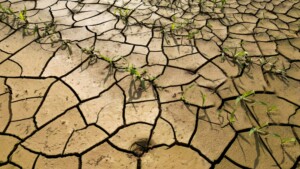
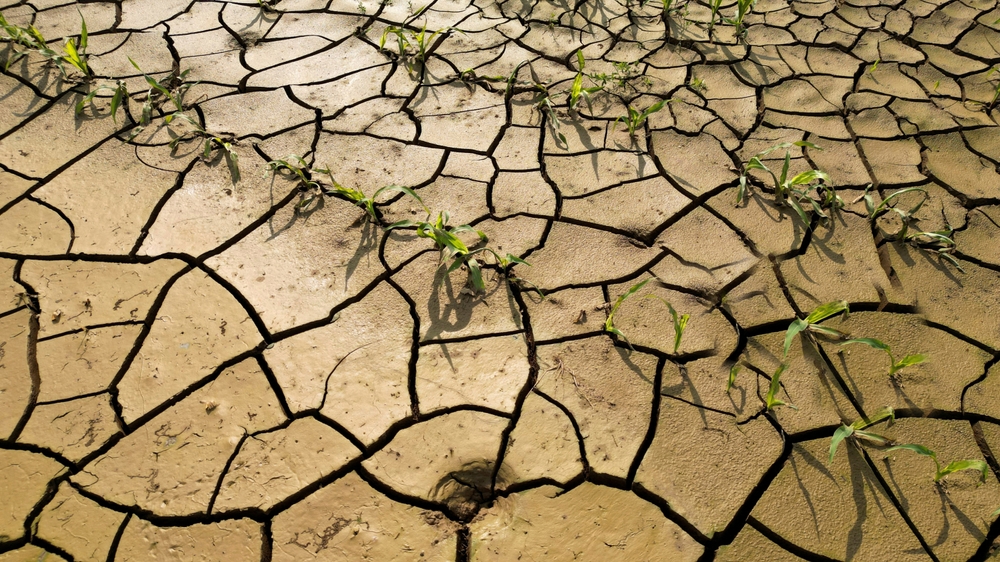
The committee’s analysis of climate risk concluded that the British way of life is under threat from heat, flooding and drought. It predicted that without adaptation, the amount of high-quality farmland in England and Wales will shrink from 38% to 11% by 2050 if the planet warms by 2°C. An extreme year of heat stress could create agricultural losses up to £2.3bn in the 2030s. It also warned that simultaneous crop failures across major global producing regions – an increasingly likely scenario as climate impacts intensify – could trigger significant food price spikes and supply disruptions.
Food is a key touchpoint through which many of us will experience the economic effects of climate change. Already, foods hit by extreme weather are rising over two times faster than the rest of the food basket, according to new analysis by the Energy & Climate Intelligence Unit. Inflation for these five foods – butter, beef, milk, coffee and chocolate – peaked at 16% in July 2025, over six times higher than the 2.6% average inflation rate for all other food and drink.
And it’s not just British-grown foods that are at risk. The CCC noted how 52% of legumes and 47% of fruit are projected to be imported by the UK from climate-vulnerable countries in 2050, increasing the likelihood of supply disruptions and shortages, and climate-related food price inflation.
Mitigation strategies
This is a lot for the food industry to unpack at a time when businesses are understandably worried about the impact of short-term food price inflation, layered upon an already growing cost base. Upward pressure on oil and fertiliser prices is real and will soon feed into supply chains. It will be difficult for most businesses to avoid these pressures in the immediate future; but as with policy makers, that shouldn’t prevent leadership teams from thinking about long-term mitigation strategies.
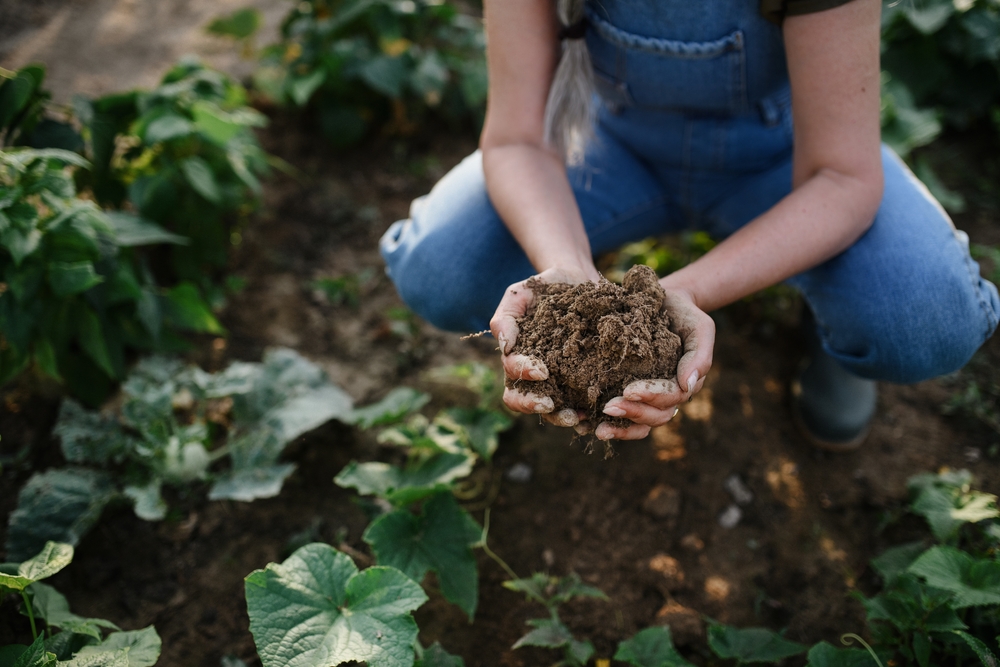
One way to reduce future supply chain exposure to volatile fossil fuels prices is to invest in nature-based farming systems. Last week, 40 leading food and drink businesses including McCain, Nestlé and Unilever said they would use their collective power to help scale regenerative farming practices globally. Farming leaders have been at pains to stress that this transition won’t happen overnight and that farmers will need to be supported on the journey through both financial and non-financial measures.
Other responses being advocated include a move to shorter supply chains; longer-term contracting with producers including more predictable pricing; and collaboration within the supply chain on the development of new crop varieties and alternative ingredients.
This should no longer be the stuff of sustainability teams working within the straitjacket of ‘business of usual’. On September 17th, Sir Charles Godfray, director of the Oxford Martin School at the University of Oxford, will deliver the opening address at the inaugural Footprint Festival. He stresses how the global food system is facing a convergence of pressures – from climate disruption and energy cost volatility to supply chain fragility – that demand a fundamental shift in how food businesses think about risk and strategy. “Sustainability is no longer a values question,” says Godfray. “It’s an economic one. The businesses that recognise this – and act on it – will be the ones that thrive.”
Ministers pushing price freezes as a solution to food inflation might be minded to do some serious thinking about risk and strategy of their own.
Further reading
Large food businesses should be required to show how they are planning for climate risk, according to a major new report on climate adaptation

The food sector has reached a critical fork in its sustainability journey. Doing ‘less bad’ is no longer a credible strategy for the future