
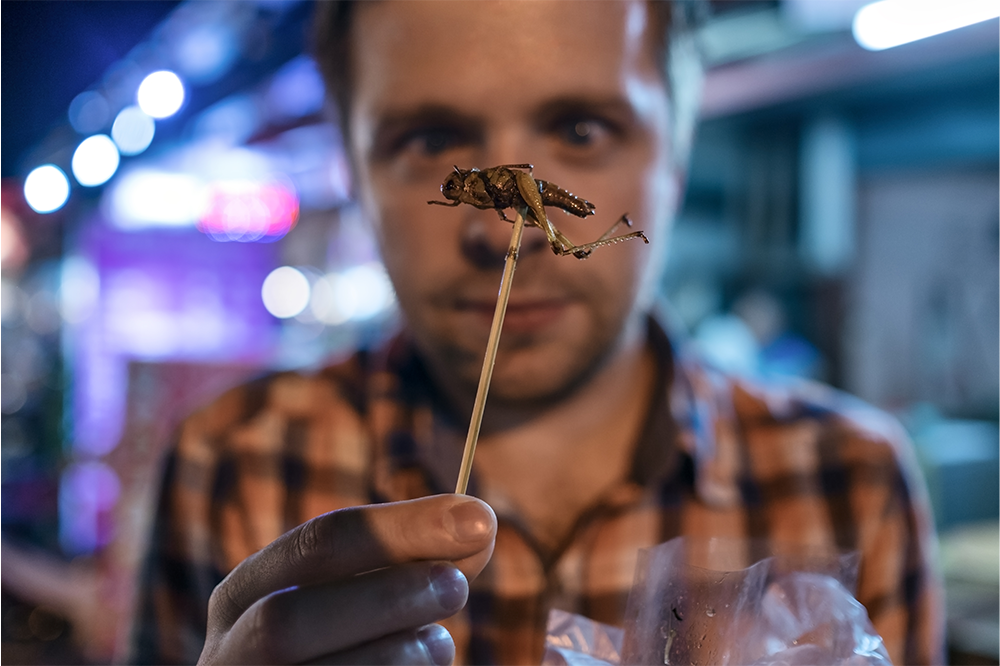
There remains little chance of consumers taking the bait on six-legged protein alternatives. By David Burrows.
Prepare not to be surprised. Researchers have concluded that insect-based foods “have a low likelihood of significantly reducing meat consumption, particularly when compared to more accepted plant-based alternatives”.
The researchers, led by Dustin Crummett from The Insect Institute in Philadelphia in the US, found that the ‘yuck’ factor is a major issue, but so too is taste, texture, affordability, availability and convenience.
“[…] while someone might be willing to try insect-based tortilla chips, these chips are in direct competition with popular, well-marketed brands,” the authors explained in their paper for the journal npj Sustainable Agriculture.
Research by the Food Standards Agency in 2022 showed one in four people were willing to try eating insects. However, only half felt they are safe to eat.
A 2024 survey of 3,000 people from Europe’s largest markets – Germany, France, Italy, Sweden, Poland, and Belgium – found six out of ten Europeans who tried insect-enriched products rated the taste as “very good”, with the age group 25-44 most likely to consume the products. Taste, market availability, health benefits, product pricing, environmental sustainability, as well as food origin, were found to be key drivers of this market, according to an accompanying report produced by the International Platform of Insects for Food and Feed (IPIFF).
Sports supplements were the most appealing insect-enriched food products, albeit due to their rich vitamin and mineral content (71%) rather than the high amounts of protein in them (29%). “While consumers do take into consideration environmental sustainability (25%) when purchasing insect-enriched foods, product taste (71%), health benefits (47%) and pricing (45%) pull the heaviest weight on their preferences,” the report noted.
Bug burger
Crummett and his team don’t see insects being able to compete on these fronts with meat substitutes like Impossible Nuggets or Beyond Burgers that have already penetrated the mainstream. These even feature in large food chains like Burger King – a milestone not yet achieved by insect-based products.
“Consumer acceptance for plant-based meat alternatives consistently ranks higher, making them a more suitable option in the effort to curb meat consumption and reduce the agricultural sector’s climate impact,” said Crummett in a post on social media.
He and his fellow researchers warned of the risk that insects could “divert attention from more sustainable alternatives. Resources allocated to insect farming might have a greater positive environmental impact if directed toward promoting plant-based foods instead,” they wrote.
Indeed, the large majority of insect-based products – crisps, bars, pasta, for example – are not meat substitutes, so they offer no clear environmental benefits. They may even have negative impacts since they primarily compete with plant-based foods, the team said.
“We have limited resources and we need to devote them to the most promising alternatives,” explained Crummett in a recent interview. “It turns out that farmed insects consistently score the lowest of any of the meat substitutes and the actual market for them is incredibly small, even in places that have a tradition of eating insects.”
A report by Dutch industry analyst RaboResearch in 2021 also noted that the current potential of insect-based foods for human consumption is “limited” and their market share “negligible”. Beyhan de Jong, senior analyst (animal protein) said “we believe the strongest future demand for insect protein lies in the aquafeed market”.
Dog’s dinner
Of late, the farmed insect industry has all but abandoned the edible insect market in favour of turning insect protein into premium livestock feed and pet food, due to the uphill battle to launch edible insects as a viable product.
But here too producers have faced challenges. Bans on the use of fishmeal as a feed source have not materialised, for example, which has prompted many to sell their worm wares into the pet food market instead. “The palatability is high. I think animals, unlike us, know what’s good for their health — they really eat it,” Sébastien Crépieux, CEO of Invers, a French insect producer, told Politicorecently.
Not everyone is convinced by the environmental gains of producing insects for feed. Energy demands, tough regulations relating to use of food waste and welfare standards are just some of the concerns raised by NGOs.
And recent research, produced by consultants Ricardo for Defra, showed insect protein may not be the one-size-fits-all sustainable solution to animal feed supporters claim – at least not yet. “[…] insect protein may not currently be the solution to decarbonising the animal feed industry,” the consultants wrote in their report for Defra. “However, under the right production conditions and with an increased demand for the co-products of the insect meal system, it may have a place in the decarbonisation of animal feed, particularly when considered alongside other factors beyond the LCA such as overfishing or deforestation and indirect land use change for soybeans.”
Crummett and his team said future research should focus on identifying specific applications where insect-based foods could offer distinct advantages.