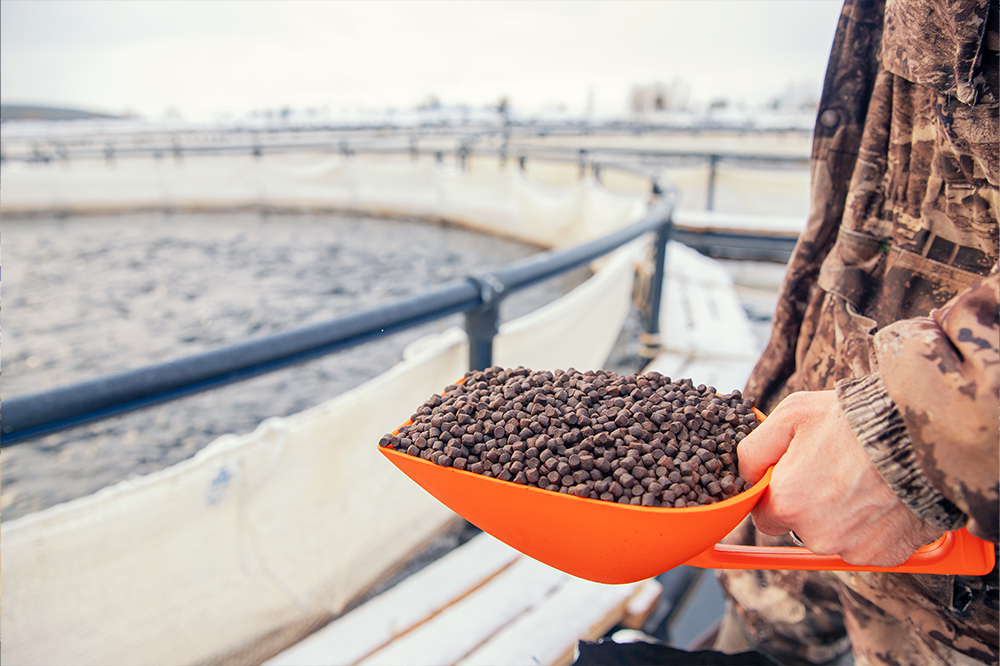
Demand for fish oil to feed Norwegian farmed salmon is depriving up to 4 million people in Northwest Africa of the fish required to meet their nutritional needs.
A new report from the charity, Feedback, claimed the growth of the farmed salmon industry in Norway – a key global supplier – has come at huge cost to the livelihoods and nutrition of people in some of the most food insecure countries in the world, including The Gambia, Senegal and Mauritania.
Norway is the world’s biggest salmon farming country, with Norwegian companies occupying eleven out of the top 20 slots in the list of global producers of farmed salmon, including the world’s largest salmon farmer, MOWI.
Feedback said the industry’s growth has come at huge costs which remain absent from Norwegian salmon companies’ balance sheets. These include the socio-economic harms resulting from the extraction of wild-caught fish to feed Norway’s farmed salmon.
Based on detailed analysis of corporate and government data as well as the latest academic research, Feedback estimated that Norway’s salmon farming industry drives the extraction of nearly 2 million tonnes of whole fish from the wild every year, including fish that are otherwise widely eaten, such as anchovy, sardine, sprat and herring.
Moreover, a significant share of its fish oil, a key commodity in salmon farming, is imported from Northwest Africa, a region facing acute food insecurity. Feedback estimated that Norway’s demand for fish oil is depriving up to 4 million people in the region of fish required to meet their annual nutritional needs.
Overall, it estimated that Norway’s annual output of farmed salmon is 27% lower than the volume of wild fish required to produce the fish oil used in Norwegian farmed salmon feed.
The charity has previously warned of the impact of Scottish salmon farming on wild fish populations. A reportpublished in 2020 found that every year the Scottish farmed salmon industry uses around 460,000 tonnes of wild fish to make fish oil to feed to farmed salmon.
It said that by revealing the Norwegian salmon industry’s enormous feed footprint, it aims to highlight the hypocrisy of global aquaculture corporations, who claim to be helping feed a growing world population while taking precious resources from the Global South for export to high-income markets.
Without significant changes in feed composition, Norway’s ambition to more than triple salmon production to 5 million tonnes by 2050 would require over three times as much wild-caught fish as in 2020, according to Feedback.
It is calling on the Norwegian government to halt the growth of Norway’s salmon farming sector and require full and mandatory transparency on feed sourcing at each stage of the aquaculture supply chain.
Companies are urged to disclose in detail their aqua-feed sourcing volumes, locations and species used; stop sourcing fish meal and fish oil from locations where its production is driving food-feed competition and exacerbating food insecurity; and end the use of whole wild caught fish in feed.
