A warning from insurance experts about the seismic impact of climate disruption has increased pressure on food businesses to get serious about resilience
The alarm bells keep on ringing. Just weeks after anonymous food industry insiders warned the current supply chain will not be resilient in the face of the climate crisis, a group of insurance industry whistle-blowers has expressed “deep concern” that climate and environmental risks are increasing at “a dangerous rate”.
Published by Inside Track, the NGO that coordinated the food industry letter, a memo from senior insurance industry experts reveals how their models are showing a growing risk of physical damage as a result of climate change and that neither government nor their customers understand the full implications.
The insurance industry is in many ways the canary in the coal mine for large scale climate disruption; its business model contingent on modelling and pricing risks that have yet to physically materialise. The memo notes how firms are already responding by repricing insurance, leaving it unaffordable to many; by altering or restricting coverage so that, for example, wildfire coverage is removed from buildings insurance; or simply by withdrawing provision from certain sectors, including agriculture.
Farmers and businesses that sit across the food supply chain are among those set to be disproportionately impacted by the insurance industry’s response to these emerging risks; yet the consequences extend far beyond certain communities, geographies and industry sectors.
The memo states: “As both domestic and commercial property insurance is limited or withdrawn at a significant scale, we foresee an economic risk that could precede a financial crash in the way that the sub-prime mortgage crisis catalysed the global financial crisis.”
It’s an ominous prediction that should encourage further interrogation of the language of ‘resilience’ increasingly being espoused by businesses and policy makers, and what it actually means in the context of the food supply chain.
Hard truths
Since the food industry memo was issued at the start of October, civil society has increased its engagement with such questions. Over 180 experts, academics, farmers and community food leaders recently wrote to the prime minister, Andy Burnham, warning the UK is complacent and unprepared for the food emergencies that are coming. “The hard truth is that the food system built over recent decades is not fit for today’s or tomorrow’s challenges,” the open letter stated.
In a blog for the Esmée Fairbairn Foundation, which funds work to improve nature and society, its director of our natural world, Liam McAleese, wrote of his concern that the word resilience “risks becoming the new greenwash – a reassuring word that allows us to describe short-term fixes as a long-term strategy”.
McAleese’s critique referenced the revelations contained in the Inside Track food memo in which the insiders claimed their businesses continue to prioritise short-term fixes to structural supply chain vulnerabilities – like switching sourcing to alternative regions and ingredients – over long-term investment in programmes that support a more secure food system. “Diversifying supply chains may buy time,” he argued. “[But] it does not, on its own, make the food system resilient.”
If anything, the success of businesses in keeping shelves and kitchens stocked risks sending leadership teams the message that systemic shocks can be dealt with via tactical interventions. “The industry’s greatest power, which is the ability to adapt and to manage disruption, has almost become its greatest weakness,” Ana Cuddeford of Inside Track told me when we spoke for last week’s episode of The Small Print podcast.
Stark warnings, like those issued by food and insurance industry insiders, are designed to make people sit up and take notice. As such, they may not reflect the experience of every sustainability executive working to embed a resilience mindset and strategy within their business. I put it to Cudderford that food businesses may be making tactical decisions to ensure continuity of supply in the short-term, whilst also investing for the long-term by, for example, supporting the adoption of regenerative farming practices, and offering financial incentives to farmers including longer term contracts. She agreed “there are hundreds and hundreds of people working towards a better food future”, but felt work to build long-term resilience is still happening at a relatively small scale.
Previously on the podcast, I had spoken with Emily Coon, who is soon to leave her role as sustainability manager at St Austell Brewery to join the pub group Fuller’s, about the challenges well-intentioned organisations often face in taking strategic action to build greater resilience into business models. She explained how businesses are very good at managing things with an immediate P&L impact, but resilience is harder because it requires investing today to reduce a risk that might materialise years from now or not at all. “That’s where leadership really matters,” said Coon. “It’s about having someone who’s willing to say, okay, this might not actually be the obvious thing in this year’s budget, but it’s part of protecting the business that we want to have, say, 10, 20, 30 years from now.”
Coon spoke too about how climate risk can feel very abstract when talking about 2℃ of warming, but when the conversation is framed around tangibles like crop failure, water shortages, ingredient price inflation, property damage and rising insurance costs, leaders begin to sit up and take notice. “When you have those kinds of conversations it is not a sustainability issue anymore, it’s a business issue,” she said.

Be prepared
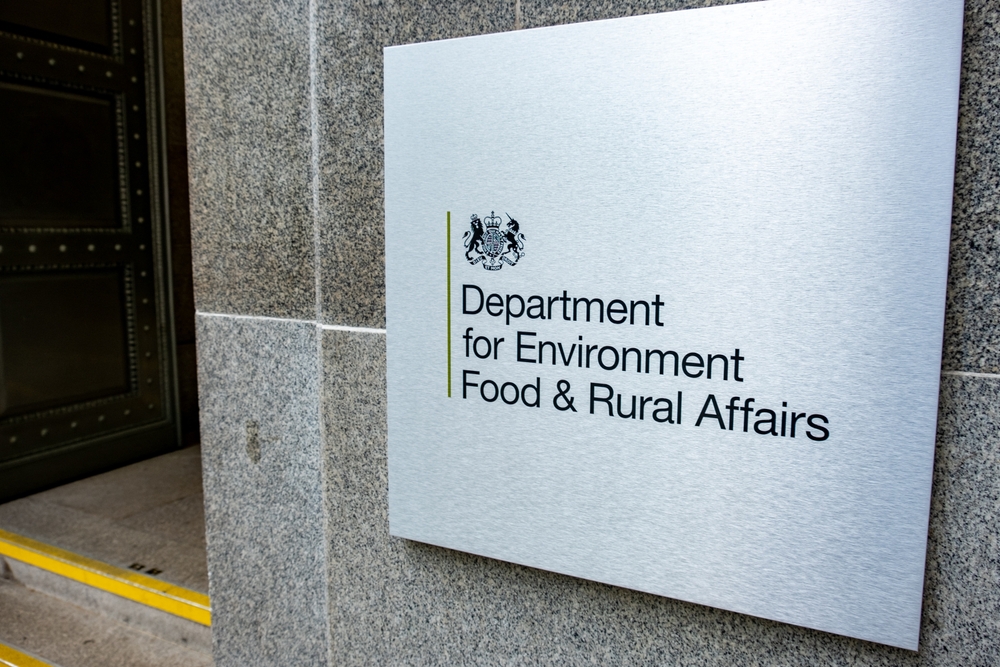
If the penny has started to drop within the food industry – albeit without, as yet, a coherent, strategic response in many cases – the same is true within government. Defra recently convened a new food preparedness group consisting of food charities, trade bodies and community groups, and has asked them to start preparing plans to deal with threats to food and fuel supplies.
In May, the department increased the size of its internal food supply chain resilience team from 6.5 full-time equivalent staff to 16.5 for an initial 12-month period as part of an effort to boost the skills and resources needed to manage food supply disruptions.
The uplift was referenced in the recent National Audit Office report on the resilience of the food supply chain to disruptions. Although it acknowledged the food supply chain has maintained overall food availability during recent disruptions, including the Covid-19 pandemic and the war in Ukraine, the NAO said Defra must do more to strengthen resilience to the kind of catastrophic events – like a national power outage – that would test the supply chain to its limits.
Among a series of concerns raised in the report, the NAO concluded that Defra’s plans for responding to an event that severely disrupts food supply lack operational detail and industry involvement. It noted too how Defra lacks any detailed picture of key food system chokepoints, despite food featuring as one of thirteen sectors afforded ‘critical national infrastructure’ (CNI) status. No specific food supply chain assets, like cold storage warehouses or retailer distribution centres, are currently included in the government’s database of CNI assets because Defra has previously assessed that no individual asset is sufficiently critical. The NAO said this lack of knowledge limits the government’s ability to identify the most essential parts of the food supply chain, and which assets would need prioritising for support during a severe disruption.
The government has also failed to properly stress test the ability of the food supply chain to withstand major shocks. The last exercise on a catastrophic event that would cause severe disruption to food supplies was held in 2023. It identified limitations in Defra’s approach to dealing with the shock, however the department has not meaningfully tested the changes it made to address those limitations, according to the NAO. Moreover, the food businesses that would be tasked with leading the national response to a crisis – given that the state owns almost no food infrastructure – have not been involved in government exercises, nor does the government have much legislative power to compel businesses to improve resilience, compared with regulated sectors such as energy and water.
Strategic leadership
In their letter to Burnham, the 180 experts panned the adequacy of the UK Government’s ‘Prepare’ website, in which households are advised to keep a store of food for emergencies lasting a few days. The advice, they wrote, pays “scant attention […] to the form that store should take or the practicalities and affordability of such recommendations for many lower-income households”.
The group is calling for Defra to be renamed as the Department for Environment and Food Security, to reflect its vital role in national security. “We need system shift: grow more food; more regionalism, diversity and storage at multiple levels, not just households; and public engagement in civil food defence,” said Tim Lang, professor emeritus of food policy at City St George’s, a signatory of the letter. “Central government must provide more strategic leadership while encouraging actions at different levels. Communities and households cannot resolve faultlines in the UK’s food system.”
That industry and government is now talking the language of food system resilience constitutes welcome progress. But saying something does not make it so. As Jack Thompson, editor of TABLE’s Fodder newsletter, wrote for Footprint earlier this year. “We don’t have time to misunderstand each other and decode an onslaught of buzzwords. When someone says “we’re building a more resilient food system”, ask them, for whom and to what? What does it mean in practice? And who is and isn’t included?”
Further reading

UK complacent over food system threats
Growing disquiet over a lack of leadership from politicians and business leaders in addressing the vulnerabilities of the UK’s food system was summed up in two letters dispatched to Whitehall
From sustainability to resilience – but has anything changed?
Jack Thompson, editor of TABLE’s Fodder newsletter, explores the context in which food’s latest buzzword is being used and why we need to interrogate what it actually means in practice