
As high temperatures and drought threaten key food and drink ingredients, the impact from lower yields and quality issues will trickle down the supply chain
It’s felt almost impossible to keep on top of this summer’s headlines charting the cumulative impact on crops and ingredients of extreme weather.
Foods ranging from brassicas and salad to cereals and meat are among those to have suffered the effects from extreme heat and low rainfall that have come hot on the heels of a wet winter and last year’s drought conditions.
Parts of the UK have just experienced their fifth heatwave in the space of three months, with 2026 set to become one of the five worst harvests recorded since 1984. Less than 1mm of rainfall fell across England in July, sending over half the country into drought or prolonged dry conditions for the second consecutive year, according to Met Office data.
Domestic producers have been left rueing another brutal harvest, with the impact expected to be felt along the supply chain in lower availability and higher prices. With wildfires and even higher temperatures engulfing much of Europe’s key ingredient producing regions, there’s little prospect of imports being able to plug gaps in supply.
The pressure doesn’t look like letting up. This year’s predicted super El Niño weather event is expected to make 2027 another record-breaking year in terms of temperature, impacting some vegetable and tropical fruit imports and adding further inflation into the global beef and lamb markets. Fresh produce specialist and catering supplier Fresh Direct has already noted the impact on Peruvian asparagus, with El Niño bringing sustained pressure on spear sizing and yields, and overall market availability expected to remain tight. Tropical fruit, coffee and cocoa are among other ingredients expected to face shortages or quality issues.
So where is the impact of this year’s extreme weather expected to be most acute? And how can hospitality and foodservice businesses plan for a new ‘normal’ characterised by extreme weather, regular supply gaps and unpredictability?
‘Disaster’ for domestic produce
As the UK moves through the peak of its domestic growing season, fresh fruit and vegetables are inevitably some of the worst affected ingredients.
The Brassica Growers Association has pulled no punches in describing the season as “a disaster and emergency”, with cabbage, cauliflower, and Tenderstem broccoli reverting to dormancy after low rainfall when they should be in peak volumes.
Any available produce is significantly smaller in size and weight, while red and white cabbage stocks remain heavily constrained as the stored season comes to an end.
Salad crops, including cucumbers, have also seen notably reduced availability. UK cucumbers, while not suffering from scorch and currently in peak production, account for only 20% of national requirements. As such, suppliers are unable to make up the shortfall caused by extreme heat in Morocco and Spain, where production under plastic led to aborted planting and severely reduced yields.
“Shortages and empty shelves are expected to extend into the winter as crop failures produce a knock-on effect to supply,” confirms secretary of the Lea Valley Growers Association, Lee Stiles.
In leafy salads, prolonged high temperatures have led to short-term quality concerns, including internal ‘tipping’ in Iceberg lettuce, where small brown patches develop inside the head. This is expected to ease as conditions cool, but salad growers point to consistently hotter summers that are reducing the UK’s capacity to pick up supply when production in southern Europe falters due to heat.
A dire warning from the French vegetable trade association has spelled out the impact on crops on the continent, including onions, shallots, lettuce and baby greens. Losses for some sectors could reach 50% of annual tonnage in France, according to Sylvestre Bertucelli, director of Légumes de France, who has called for all downstream stakeholders to relax specifications or risk going without. As he put it: “A batch rejected today for a minor appearance defect will be a batch missing on the market tomorrow.”
As two major lines for foodservice and hospitality, the picture in peas and potatoes is arguably of even greater concern. While regional variation may see Scotland and northern England boost the national average pea crop, at least half of the overall harvest is expected to underperform.
“On sandy soils with no rain for months and months, you don’t get good yields even if your soils are resilient,” explains Roger Vickers, CEO of pea and bean industry body PGRO. “In the south east and East Anglia, where they’ve had practically no rain for 50-60 days, crops are extremely stressed. There is a high chance that yields will be extremely poor.”
For potatoes, there is still some hope of salvaging the domestic season if a cool, damp end to summer arrives before the bulk of crop lifting begins in September and October. But irrigation pressures, reduced water extractions and high temperatures are already likely to have reduced both tuber volumes and sizing, according to CEO of GB Potatoes, Scott Walker.
“What I suspect will happen is specs will have to change this year; for example baking potatoes won’t be bulking out as much,” Walker says, adding that prices are expected to go up due to lower availability. That’s despite a reasonable harvest predicted from Scotland, where growers have benefited from regular grey skies and decent rainfall.

Over the last six months, there has been an abundance of cheap chips from Europe, says Walker, who notes that buyers won’t be able to tap into similar availability this year. More likely is that operators will face higher prices for traditional chips, while other lines, such as sweet potatoes, could help bulk out menus. “The specs will be different but the supply chain is good at using what there is,” says Walker.
Cereals harvest suffers
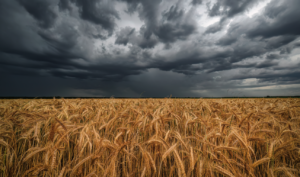
Other staple foodservice ingredients like bread and pasta are also in the line of fire. New analysis by the Energy and Climate Intelligence Unit (ECIU) suggests that this year’s exceptionally dry, hot spring and summer has knocked as much as 2.5 million tonnes off the UK cereals harvest, with the estimated wheat yield well below the ten-year average at 6.8 tonnes per hectare.
With just over half the wheat crop harvested at the start of August, if these average yields hold the UK cereal and oilseeds harvest would be 19.5 million tonnes, surpassing 2020 as the worst harvest since records began in 1984.
“Basically it’s probably the worst harvest I’ve ever had. The winter rainfall was at best average, with dribs and drabs since then,” says Norfolk-based arable and poultry farmer, William Barber. “The east of the country has been badly hit, most people are almost finished [with the harvest], whereas normally it would be mid-August. It’s come so early.”
Livestock weights fall
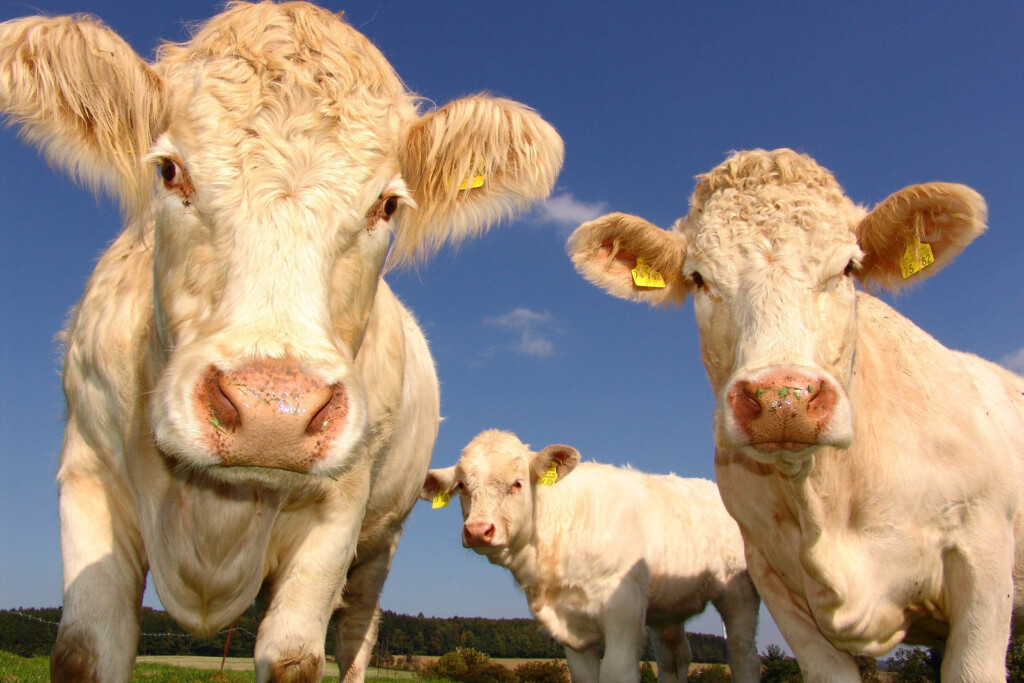
The picture is more mixed where livestock is concerned. While dairy prices have fallen and output has declined slightly in recent months, these are not solely linked to the effect of recent heatwaves.
According to dairy analyst at the AHDB, Susie Stannard, milk production in the UK and Europe has tipped from over to under supply in the short-term, due to the high temperatures, with production during the June heatwave at about 2.9% below the 5-year average.
But that comes alongside the longer-term context of increased production in both the UK and Europe across the last two years, which put downward pressure on prices towards the end of last year. Added to the annual seasonal decline in milk production, it’s difficult to directly link falling dairy volumes to recent conditions without considering other factors.
More impactful will be ongoing inflation in beef and lamb, according to Tom Lancaster, senior analyst at ECIU. “Last year’s drought, plus the previous year’s wet weather, had a cumulative effect on the price of beef and lamb,” he explains. “Lambs are lighter because there’s not as much grass available, and they take more milk off ewes so there will be lower productivity in the autumn.”
“Globally there is a lot of evidence about the impact of extreme weather on beef cows,” he continues, describing a vicious cycle as farmers shrink breeding herds and further reduce availability. “It’s having a really inflationary effect on prices. Other factors are at play but drought in South America and Europe have played a not insignificant role in that.”
Menu substitutions
With such a wide range of ingredients affected, there are both challenges and opportunities for foodservice buyers and chefs.
“There’s a big shift in mentality going on, away from treating supply like a supermarket and getting whatever you want all year round,” notes David Read, founder of procurement consultancy Prestige Purchasing. “Take cucumber right now. If you’re smart, you work out how to do salads without cucumbers, tomatoes or lettuce.”
The sector may also look to change format, as well as product, according to Read. “Two years ago, the drought meant potato sizing was terrible. So you couldn’t get long chips and organisations changed to serve short chunky chips, or longer, sweet potato chips,” he explains.
As the price of beef continues to rise, there has also been something of a comeback for pork on menus, as well as a trend for contract caterers sourcing more venison.
In chicken, the UK is already undersupplied with retailers buying most of the domestic production, and supply hampered by planning constraints and growing demand, according to Read. “Foodservice buys mostly from overseas and thankfully, mostly from eastern Europe where the weather hasn’t been as bad,” he adds. (In France, the severe heat has reportedly killed thousands of chickens and reduced poultry and egg output.)
Short-term swaps aside, optimising a company’s buying scale can also help mitigate longer-term volatility in supply. “The bigger you get, the more you get an opportunity to buy upstream from importers or direct to growers. When you do that, you get more visibility of what’s going on,” says Read.
There are, however, some advantages to be had for smaller, independent restaurants who can move quickly to adapt menus to benefit from gluts in local produce. That’s something currently happening in pockets of the UK where small-scale cucumber and salad production can flow into foodservice in smaller volumes not suitable for multiple retail.
As all sections of the market look to secure future resilience in response to climate change and extreme weather, long-term contracting and direct-to-grower supply relationships are set to become more common, with those buying from spot markets increasingly exposed to unpredictable availability.
Close contact between chefs and buying teams, and the ability to turn constraint into creativity, will continue to set operators apart as the industry grapples with production and supply chain challenges that are here to stay.
Further reading
Farming enters climate ‘doom loop’
The brown fields and dry rivers have told their own story, but the data crunchers at the Met Office have now confirmed what we can see with our own eyes – that the British summertime has once again played host to exceptional weather extremes
How the stars aligned for ‘regen ag’ to go mainstream
Surging input costs and extreme weather have created the conditions to scale more sustainable agriculture – but care and caution is needed