Surging input costs and extreme weather have created the conditions to scale more sustainable agriculture – but care and caution is needed
In an irony that wasn’t lost on those sweltering beneath the capital’s sun, this year’s London Climate Action Week took place amid record-busting UK temperatures for June.
Among the events taking place as the mercury rose was a Footprint roundtable discussion, in association with Nestlé Professional, posing the question: ‘Can regenerative agriculture seize the moment?’ That the conversation took place against the backdrop of unprecedented seasonal heat served only to increase the sense of urgency around a debate that has already been brought to the boil this year by global events.
After several decades’ worth of geopolitical crises were squeezed into the first half of the 2020s – the Covid-19 pandemic, followed by the war in Ukraine and the conflict in Gaza to name but three – there was cautious optimism at the start of 2026 that we might be in for a year of relative stability. Such hope was quickly extinguished in February when the United States and Israel launched military strikes on Iran which retaliated by closing the Strait of Hormuz, a key choke point for global trade. Ever since then the ripple effects have been felt across the world, including the UK.
Among those suffering collateral damage have been UK farmers, particularly those heavily reliant on fossil-fuel based inputs, notably fertiliser for which the price had rocketed by almost 40% by April, according to the National Farmers Union (the cost of fuel and energy also saw major hikes that have sustained until the summer).
A quarter of the globally traded nitrogen used in fertiliser travels through the Strait of Hormuz. Despite growing interest in regenerative farming techniques, such volatility in price impacts a large majority of UK producers who farm using conventional methods. Those farmers have been left with brutally tough decisions over whether to try and absorb the cost increases themselves or pass them on, and whether to try and grow a crop with reduced fertiliser applications or even to plant at all.
The impact on food prices takes longer to feed down supply chains but is likely to hit hard from the autumn. Whereas previously food inflation was expected to settle at around 3% this year, now predictions vary from the Bank of England’s 6-7% to the Food and Drink Federation’s 9% estimate.
Extreme weather
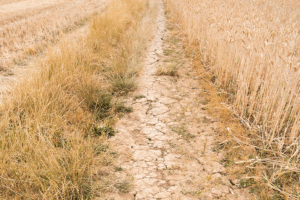
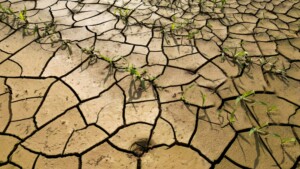
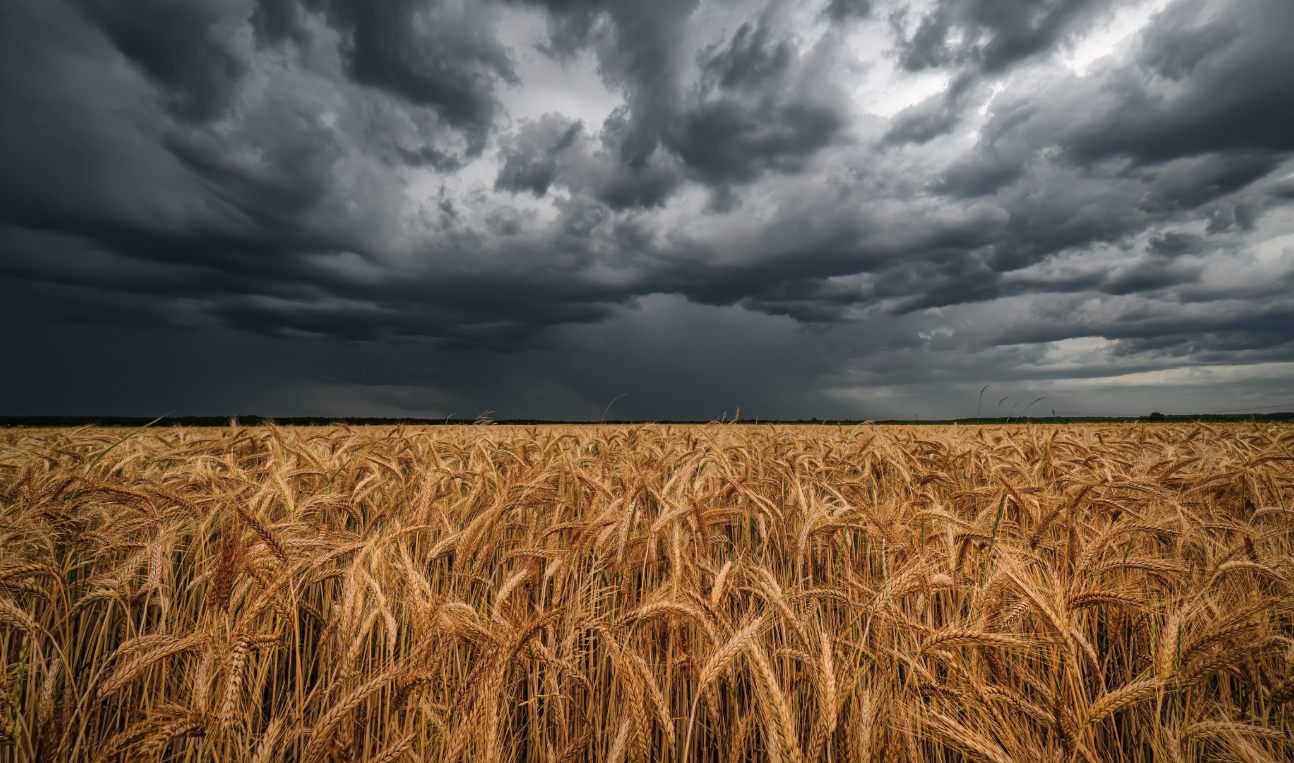
The kind of weather extremes experienced during June, that have persisted into July, are exacerbating the economic effects of geopolitical instability. Extreme weather in the form of floods, drought and heat stress delays plantings, restricts crop growth, creates conditions for pests to thrive and impacts crop quality.
Three of the five worst UK harvests since records began – 2020, 2024 and 2025 – have all occurred this decade after periods of extreme weather.
The 2026 harvest shows no sign of bucking the trend with farmers braced for the effects of prolonged periods of heat and drought on crop yields and quality. New analysis from the Energy and Climate Intelligence Unit (ECIU) found that 25 million fewer pints of milk were delivered from UK farms during the May and June heatwaves as dairy herds suffered the effects of heat stress. And worse is expected to come, with 2027 predicted to be the hottest year ever recorded due to a powerful El Niño event.
Longer-term predictions are even more dire. The Climate Change Committee in its latest report said without adaptation the amount of high-quality farmland in England and Wales could shrink from 38% to 11% by 2050 if the planet warms by 2°C.
Nor can the UK continue to rely on imports to feed us. The 15 nations most exposed and least resilient to climate change-driven weather extremes were the source of 13% of UK food imports in 2025, according to ECIU, with staples like rice, citrus fruits, coffee and cocoa all under threat.
Positive within the peril
If there is a positive to be found within the peril, it is in a subtle shift in the narrative around UK food security. ‘Food security is national security’ has become a popular maxim among those working within the food system, while resilience has replaced sustainability as the industry’s buzzword of choice.
It is in these linguistic pivots that we start to find evidence of growing urgency behind the need to adopt a more regenerative form of agriculture that is resilient to climate extremes because it seeks to harness the symbiotic relationships that exist within the natural world rather than exact control over nature via deployment of a chemical arsenal.
Experiences shared at the roundtable event suggested that farmers are becoming more open to the business case for adopting regenerative farming principles, albeit concern persists over the risk to yields and revenues and a lack of financial support to manage the transition.
Some of the evidence filtering through from field trials is starting to disprove the notion that regenerative automatically means lower yields and less income. A recent study of French farms found those adopting more regenerative practices consistently outperformed more conventionally farmed holdings during drought conditions, both in terms of yield and profit stability.
A pan-European study by the European Alliance for Regenerative Agriculture (EARA) published last year, meanwhile, found that over a three year period yields on regenerative farms were almost identical on average but the use of inputs was down significantly which translated into greater profitability.
Scale versus substance
Many of the farms assessed in these studies were well advanced in their regenerative journey. To meet the kind of targets for adoption of regenerative farming being set by large multinational businesses it will require many thousands more conventional farmers to adopt regenerative principles or convert to other nature-friendly systems like organic. This has led to concern – including among proponents of organic farming – that in the race to scale regenerative approaches, the term itself risks becoming too pliable and ultimately devoid of meaning.
Large businesses have sought to come together to draw their own parameters for what regenerative agriculture should involve and how its impact should be measured in order to fend off charges of greenwashing. In June, the SAI Platform launched its ‘Regenerating together programme’ designed to help companies and farmers scale regenerative agriculture across global supply chains. The programme is supported by over 40 large food and agriculture businesses including Nestlé, Louis Dreyfus Company, McCain Foods and Diageo and has been developed with input from farmers, agronomists, NGOs, academia and industry. It consists of a framework for adoption of regenerative agriculture with implementation guidance and transition support. For the first time, the framework includes guidance for independent third-party verification and benchmarking of regenerative agriculture practices, which SAI says will help improve consistency, credibility and trust across the sector.
Yet some experts working within the food system are uncomfortable with what started as a farmer-led movement being moulded to the requirements of large multinational organisations.

Part of the roundtable discussion centred around regenerative being a whole system shift not a set of small practice changes. “Regeneration is a forever journey,” as one attendee put it. In this version of ‘regen ag’, change extends beyond pure farming practices to address supply chain dynamics, power imbalances, nutritional outcomes and other systemic challenges.
The supply chain piece – “how are we trying to decommodify commodity markets” as one participant put it – received particular attention within the conversation. It was noted how commodity supply chains have been optimised over many years for efficiency. This has had the effect of making an individual farm’s output indistinguishable from their neighbours, regardless of differences in farming techniques, since it all ends up in the same mill, processing facility, loaf of bread or box of cereal.
In order to mark specific food items out as genuinely regenerative, rather than rely on a mass balance approach, segregated supply chains will need to develop that allow full traceability of an ingredient from farm to fork, but without abandoning the efficiency and consistency associated with traditional supply chains. It’s a challenge some businesses in the room are already working to crack.
In it together
Although it was agreed that the private sector needs to take the lead in pulling the levers for regenerative agriculture to be productive and profitable at scale, including by providing financial support for the transition, participants were of the view that other stakeholders need to play their part in creating an enabling environment, including insurers, investors and policy makers.
Consumer-facing businesses – pub and restaurant chains for example – who don’t hold direct farmer relationships and/or are too small to effect farm-level change through their contracting will need to work with suppliers who do hold those relationships on a shared pathway to supporting regenerative agriculture. Roundtable participants noted how there is an important role here for collaborative initiatives, including member organisations, to do the work individual businesses struggle to do by themselves by demonstrating business demand for regenerative food and drink, exploring routes to market, and coordinating a single set of ‘asks’ for producers, including over the provision of environmental data.
Perhaps the biggest unanswered question surrounding the adoption of regenerative agriculture concerns the price we pay for our food. Does the premium currently paid for regenerative produce simply reflect the new price of buying commodities with added nature benefits? Or will there be a “gentle off ramp”, as one participant put it, once the transition is fully established at which point prices stabilise as farmers experience more reliable, higher quality yields and save money on inputs? “We don’t really know,” was the contributor’s own honest assessment.
The unknowns may still outnumber the knowns where regenerative agriculture is concerned, but the case for doing farming differently in 2027 and beyond has surely been made convincingly by the events of 2026.
Further reading

From sustainability to resilience – but has anything changed?
Jack Thompson, editor of TABLE’s Fodder newsletter, explores the context in which food’s latest buzzword is being used and why we need to interrogate what it actually means in practice
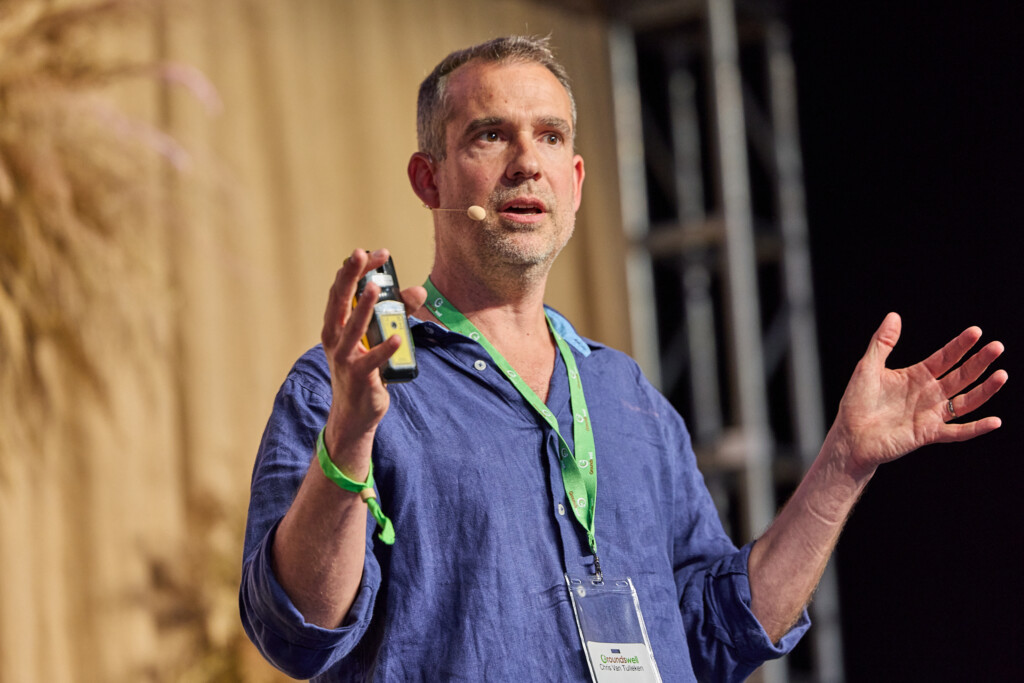
Inside the tent: what did we learn from Groundswell 2026?
Nick Hughes reports from this year’s Groundswell Festival where the focus fell on the relationship between more sustainable food production and healthy consumption